When considering a new family vehicle, the Honda CR-V frequently enters the conversation, often lauded for its enduring blend of practicality and reliability. As we navigate 2026, this compact SUV continues to be a strong contender for households prioritizing comfort, safety, and ample space for daily routines.
This analysis delves into the CR-V's real-world appeal, focusing specifically on how its cabin dimensions and driving characteristics meet the demands of family life, from school runs to weekend excursions.

The CR-V's Enduring Appeal for Families
The Honda CR-V, in its 2026 iteration, remains a benchmark for compact SUVs, particularly for families. Its core strengths lie in a well-engineered balance of interior volume, fuel efficiency, and Honda's established reputation for long-term dependability. Widely reported consensus consistently points to the CR-V as a sensible, no-fuss option for those seeking a practical daily driver with enough room to grow.
Engineering Deep Dive: Core Specifications and Build Integrity
Honda's commitment to robust engineering is evident in the CR-V's construction. The 2026 model typically offers a choice between a traditional gasoline engine and an increasingly popular hybrid powertrain, designed for improved efficiency. The chassis benefits from a rigid structure, contributing to both occupant safety and a composed ride.
Material choices within the cabin reflect a focus on durability and ease of cleaning, a significant consideration for families with young children. Surfaces are generally hard-wearing, capable of withstanding the rigors of everyday family use.
Key 2026 CR-V Specifications (Typical Hybrid Model)
| Feature | Specification |
|---|---|
| Engine Type | 2.0L 4-Cylinder Hybrid |
| Combined Horsepower | 190-204 hp (reported) |
| EPA Estimated MPG (Combined) | 37-40 MPG (reported) |
| Passenger Volume | ~103.5 cubic feet |
| Cargo Volume (Rear Seats Up) | ~39.3 cubic feet |
| Cargo Volume (Rear Seats Folded) | ~76.5 cubic feet |
| Ground Clearance | ~7.8 inches |
Real-World Comfort and Daily Commute Dynamics
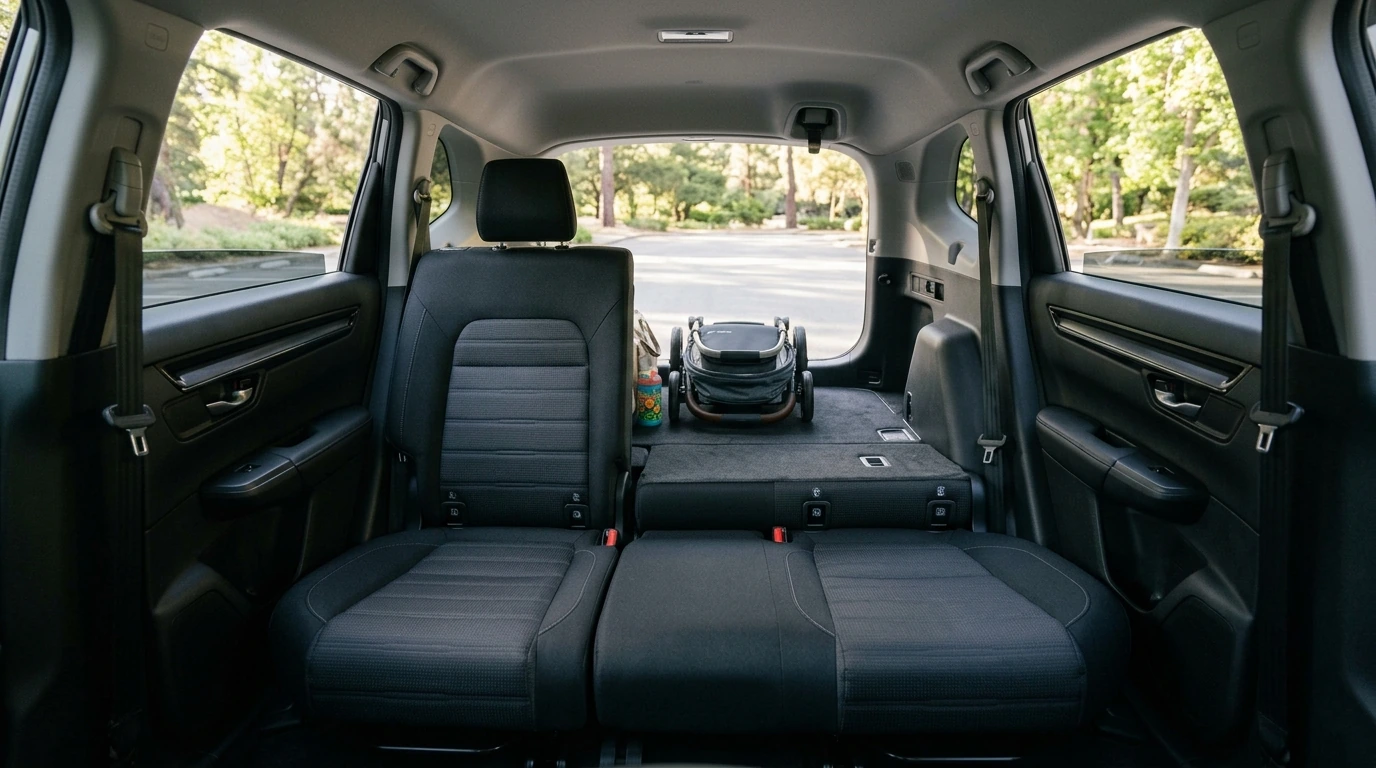
The CR-V truly shines in its practical application for families. Its cabin is thoughtfully designed, offering generous head and legroom for both front and rear passengers. Installing child safety seats is generally straightforward, thanks to easily accessible LATCH anchors and wide-opening rear doors. The rear bench comfortably accommodates two car seats, with sufficient space remaining for a smaller third passenger or easy access to buckles.
Cargo capacity is another strong point, with the reported 39.3 cubic feet behind the rear seats proving adequate for most grocery runs, strollers, or sports equipment. Folding the rear seats flat expands this to an impressive 76.5 cubic feet, making light work of larger hauls or moving day essentials.
On the road, the CR-V offers a smooth, composed ride, absorbing most road imperfections effectively. Steering is light and responsive, making urban maneuvering and parking less of a chore. The hybrid powertrain provides brisk acceleration for merging onto highways, and its enhanced fuel economy is a definite boon for families looking to manage running costs.
PRO TIP: Maximizing Cargo Space
When loading bulky items, remember that the CR-V's rear seats fold almost completely flat. Utilize cargo organizers or nets to prevent smaller items from shifting during transit, keeping the cabin tidy and safe for family adventures.
Balancing Act: Strengths and Noted Limitations
Pros
- Generous Cabin Space: Ample legroom and headroom for all passengers, and a highly versatile cargo area.
- Fuel Efficiency: Particularly strong with the hybrid powertrain, offering competitive MPG figures.
- Honda Reliability: A long-standing reputation for dependable performance and strong resale value.
- User-Friendly Driving: Easy to maneuver, comfortable ride, and predictable handling suitable for daily driving.
- Standard Safety Features: Comprehensive suite of driver-assist technologies often included across trim levels.
Cons
- Infotainment Interface: Some users report the infotainment system can be less intuitive or responsive compared to rivals.
- Engine Noise: Under heavy acceleration, the gasoline engine (and sometimes the hybrid when pushed) can become noticeably vocal.
- Base Model Features: Entry-level trims might lack some desirable comfort or tech features found standard in competitors.
- Design Aesthetics: While functional, the exterior design is often described as conservative rather than groundbreaking.
Is the CR-V the Right Fit for Your Family?
For families seeking a reliable, spacious, and fuel-efficient compact SUV, the 2026 Honda CR-V presents a compelling package. It consistently delivers on its promise of practical utility, making it an excellent choice for daily commutes, school drop-offs, and longer road trips.
While its infotainment system might not be class-leading and its engine can be a bit loud when pushed, these are generally minor trade-offs for the overall package. The CR-V's strong resale value and Honda's reputation for low maintenance costs further enhance its appeal as a smart long-term investment for family transportation.
Frequently Asked Questions
- What are the key safety features for families in the 2026 Honda CR-V?
- The 2026 CR-V typically includes Honda Sensing, a suite of safety and driver-assist technologies like Collision Mitigation Braking System, Road Departure Mitigation System, Adaptive Cruise Control, and Lane Keeping Assist System, all beneficial for family safety.
- How does the CR-V handle car seats?
- The CR-V is well-regarded for its car seat compatibility. It features easily accessible LATCH anchors in the rear outboard seats, and the spacious rear bench generally accommodates two car seats comfortably, with enough room for easy buckling.
- Is the hybrid version worth the extra cost for a family?
- For many families, the hybrid version's improved fuel economy can lead to significant savings over the vehicle's lifespan, especially with frequent driving. The initial higher cost is often offset by reduced fuel expenses and the environmental benefits.
- What is the typical maintenance schedule for a Honda CR-V?
- Honda vehicles typically follow a maintenance minder system, which alerts owners based on driving conditions. Generally, oil changes are recommended every 7,500-10,000 miles, with more comprehensive checks for fluids, tires, and filters at regular intervals as per the owner's manual.