Achieving a consistently fresh car interior without resorting to overpowering air fresheners or artificial perfumes is a goal for many discerning vehicle owners. The secret lies not in masking odors, but in understanding their source and implementing effective, natural elimination strategies.

The Fundamentals of a Clean-Smelling Cabin
Maintaining a pleasant atmosphere inside your vehicle begins with a foundational understanding of what causes odors and how various materials in a car's cabin interact with them. From upholstery fabrics to ventilation systems, each component plays a role in either trapping or dispersing scents. Key to a lasting fresh scent is a multi-pronged approach combining proactive cleaning with passive odor absorption, relying on established principles of air quality and material science.
Common culprits for persistent odors include:
- Organic Spills: Food, drinks, pet accidents that seep into carpets or upholstery.
- Moisture: Leading to mildew and musty smells, especially in humid climates or after rain.
- Smoke Residue: Nicotine and other compounds that permeate fabrics and headliners.
- HVAC System: Mold or bacteria growth within the air conditioning evaporator or cabin filter.
Practical Steps for Odor Neutralization
Implementing a regular cleaning regimen is the most effective defense against unpleasant car odors. This isn't about deep cleaning every week, but rather consistent attention to detail and immediate action on spills. Practical scenarios often involve addressing the root cause before any absorption method can be truly effective.
Initial Deep Clean & Vacuuming
Begin by thoroughly vacuuming all carpets, floor mats, and upholstery. A powerful automotive vacuum with various attachments can reach into crevices where crumbs and debris accumulate. For fabric upholstery, a dry brush can help dislodge embedded dirt before vacuuming. For leather surfaces, a gentle wipe-down with a dedicated leather cleaner is recommended, followed by conditioning.
Targeted Surface Cleaning
After vacuuming, focus on hard surfaces. Wipe down the dashboard, door panels, center console, and steering wheel with a suitable interior cleaner. For persistent stains on fabric, a specialized enzymatic cleaner can break down organic matter causing odors, rather than just masking them. Always test any cleaning product on an inconspicuous area first.
PRO TIP: Address HVAC Odors
A common source of musty smells is the HVAC system. Consider replacing your cabin air filter every 12-15,000 miles, or more frequently if you drive in dusty conditions. For deeper issues, an automotive AC system cleaner can be used to treat the evaporator core, eliminating mold and bacteria that cause persistent odors.
Natural Odor Absorption Techniques
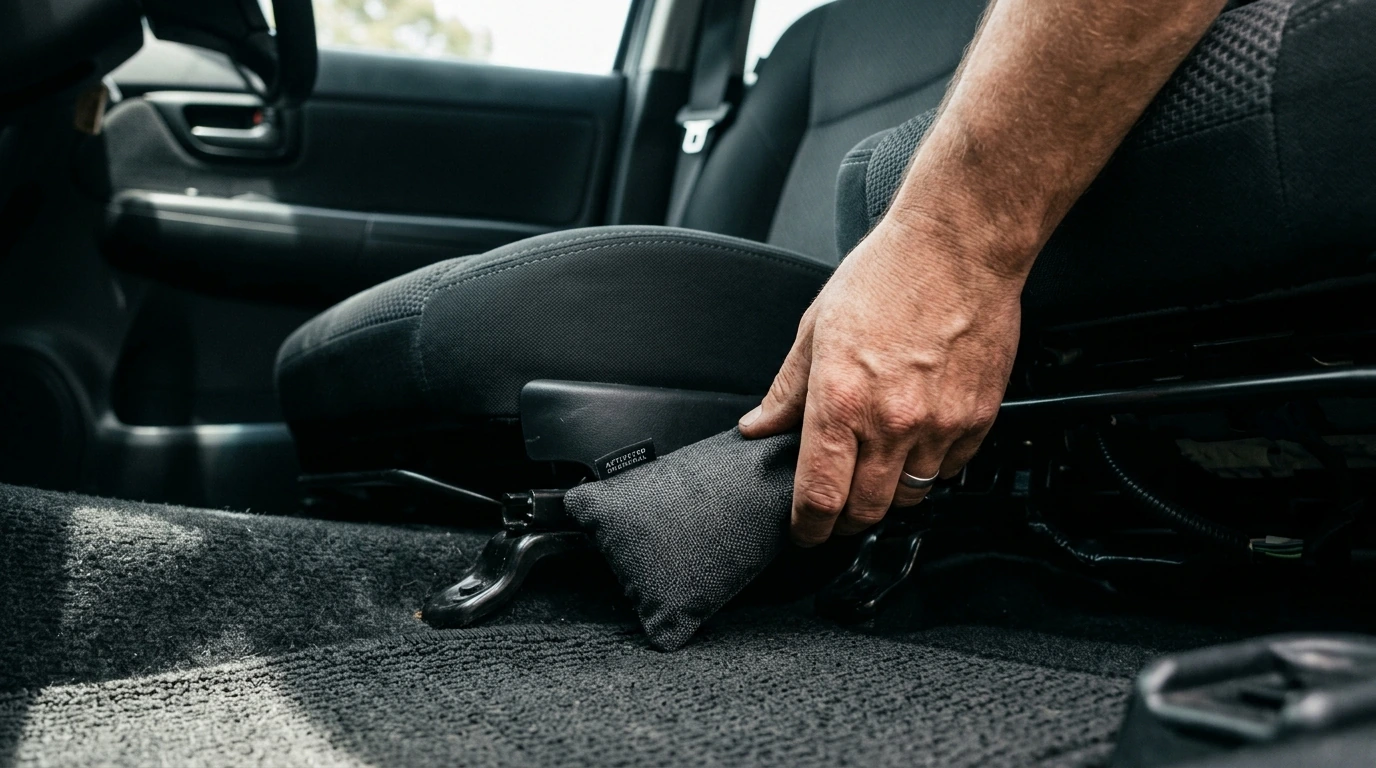
Once the car is thoroughly cleaned, passive odor absorbents can maintain freshness by continuously neutralizing airborne molecules. These methods work without introducing new scents, making them ideal for those sensitive to perfumes.
| Absorbent Type | Key Benefits | Application Method | Longevity/Maintenance |
|---|---|---|---|
| Activated Charcoal | Highly porous, excellent broad-spectrum odor absorption. | Place bags discreetly under seats or in pockets. | Recharge by placing in sunlight every 1-2 months; replace every 6-12 months. |
| Baking Soda (Sodium Bicarbonate) | Effective for acidic odors, readily available, inexpensive. | Sprinkle on carpets/upholstery, let sit for hours, then vacuum. Or place an open box. | Replace open boxes monthly; reapply powder as needed. |
| White Vinegar | Neutralizes strong odors like smoke, pet accidents. | Spray diluted solution (1:1 water) on affected areas, or leave a bowl overnight. | Use as a treatment; temporary vinegar smell dissipates. |
| Coffee Grounds | Good for absorbing stale or musty odors. | Place dry grounds in a breathable container (e.g., old sock) under seats. | Replace every 1-2 weeks as potency diminishes. |
Pros and Cons of a Scent-Free Approach
Embracing a naturally fresh car interior offers distinct advantages, particularly for sensitive individuals, but it does require a more proactive stance than simply hanging an air freshener.
Advantages of Natural Odor Elimination:
- Healthier Environment: Avoids potential irritants from artificial fragrances, beneficial for allergy sufferers or those with respiratory sensitivities.
- True Freshness: Eliminates odors at their source rather than masking them, resulting in a genuinely clean smell.
- Cost-Effective: Many natural absorbents are inexpensive and reusable.
- Preserves Interior: No sticky residues or potential staining from chemical sprays.
Considerations:
- Requires Diligence: Regular cleaning and maintenance are essential for long-term results.
- Slower Action: Natural absorbents work gradually compared to instant (but temporary) perfume sprays.
- Initial Effort: A thorough initial deep clean is often necessary to reset the interior's scent profile.
Value Analysis & Who Benefits Most
Investing time and effort into maintaining a naturally fresh car interior offers significant value beyond just a pleasant smell. It contributes to overall driving comfort and can even enhance a vehicle's resale appeal by presenting a well-cared-for cabin.
This approach is particularly beneficial for:
- Families with Children or Pets: Where spills and unique odors are frequent, and strong chemicals are best avoided.
- Individuals with Allergies or Chemical Sensitivities: Providing a safe and comfortable breathing environment.
- Car Enthusiasts: Who appreciate a pristine vehicle condition, down to its neutral scent.
- Anyone Seeking a Truly Clean Space: For whom a masked odor is still an odor.
The definitive purchasing verdict here is that for those prioritizing health, genuine cleanliness, and long-term interior preservation over quick fixes, adopting these natural odor management strategies is a superior choice. It's a commitment to a better driving experience, grounded in practical maintenance rather than temporary concealment.
Frequently Asked Questions
How often should I clean my car interior to prevent odors?
A light vacuum and wipe-down every 2-4 weeks is generally sufficient for prevention. Deep cleaning, including carpet shampooing or targeted stain removal, should be done every 3-6 months, or immediately after any significant spill.
Are essential oils a good alternative to perfumes?
While essential oils are natural, they still introduce a scent, which can be overpowering for some. If used, opt for very subtle applications (e.g., a single drop on a cotton ball in a vent) and choose mild, fresh scents like lemon or peppermint. They are still masking, not eliminating, odors.
What's the best way to remove cigarette smoke smell?
Removing cigarette smoke is one of the toughest challenges. It requires a deep clean of all surfaces, including the headliner, upholstery, and carpets, using specialized smoke odor eliminators. Following this with strong natural absorbents like activated charcoal for several weeks, and replacing the cabin air filter, is crucial. Professional detailing may be necessary for severe cases.
Can I use household cleaning products in my car?
It's generally not recommended without careful consideration. Many household cleaners can be too harsh for automotive surfaces, potentially causing discoloration, damage, or leaving residues. Always use products specifically formulated for car interiors to ensure material compatibility and safety.


