
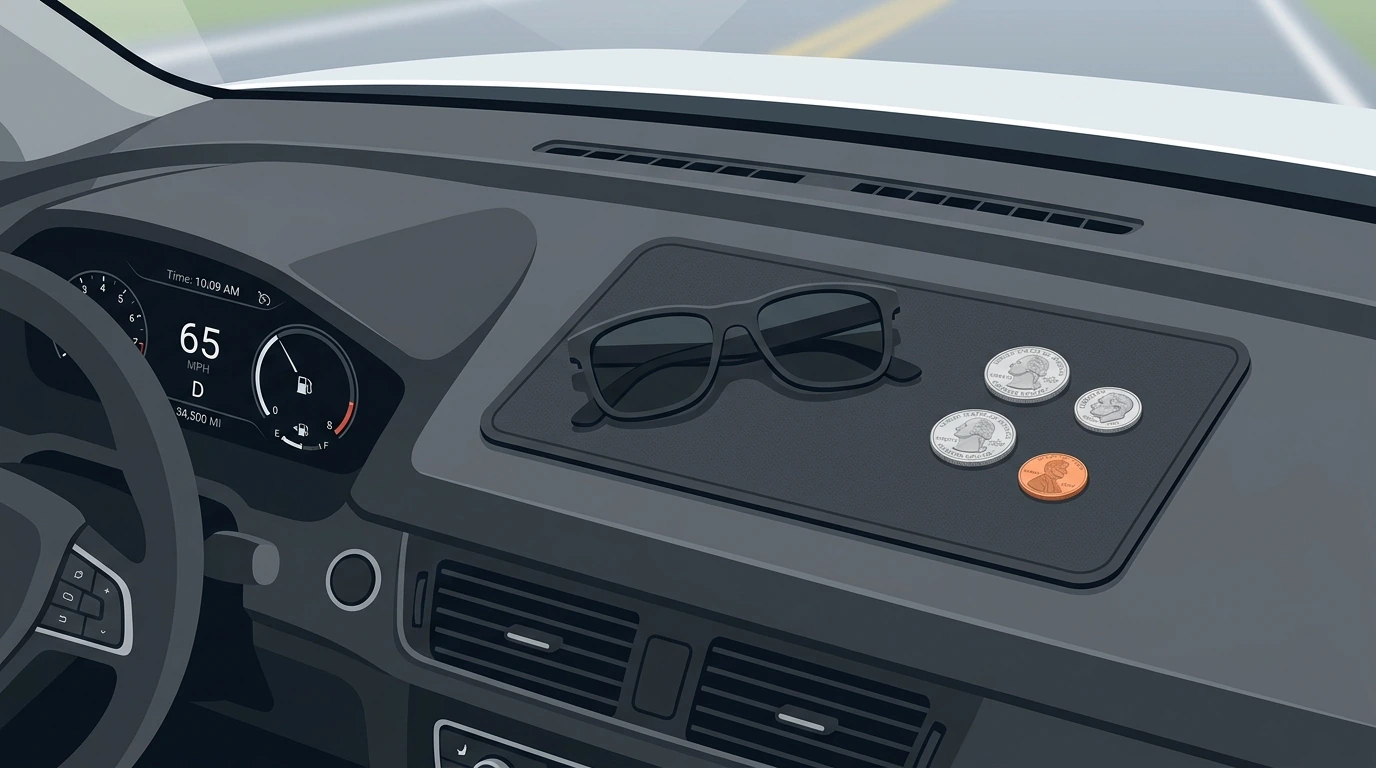
Keeping essential items like sunglasses, your phone, or loose change secure on your car's dashboard without them sliding around or leaving a sticky mess can be a persistent challenge for many drivers. Modern non-slip dashboard mats offer an elegant solution, designed to provide superior grip for your belongings while ensuring your dashboard remains pristine and residue-free.
Understanding the Mechanics of Non-Adhesive Grip
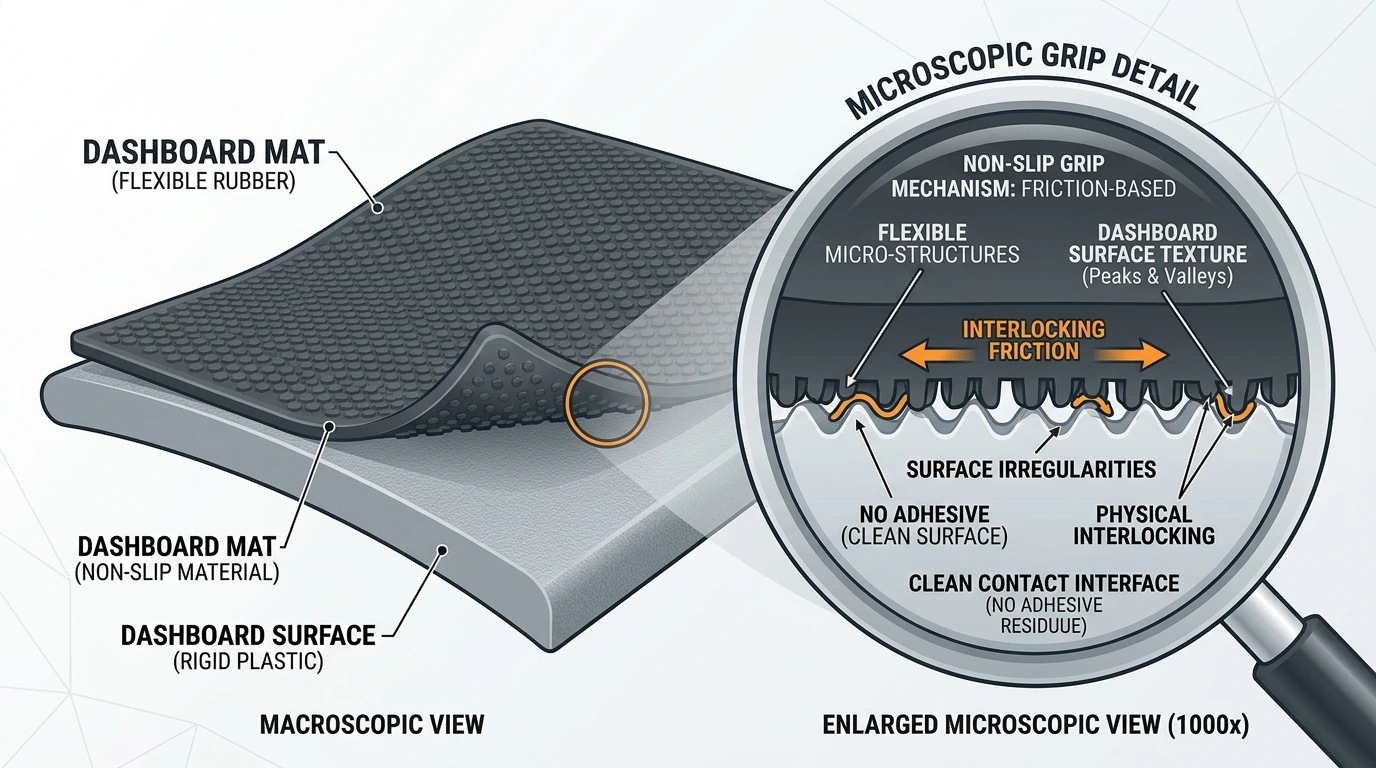
For years, drivers struggled with various makeshift solutions, from textured fabric pads to double-sided tape, often leading to items still shifting or, worse, leaving unsightly adhesive residue baked onto the dashboard by the sun. The evolution of non-slip dashboard mats has largely overcome these issues by leveraging advanced material science to create a strong, temporary bond through friction, not stickiness.
The core principle relies on materials with a high coefficient of friction and a unique molecular structure that allows them to conform slightly to both the item placed on them and the dashboard surface. These materials, typically advanced silicone or specialized PVC gel compounds, possess millions of microscopic suction cups or a highly textured, tacky surface at a molecular level. This creates a powerful static friction that prevents items from sliding, even during sharp turns or sudden stops, without the use of any glues or chemical adhesives.
Material Composition and Long-Term Residue Prevention
The choice of material is paramount when selecting a non-slip dashboard mat, directly influencing its performance, durability, and most importantly, its ability to remain residue-free over time. High-quality silicone and specific PVC gel formulations are widely recognized for their excellent non-slip properties and chemical stability.
- Silicone: Known for its exceptional heat resistance and flexibility, silicone mats maintain their integrity across a broad temperature range, from freezing conditions to the intense heat of a sun-baked dashboard. Pure silicone is chemically inert, meaning it does not react with dashboard materials or degrade into a sticky substance. Its porous-free surface also resists dust and grime buildup, contributing to its residue-free performance.
- PVC Gel: Certain PVC gel compounds are engineered to be highly elastic and tacky, providing strong grip. However, it is crucial to differentiate between high-grade, stabilized PVC gels and lower-quality variants. Inferior PVC gels can plasticize over time, especially when exposed to prolonged UV radiation and high temperatures, potentially leaching chemicals that can leave a sticky film or even stain the dashboard surface. Reputable manufacturers use automotive-grade PVC gels that are UV-stabilized and formulated to prevent such degradation.
PRO TIP: Material Verification
Always verify the stated material composition. Mats labeled simply as "gel pads" without specifying silicone or a high-grade PVC blend might be made from cheaper, less stable compounds prone to degradation and residue. Look for explicit mentions of "100% pure silicone" or "automotive-grade, UV-stabilized PVC gel" in product specifications.
Practical Integration and Maintenance
Beyond material science, the practical application of these mats in daily driving scenarios involves several considerations. Their design often allows for easy trimming to fit specific dashboard contours, making them highly adaptable. Many mats feature raised edges or compartments to further secure items, preventing them from rolling off the mat itself.
Maintaining the mat's non-slip properties is straightforward. Over time, dust, lint, and oils from hands can accumulate on the surface, reducing its tackiness. A simple rinse under warm water with a mild soap, followed by air drying, is typically sufficient to restore its original grip. This easy cleaning process ensures the mat continues to perform effectively without needing harsh chemicals that could compromise its material integrity or dashboard finish.
Comparative Overview of Common Mat Materials
Understanding the distinctions between popular non-slip mat materials can help in making an informed choice:
| Feature | 100% Silicone | Automotive-Grade PVC Gel | General Rubberized Polymer |
|---|---|---|---|
| Grip Strength | Excellent, consistent across temperatures | Very good, may slightly reduce in extreme cold/heat | Good, can vary with surface texture |
| Residue Risk | Virtually zero | Extremely low if high-grade and UV-stabilized | Low, but some cheaper variants can leave marks |
| Durability | Excellent, highly resistant to UV and ozone | Very good, especially with UV stabilizers | Good, but can become brittle or crack over time |
| Temperature Resistance | Superior (-40°F to 450°F / -40°C to 232°C) | Very good (0°F to 200°F / -18°C to 93°C) | Moderate (10°F to 150°F / -12°C to 65°C) |
Frequently Asked Questions About Dashboard Mats
- Will these mats work on all dashboard textures?
Most non-slip mats are designed to adhere effectively to a wide range of dashboard textures, from smooth to slightly textured surfaces. However, extremely porous or heavily textured dashboards might offer slightly less grip compared to smoother finishes. - How often should I clean my non-slip mat?
Cleaning frequency depends on usage and environmental factors. For daily drivers, rinsing the mat every 2-4 weeks or whenever you notice a reduction in tackiness is generally recommended. - Can these mats withstand extreme heat from direct sunlight?
High-quality silicone mats are exceptionally heat-resistant and will not melt or deform under typical dashboard temperatures, even in direct summer sun. Automotive-grade PVC gels are also designed for high heat, but pure silicone generally offers a wider temperature tolerance. - What if my mat starts to lose its grip?
A loss of grip is almost always due to surface contamination (dust, oils). A thorough cleaning with warm water and mild soap, followed by air drying, should fully restore its non-slip properties.
Selecting the Right Mat for Secure, Residue-Free Storage
Choosing a non-slip dashboard mat that genuinely leaves no sticky residue hinges on understanding the materials and their properties. Prioritizing mats made from 100% pure silicone or certified automotive-grade, UV-stabilized PVC gel will provide the most reliable performance. These advanced materials ensure your sunglasses, coins, and other small items remain securely in place, even on the most dynamic drives, all while preserving the pristine condition of your vehicle's interior. By investing in a quality mat and adhering to simple maintenance, drivers can enjoy a clutter-free and damage-free dashboard for years to come.


Comments
Post a Comment