
Keeping your car's interior clean often feels like a losing battle, especially when small items like coins, keys, or even a rogue French fry vanish into that abyss between your seat and the center console. Car seat gap catchers are designed to solve this exact problem, offering a simple barrier against the relentless pull of gravity on your valuables and crumbs.
Many drivers overlook the specific design and material choices that make some gap catchers far more effective than others. Understanding these details is key to picking a solution that genuinely keeps your car tidier and your sanity intact.

The Honest Verdict on Seat Gap Catchers
Car seat gap catchers are a practical accessory for almost any vehicle owner, particularly those who value a clean interior, frequently eat in their car, or transport children. They excel at preventing small items from disappearing into hard-to-reach crevices, saving you from frustrating searches and sticky messes. Drivers who rarely drop items or prefer an absolutely minimalist interior might find them unnecessary.
The biggest trade-off is often the universal fit claim; while many are designed to be adaptable, a truly seamless, custom-like fit is rare and can impact aesthetics or seat adjustment.
What These Gap Fillers Bring to Your Cabin
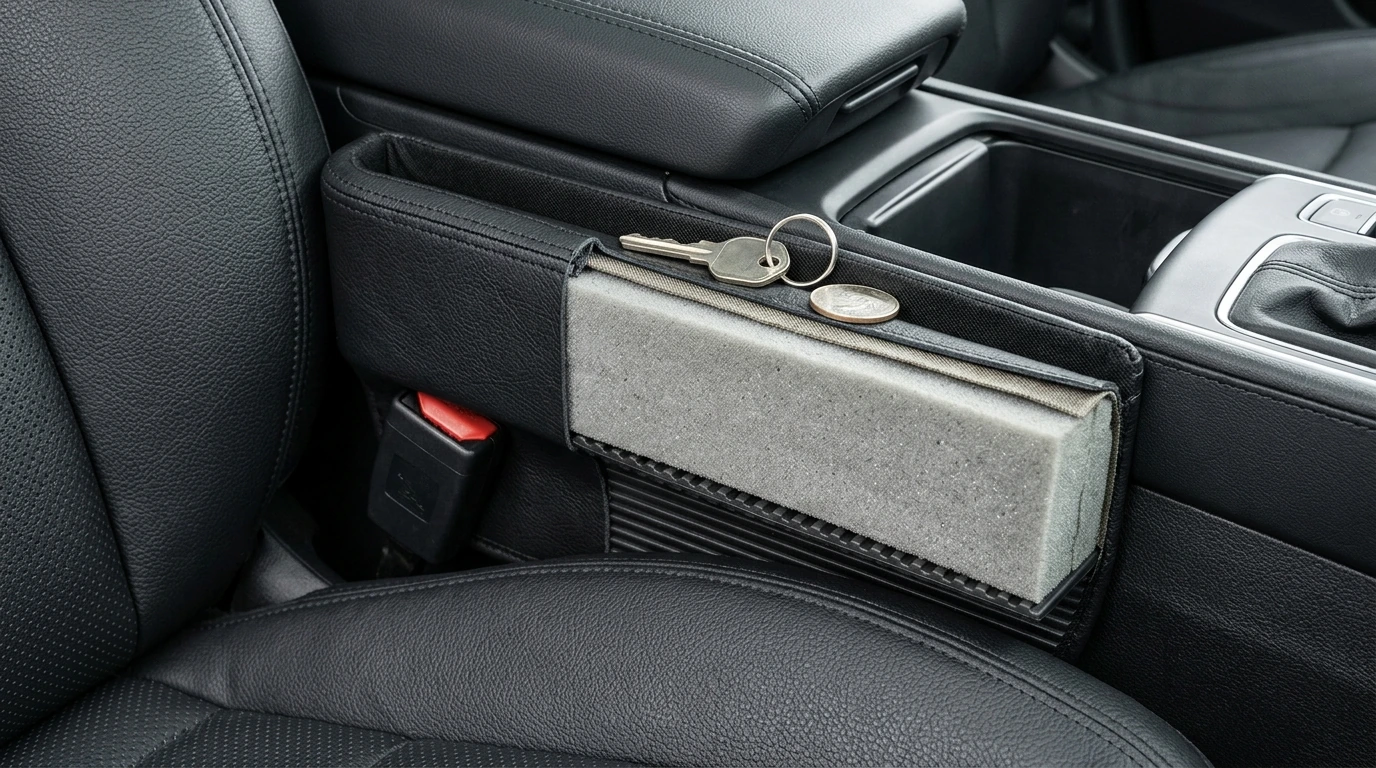
At their core, car seat gap catchers are simple devices: flexible barriers that plug the space between your car's front seats and the center console. Unlike older, less refined solutions that were often just generic foam strips, modern gap catchers have evolved. Many now feature thoughtful designs that integrate storage pockets, offer more durable materials, and aim for a more aesthetically pleasing blend with the car's interior.
The primary difference from basic improvised solutions (like a rolled-up towel) lies in their semi-rigid structure and intended longevity, providing a more permanent and effective block against lost items.
Key Design and Material Insights
Choosing the right gap catcher means looking beyond the basic concept. Here are the core specifications and material choices that dictate performance and user satisfaction.
Material: High-Density Foam Core
What It Means: A robust, high-density foam core provides structural integrity, preventing the catcher from collapsing or deforming under light pressure. This material choice often indicates better longevity and consistent gap coverage compared to simple fabric sleeves. It effectively creates a solid, lasting barrier.
Verdict: Plus. This construction offers superior durability and consistent gap coverage. It resists compression over time. Who Feels It: Drivers who frequently adjust their seats or have active passengers, as well as those who want a long-term solution.
Outer Fabric: PU Leather or Neoprene
What It Means: The exterior material determines both the look and ease of cleaning. PU leather offers a more premium aesthetic, often blending well with modern car interiors, and is generally easy to wipe clean. Neoprene, a synthetic rubber, provides excellent water resistance and flexibility, making it durable against spills and constant friction.
Verdict: Neutral to Plus. PU leather looks good but can show wear; neoprene is practical but less premium. Who Feels It: Those prioritizing aesthetics will prefer PU leather; those focused on spill protection and ruggedness will lean towards neoprene.
Attachment Method: Seat Belt Loop or Friction Fit
What It Means: Some gap catchers feature a loop that slides over the seat belt buckle, anchoring the catcher in place. Others rely solely on a friction fit within the gap. The seat belt loop provides a more secure, stable installation, preventing the catcher from shifting or sliding out of position during driving or seat adjustments.
Verdict: Plus (for seat belt loop). A secure attachment significantly improves reliability. Friction-fit models can be less stable. Who Feels It: Drivers who want a set-and-forget solution and those who frequently move their seats.
Integrated Storage Pockets
What It Means: Many designs incorporate small pockets or slots on the side facing the driver or passenger. These are useful for holding small items like phones, pens, or coins, adding functionality beyond just blocking the gap. The size and depth of these pockets vary significantly.
Verdict: Plus. Adds practical utility and helps declutter the console area. Who Feels It: Drivers who need extra storage for small, frequently accessed items and those who like a highly organized cabin.
Real-World Scenarios and Performance
Based on their typical construction, car seat gap catchers generally perform well in several common situations.
- The Daily Commute & Coffee Spills: For drivers who grab coffee on their way to work, a gap catcher with a water-resistant outer fabric (like neoprene) is highly effective. If a few drops escape the cup holder, the catcher should prevent them from soaking into the carpet, making cleanup much simpler. Models with a secure seat belt loop will also stay in place, even with repeated seat adjustments.
- Family Road Trips & Kid Clutter: During long drives with children, snack crumbs, small toys, and loose change are inevitable. A gap catcher with a dense foam core will consistently block these items from falling into the abyss. Integrated storage pockets become invaluable for stashing crayons or small snacks, keeping the main console clear and accessible for the driver.
- Frequent Ride-Sharing or Passenger Use: If your car sees many different passengers, especially those who might drop their keys or phone, a durable gap catcher is a wise investment. The high-density foam ensures it withstands repeated pressure and movement without deforming, maintaining its protective barrier regardless of who is in the seat.
Advantages and Considerations
Here’s a balanced look at what these accessories offer and where they might fall short.
Key Advantages
- Stops Lost Items: The high-density foam core and snug fit effectively block coins, keys, phones, and food from falling into the seat gap, saving time and frustration.
- Simplifies Cleaning: With a water-resistant outer fabric, spills and crumbs are contained on the catcher itself, making them easy to wipe clean rather than requiring deep vacuuming of the seat crevices.
- Adds Convenient Storage: Many models include integrated pockets, providing readily accessible spots for small items like charging cables, pens, or a wallet, reducing console clutter.
- Maintains Resale Value: By preventing crumbs and debris from accumulating in hard-to-clean areas, these catchers help keep your car's interior looking newer for longer, which can be beneficial for resale.
Potential Drawbacks
- Variable Fit: Despite claims of universal fit, the exact contour of the seat and console varies between vehicle models. This can lead to some gap catchers not sitting perfectly flush, potentially leaving small gaps or looking slightly awkward.
- Can Impede Seat Adjustment: For designs that are particularly bulky or rely heavily on friction, they might slightly interfere with the smooth forward and backward movement of the seat, especially for those who frequently adjust their driving position.
- Aesthetic Mismatch: While many come in neutral colors, the outer fabric (e.g., a specific PU leather texture) might not perfectly match your car's existing interior materials, which can be a minor visual distraction for some.
- Durability of Pockets: The integrated storage pockets, while useful, can sometimes be made of thinner material than the main body, potentially tearing or stretching over time with heavy use.
Alternatives to Consider
While gap catchers are effective, other solutions exist depending on your priority.
- Dedicated Console Organizers: These fit directly into or on top of your center console, providing structured compartments for larger items. They are a better pick if you need significant, organized storage for diverse items rather than just blocking the gap.
- Seat-Back Organizers: Hanging from the back of the front seats, these are ideal for passengers, especially children, offering multiple pockets for toys, tablets, and drinks. They won't prevent items from falling between the seats, but they excel at general cabin organization.
- Custom-Fit Trim Pieces: For some specific car models, aftermarket companies offer custom-molded plastic or rubber trim pieces designed to perfectly fill the gap. These often provide the most seamless look and secure fit, but they are vehicle-specific and usually more expensive.
Value and Buying Advice
Car seat gap catchers represent a high-value accessory for most drivers, offering a significant return in convenience and cleanliness for a relatively small investment. Their ability to prevent lost items and simplify interior maintenance makes them a worthwhile addition.
When considering a purchase, prioritize models that specify a high-density foam core and a secure attachment method like a seat belt loop. Always check the current price at the official store or trusted retailers, as prices can vary by brand, material, and region. Look for user reviews from owners of similar vehicle types to gauge the real-world fit.
Final Recommendation
Buy if: You frequently drop small items, eat in your car, transport children, or simply want a cleaner, more organized interior without constant retrieval efforts.
Skip if: You are an extremely meticulous driver who rarely drops anything, prefer an absolutely unadorned interior, or your car's unique seat-to-console gap makes a universal fit impractical.
Frequently Asked Questions
Do car seat gap catchers interfere with seat belts?
Most well-designed gap catchers, especially those with a seat belt loop, are engineered to allow full, unimpeded access to your seat belt buckle. Ensure the design does not obstruct the buckle before purchase.
Are these catchers easy to clean?
Yes, many models feature materials like PU leather or neoprene that can be easily wiped down with a damp cloth. This makes cleaning up spills or crumbs much simpler than trying to clean deep into the seat crevices.
Can they be used in any car?
While most are marketed as "universal fit," the effectiveness can vary. They are generally designed for cars with a standard gap between the seat and console. Vehicles with very narrow or unusually shaped gaps might experience a less perfect fit.
How long do car seat gap catchers last?
The lifespan depends heavily on the quality of materials. Models with a high-density foam core and durable outer fabric can last several years, resisting compression and wear effectively.
This review is compiled from official product specifications and widely reported user feedback rather than personal lab testing. Specific product details and performance can vary by region or variant.


Comments
Post a Comment