
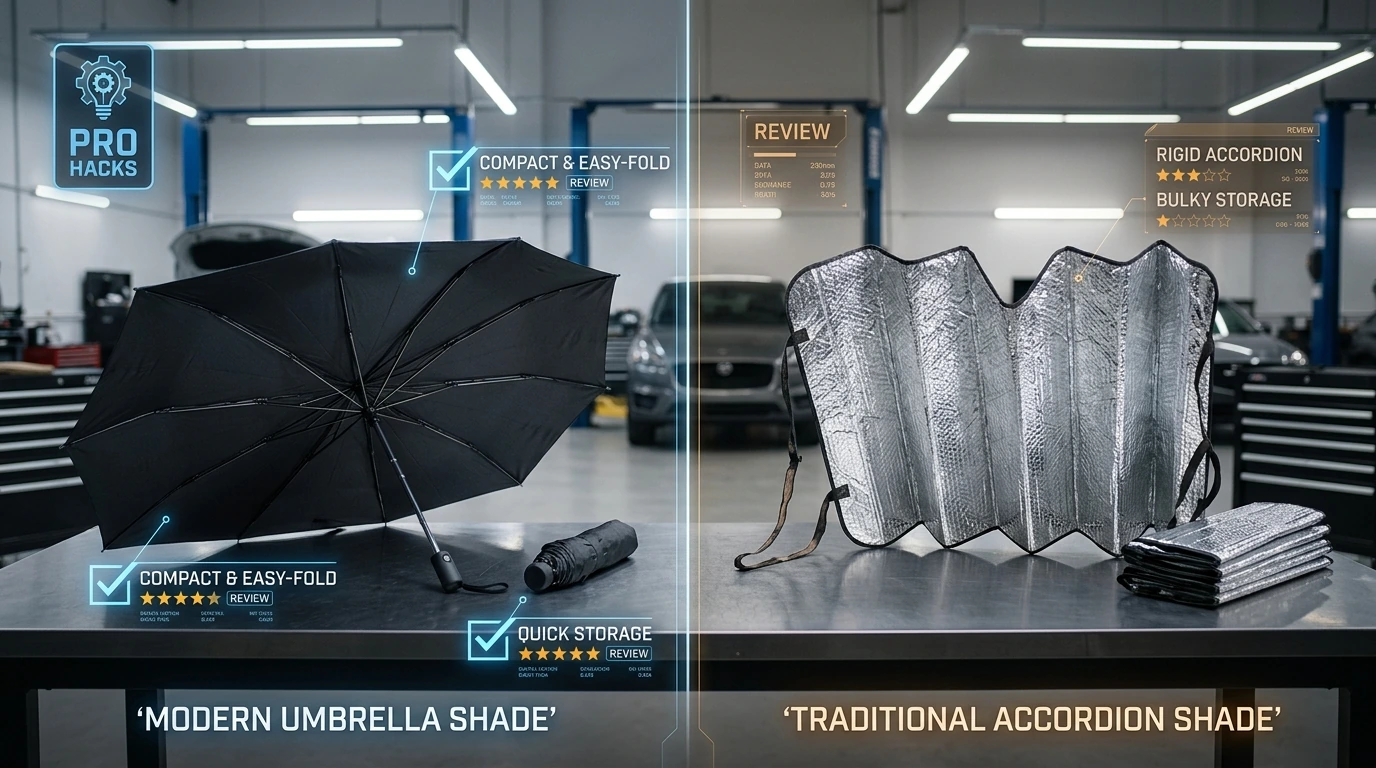
Summers bring intense heat, transforming parked vehicles into sweltering ovens. The sun's relentless rays not only make the cabin uncomfortable but also accelerate the degradation of interior materials like dashboards, upholstery, and electronics. Selecting an effective windshield sun shade is a simple yet impactful way to mitigate these effects, preserving your car's interior and ensuring a more pleasant return to your vehicle. The market primarily offers two popular styles: the innovative easy-folding umbrella design and the long-standing traditional accordion-fold variant. Each offers distinct advantages and trade-offs in terms of convenience, coverage, and durability.
Key Takeaways
- Umbrella Shades: Offer superior compactness and easier storage, often providing a more precise fit around the rearview mirror.
- Accordion Shades: Generally more rigid, offering robust coverage and often a lower initial cost, but with a larger folded footprint.
- Installation & Removal: Umbrella styles typically deploy and retract quicker, while accordion types require more manipulation to fold flat.
- Durability: Both types can offer good longevity, with material quality and construction being the primary determinants.
Umbrella Style Sun Shades: Design and Advantages
The umbrella-style car sun shade has gained traction for its ingenious design, mirroring the mechanics of a standard rain umbrella. It features a central shaft and flexible ribs that expand to cover the windshield and collapse compactly when not in use. This design typically allows for a very snug fit against the windshield, often with a cut-out or flexible area around the rearview mirror to maximize coverage and stability. The primary material is usually a reflective fabric, sometimes multi-layered, designed to bounce sunlight away from the car's interior.
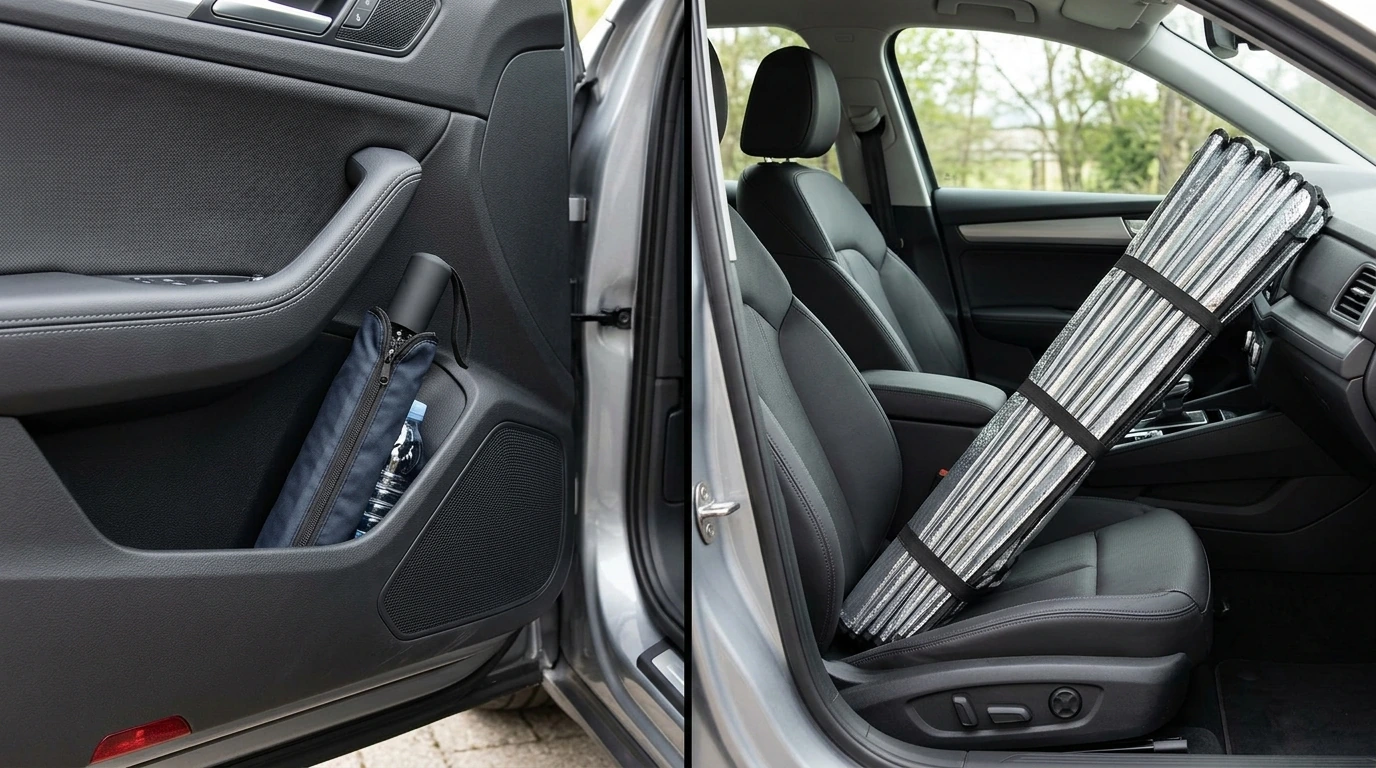
A significant advantage of the umbrella design is its unparalleled ease of storage. Once collapsed, it reduces to a cylindrical shape that can often fit into a door pocket, glove compartment, or center console, minimizing clutter within the cabin. Installation is typically a quick process: simply open it like an umbrella and position it against the windshield. Its flexibility also means it can often adapt better to slightly curved windshields compared to more rigid alternatives.
Accordion Fold Sunscreens: Enduring Design and Performance
The traditional accordion-fold sun shade has been a staple for decades, recognized by its familiar hinged panel construction. These shades typically consist of multiple panels, often made from a stiff cardboard-like material or foam core laminated with a reflective surface, joined by flexible creases that allow them to fold flat. When deployed, they span the width of the windshield, held in place by the sun visors. Their rigidity provides a solid barrier against the sun, and their broad surface area ensures comprehensive coverage for many vehicle models.
Accordion shades are generally robust and can withstand repeated use. Their simple construction often translates to a lower manufacturing cost, making them an accessible option for many drivers. While they do fold, their inherent stiffness means they maintain a larger footprint even when collapsed. They typically need to be stored on the back seat, passenger seat, or in the trunk, as they rarely fit into smaller car storage compartments. Deployment involves unfolding the panels and securing them with the car's visors, a process that can sometimes be a bit cumbersome, especially in a cramped interior.
Head-to-Head: Installation, Coverage, and Longevity
When evaluating these two popular sun shade types, several practical aspects stand out. Installation speed and ease are often top concerns for daily drivers. The umbrella shade typically deploys with a single motion, much like opening an umbrella, and can be quickly adjusted. Accordion shades, conversely, require unfolding each panel and then positioning them, which can take slightly longer. For removal, the umbrella style collapses just as quickly, whereas the accordion shade needs to be carefully folded along its creases to avoid damage.
Coverage is another critical factor. Many umbrella shades are designed to offer a very close fit, almost custom-like, often extending right to the edges of the windshield and snugly around the rearview mirror. Accordion shades, while offering broad coverage, can sometimes leave small gaps around the edges or mirror, depending on the specific vehicle's windshield shape and the shade's generic sizing. However, their rigidity can make them feel more substantial in blocking light.
Regarding longevity, both styles depend heavily on material quality. High-quality reflective fabrics used in umbrella shades can last for years without significant degradation. The flexible ribs, if made from durable materials, also hold up well. Accordion shades, particularly those with a foam or cardboard core, can be prone to creasing, bending, or delamination over time, especially with frequent folding and exposure to extreme temperatures. However, well-constructed accordion shades with robust panel materials can also offer extended service life.
| Feature | Umbrella Style Sun Shade | Accordion Fold Sun Shade |
|---|---|---|
| Installation Speed | Very quick, one-motion deployment. | Moderate, requires unfolding multiple panels. |
| Storage Footprint | Extremely compact, fits in door pockets/glove box. | Larger, typically stored on seats or in trunk. |
| Windshield Coverage | Often a snug, custom-like fit with minimal gaps. | Broad coverage, but can leave small edge gaps. |
| Material Durability | Fabric and flexible ribs are generally resilient. | Rigid panels can crease or delaminate over time. |
| Interior Fit | Flexible, adapts well to varying windshield curves. | Rigid, less adaptable to extreme windshield curves. |
| Price Range | Typically mid to higher range. | Often lower to mid range. |
Selecting Your Ideal Shade: User Profiles and Recommendations
Choosing between an umbrella-style and an accordion-fold sun shade ultimately depends on your priorities and daily habits.
Who Should Choose an Umbrella Style Sun Shade?
- Commuters and frequent parkers: If you install and remove your sun shade multiple times a day, the quick deployment and compact storage of an umbrella style will save you time and hassle.
- Drivers with limited interior storage: For smaller vehicles or those who prefer a clutter-free cabin, the ability to store the shade in a door pocket or glove box is a significant benefit.
- Owners of luxury or newer vehicles: If maintaining a pristine interior and a sleek aesthetic is important, the precise fit and modern design of many umbrella shades are appealing.
- Individuals seeking maximum coverage: For windshields with complex curves or large rearview mirror housings, an umbrella shade often provides a more complete block from the sun.
Who Should Choose an Accordion Fold Sun Shade?
- Budget-conscious buyers: Accordion shades are often more affordable upfront, offering solid sun protection without a significant investment.
- Drivers who park for extended periods: If your car is parked for long hours and you don't need to quickly deploy/stow the shade, the slightly longer installation time is less of a concern.
- Owners of older vehicles or work trucks: Where interior aesthetics are less of a priority and robust, straightforward functionality is key, an accordion shade provides reliable service.
- Those prioritizing rigid sun blocking: The firm panels of an accordion shade can sometimes feel more substantial in their ability to block light, especially in very bright conditions.
Final Verdict: Optimizing Your Vehicle's Interior Comfort
Both umbrella-style and accordion-fold sun shades effectively reduce interior temperatures and protect your car's cabin from sun damage. The choice boils down to a balance of convenience, storage, and budget.
For those prioritizing ultimate convenience, compact storage, and a precise fit, the umbrella-style sun shade represents a modern evolution in car care accessories. Its quick deployment and minimal footprint make it an ideal choice for daily drivers and anyone who values efficiency.
Conversely, for drivers seeking a straightforward, robust sun blocking solution at a potentially lower price point, the traditional accordion-fold sun shade remains a perfectly viable option. It delivers reliable performance, provided you have adequate space for its larger folded dimensions.
Ultimately, assessing your personal parking habits, vehicle interior space, and budget will guide you to the sun shade that best serves your needs, ensuring a cooler, more protected car interior for years to come.


Comments
Post a Comment