
Fine airborne particulates, pollen, and dried moisture droplets inevitably settle into the intricate louvers and deep air channels of automotive dashboard vents. Standard detailing brushes often end up pushing debris farther into the HVAC ductwork or leaving lint behind on textured plastic housings. Cleaning slimes—technically known as viscoelastic polymer gels—offer a unique tactile solution by conforming around tight vent geometries without scratch hazards or liquid run-off.
Pre-Cleaning Assembly and Polymer Temperature Check
Before introducing any cleaning compound into delicate climate control assemblies, setting up the proper ambient environment prevents gel breakdown and internal mess. Viscoelastic gels rely on specific cross-linked polymers, typically guar gum or synthetic polyoxymethylene derivatives, which soften significantly when exposed to elevated cabin temperatures.
Gather the following essentials before beginning:
- Viscoelastic Cleaning Compound: Fresh or well-stored automotive gel with firm elasticity.
- Dry Microfiber Cloth: Ultra-fine 300+ GSM towel for initial outer wiper passes.
- Flashlight or Penlight: To inspect the deep internal duct channels behind the directional vanes.
- Infrared Thermometer or Hand Check: Ensuring dashboard plastic surface temperature is below 85°F (29°C).
Never apply cleaning gel to a vehicle that has been parked in direct summer sunlight or has heated HVAC ductwork running. High heat lowers the gel's surface tension, causing the polymer to liquefy and tear off inside internal actuator gears, leaving permanent gummy residues behind the louvers.
Step-by-Step Procedure for Extracting Deep Vent Debris
Following a precise physical technique ensures deep contamination extraction while eliminating the risk of leaving torn gel fragments trapped inside the ventilation ductwork.
Step 1: System Power Down and Initial Outer Wipe
Switch off the vehicle's ignition and ensure the climate control fan is completely off. Cleaning vents with forced air running creates positive pressure that can blow loose gel particles deeper into the evaporator housing. Use a dry microfiber cloth to wipe the outer frame and forward edges of the vent slats to remove heavy top dust.
Step 2: Knead and Temper the Cleaning Slime
Remove the gel matrix from its sealed container with clean, dry hands. Work the mass between your palms for 30 to 45 seconds. This mechanical working distributes internal moisture evenly, raises tensile cohesion, and ensures the gel forms a unified surface bond rather than sticking to your fingers or dash trim.
Step 3: Controlled Press-and-Pull Mechanical Application
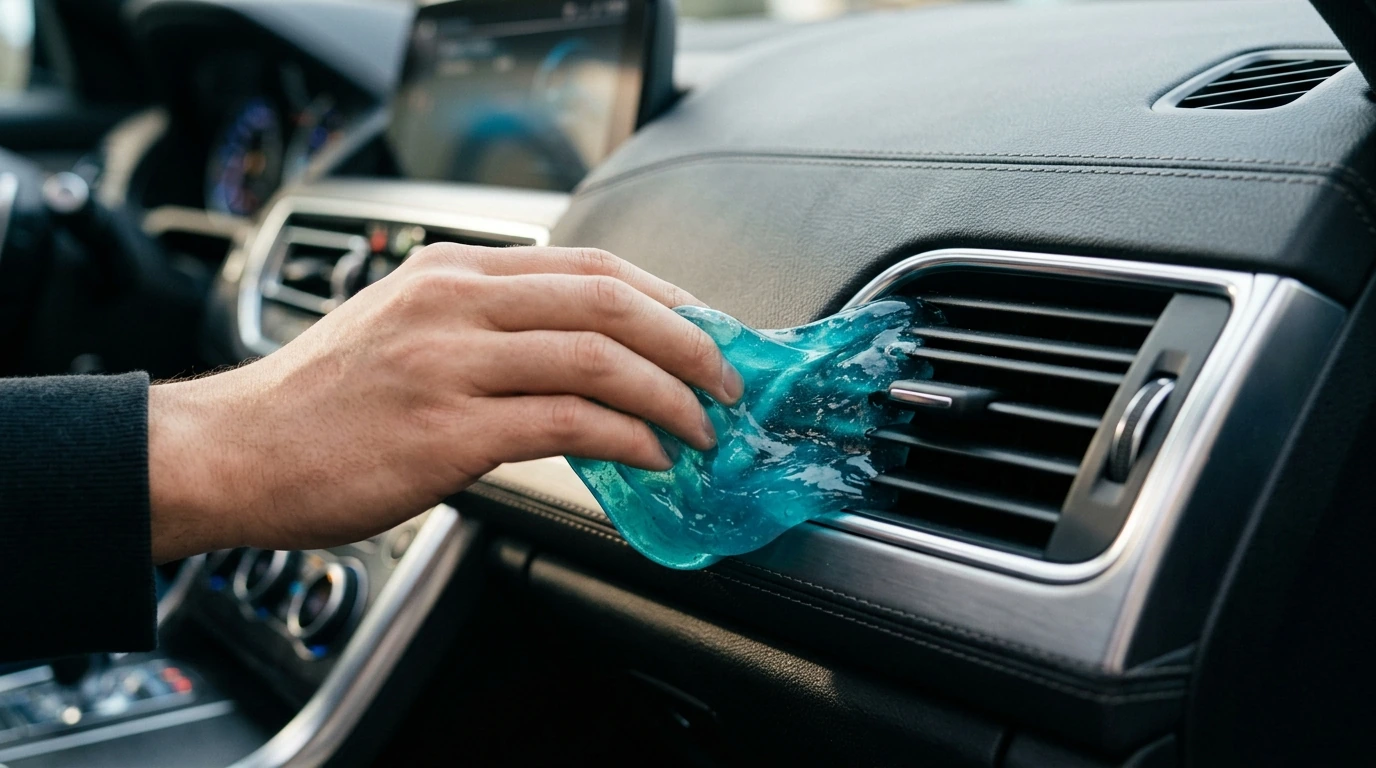
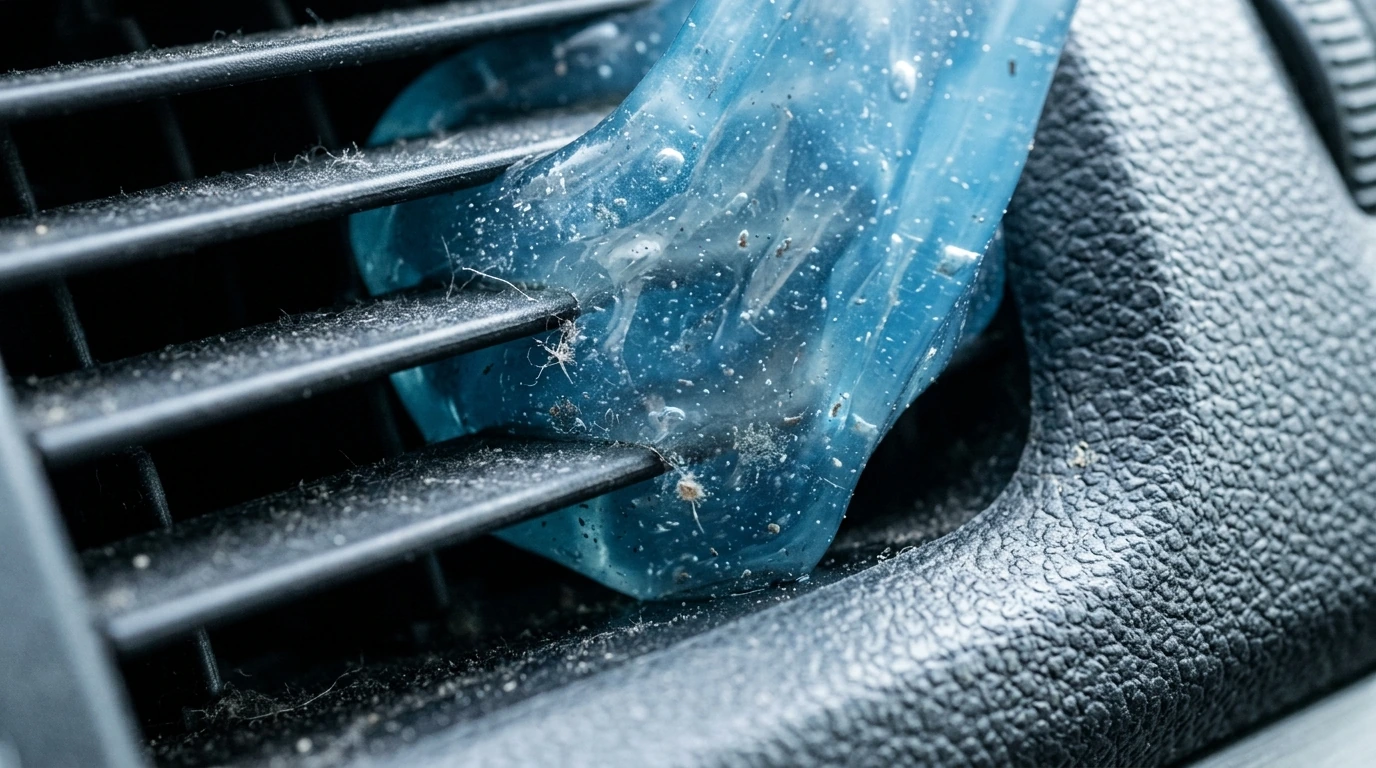
Shape the gel into a smooth oval roll roughly the length of the air vent array. Position the roll directly over the vent louvers and apply light, uniform pressure across the mass using the flat portion of your palm. Allow the gel to sink between the vertical and horizontal directional fins under mild pressure.
Do not force or jam the mass deep past the physical stops of the louver mechanism. Hold the gel in place for roughly 2 to 3 seconds—just long enough for the soft matrix to surround dust particles—then peel the mass away in one continuous, swift pulling motion. The high cohesive strength of the polymer will pull the mass out clean along with trapped dust, hair, and grit.
Step 4: Surface Folding and Recyclic Passes
Examine the extracted face of the gel. Fold the dirt-laden surface inward toward the center of the ball and knead briefly to expose a fresh, clean polymer outer layer. Repeat the press-and-pull technique across adjacent vent sections, working from top to bottom.
Evaluating Vent Cleaning Methods across Key Metrics
Understanding how gel cleaners compare against traditional detailing gear helps select the right tool for specific cabin interior textures and vent geometries.
| Tool Type | Access Depth | Scratch Risk | Residue Hazard | Ideal Scenario |
|---|---|---|---|---|
| Viscoelastic Slime | Medium to Deep | Zero Risk | Moderate (if overheated) | Intricate louvers, soft-touch trim, coin trays |
| Boar Hair Brushes | Shallow to Medium | Low to Moderate | Low (shedding bristles) | Dry surface dusting, textured dashboards |
| Foam Swabs | Deep Specific Points | Zero Risk | Zero Risk | Heavy grime spots, liquid cleaner application |
| Compressed Air | Very Deep | Zero Risk | High (airborne redistribution) | Blowing out hidden ductwork before interior vacuuming |
Avoidable Execution Mistakes That Cause Gel Breakup
While soft gel compounds are user-friendly, specific errors during application can lead to frustrating cleanups inside delicate instrument panels:
- Pressing Over Sharp Internal Switches: Avoid pressing soft gels over vent thumbwheels that feature sharp plastic edge flash or exposed split pins. Sharp plastic can slice the polymer matrix, leaving severed gel caps jammed inside the gear mechanism.
- Applying to Wet or Oily Surfaces: Pre-existing silicone dressings or spray shines disrupt the gel's ability to grab dust and can cause the compound to leave a greasy film over dark matte plastics. Ensure vents are dry before gel contact.
- Overworking Exhausted Gels: Cleaning slimes have a finite dust-absorption capacity. Once the compound loses its transparency and turns dark grey or feels sticky rather than elastic, discard it. Over-saturated gel breaks apart easily under tension.
Post-Cleaning Inspection and Storage Protocol
After completing all interior vents, perform a quick visual inspection using a narrow penlight angled through the louver slats. Verify that no gel residue remains stuck to the rear louver pivots or internal airflow directional flaps.
To preserve the cleaning compound for future maintenance cycles, wash your hands thoroughly before handling it for storage. Seal the gel tightly inside its original airtight container or a heavy-duty ziplock bag. Store the container in a cool, dark location such as under a seat or in a home climate-controlled space, keeping it out of direct sunlight and glove compartments that reach extreme summer temperatures.
Frequently Asked Questions
Can soft cleaning gels damage delicate piano-black dash trim?
No, high-quality viscoelastic cleaning gels are non-abrasive and will not scratch delicate high-gloss or piano-black interior plastics. However, ensure the trim is free of hard grit particles before pressing the gel down to avoid dragging loose dirt across the surface.
How do I remove gel residue if it gets stuck inside a vent slat?
If small gel fragments tear off, do not use sharp metal picks to dig them out. Take a larger piece of fresh, clean gel compound and press it firmly against the stuck fragment. The cohesive chemical bond between the gel pieces will cause the fragment to stick to the main ball and pull out cleanly.
How many times can a single tub of soft cleaning gel be reused?
A standard container of cleaning slime can typically be reused between 15 and 30 times, depending on the severity of dust accumulation. Once the gel shifts to an opaque dark color, loses its elastic stretch, or leaves a moist tacky feeling on surfaces, it should be replaced.


Comments
Post a Comment