
A motorcycle kickstand will sink on soft ground.
Key Takeaways
- Kickstand pads are the simplest, most effective way to prevent sinking on unstable surfaces.
- Material and footprint size are critical for durability and actual weight distribution.
- Always consider how easily a pad can be stored and accessed on your motorcycle.
- Even on seemingly firm ground, a pad can protect against unexpected softening or heat.
Motorcycle kickstand pads are simple, inexpensive accessories designed to provide a wider, more stable base for your bike's kickstand. They are best suited for any rider who frequently parks on unpaved surfaces like dirt, gravel, grass, or even hot asphalt where a kickstand can sink or melt into the surface. Riders who stick exclusively to perfectly flat, firm concrete might find them less essential, but even then, a pad can offer peace of mind. The biggest trade-off is remembering to carry and deploy it every time you park.
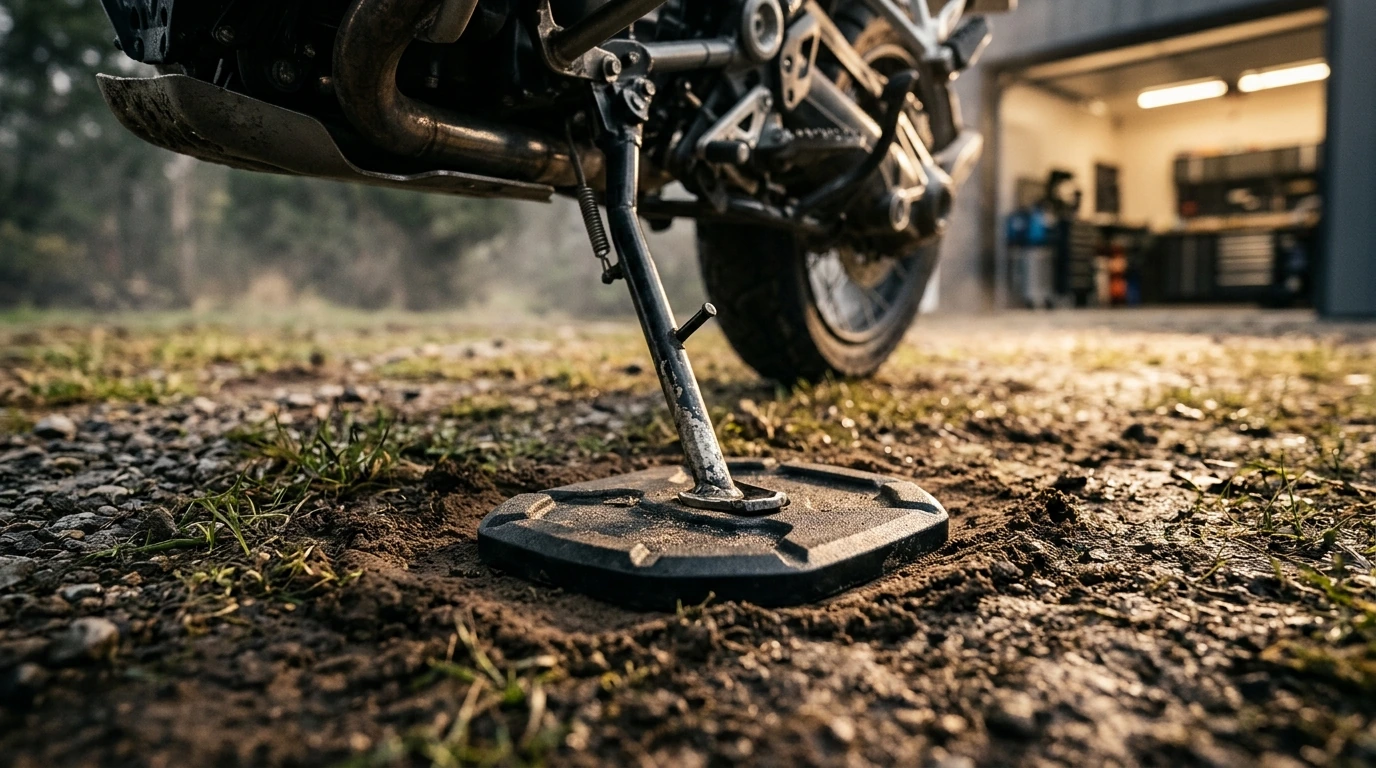
The Simple Science of Kickstand Stability
At its core, a kickstand pad is a surface area extender. It takes the concentrated pressure from the small tip of your motorcycle's kickstand and distributes it over a much larger area. This significantly reduces the pounds per square inch (PSI) exerted on the ground, preventing the kickstand from sinking. Compared to improvising with a flattened soda can or a random rock, a purpose-built pad offers consistent dimensions, material integrity, and often anti-slip features for more reliable performance.
Key Characteristics of Effective Kickstand Pads
Choosing the right kickstand pad involves looking beyond just a flat piece of material. Several design and material specifications dictate how well it will perform under various conditions.
| Spec/Composition | What It Means | Verdict | Who Feels It |
|---|---|---|---|
| Material: High-density ABS Plastic (e.g., 5mm thick) | Offers good rigidity and impact resistance, resisting cracking under load. It's generally lightweight and weather-resistant. | Plus | Every rider seeking a durable, lightweight, and affordable solution. |
| Footprint Area: Typically 3-4 inches diameter/side | Larger surface area distributes weight more effectively, crucial for very soft ground. Smaller pads are more portable but less effective. | Plus (for larger) / Minus (for smaller) | Adventure riders, heavy touring bikes, or anyone parking on very loose terrain. |
| Anti-Slip Surface: Textured top and bottom | Grooves or dimples on the top prevent the kickstand from sliding off. Textured bottom grips the ground, reducing movement. | Plus | All riders, especially those on uneven slopes or windy days, enhancing overall stability. |
| Integrated Lanyard Hole: Small hole for a string or clip | Allows easy attachment to the bike or gear, preventing loss and making deployment quicker. | Plus | Commuters, touring riders, or anyone who values convenience and anti-loss features. |
Real-World Parking Scenarios
Consider how a good kickstand pad performs in common situations:
- Parking on a Gravel Lot: Without a pad, the kickstand's narrow foot can easily push aside the loose gravel, causing the bike to lean precariously or even tip over. A pad with a generous footprint (e.g., 6+ square inches) will distribute the weight over many more stones, creating a stable platform that resists sinking and shifting.
- Overnight Stop on a Grassy Bank: Dew or light rain can quickly soften grass and the soil beneath it. A kickstand pad made of high-density plastic will not absorb moisture and will maintain its structural integrity, preventing the kickstand from slowly sinking as the ground gives way over several hours. Its anti-slip surface would also help prevent the kickstand from sliding on damp grass.
- Brief Stop on Hot Summer Asphalt: High ambient temperatures can soften asphalt, especially older or poorly maintained surfaces. A kickstand's sharp point can easily dig into this softened material. A thick, rigid kickstand pad, particularly one made of a material with a high melting point, provides the necessary barrier to prevent the kickstand from leaving a permanent divot or, worse, sinking enough to destabilize the motorcycle.
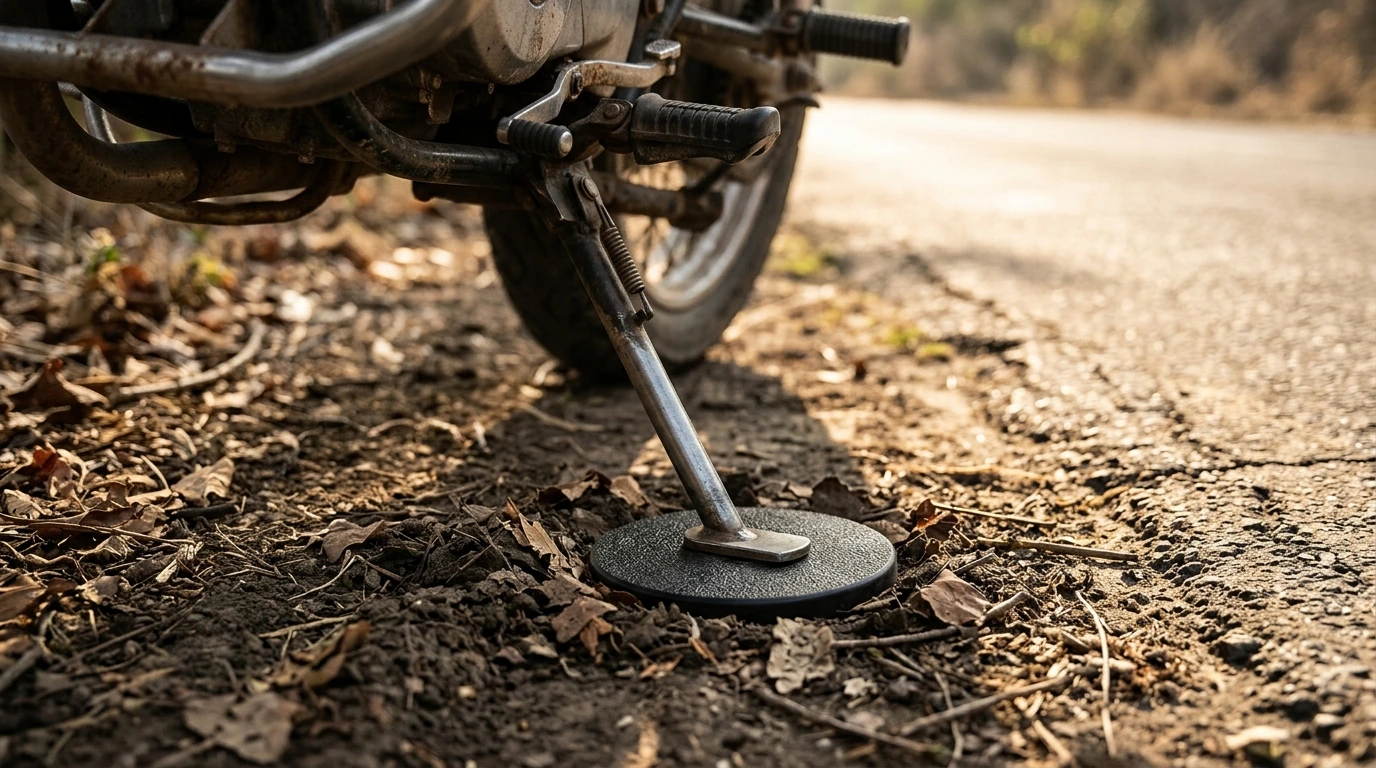
Advantages of a Quality Kickstand Pad
- Superior Stability: The increased footprint area significantly reduces ground pressure, making your bike much more stable on soft or uneven surfaces, directly preventing costly tip-overs.
- Surface Protection: A rigid, thick material prevents damage to delicate surfaces like expensive garage floors or soft asphalt, protecting both your bike and the parking spot.
- Enhanced Durability: High-density plastic construction resists cracking and wear, ensuring the pad remains effective even after repeated use in harsh conditions.
- Convenient Portability: Many designs include a lanyard hole, making it easy to attach to your gear or bike, so it's always there when you need it without taking up much space.
Drawbacks to Consider
- Deployment Requirement: It requires manual placement each time you park, which can be forgotten or inconvenient if you're in a hurry, contrasting with automatic kickstand enlargers.
- Potential for Loss: Without an integrated lanyard hole or secure storage, these small accessories can be easily misplaced or left behind, negating their benefit.
- Limited Clearance on Extreme Terrain: While effective, a pad adds a small amount of height. On extremely steep or uneven ground, this slight elevation might subtly alter the bike's lean angle, which is a minor consideration for some riders but could be a factor for others.
PRO TIP: For maximum stability on very soft ground, place the kickstand pad slightly forward of where the kickstand naturally lands. This slight angle can help lock the kickstand into position as the bike's weight settles.
Alternatives Worth Considering
While kickstand pads are excellent, other solutions exist:
- Bolt-on Kickstand Foot Enlarger: These permanently attach to your existing kickstand, providing an always-ready wider base. They are a better pick if you absolutely want to avoid manual deployment and rarely encounter extremely soft ground where a separate pad's larger footprint might still be superior.
- DIY Solutions (e.g., Crushed Can, Flat Rock): These are free and readily available in a pinch. They serve as an emergency solution when no pad is available but lack the consistent stability, durability, and anti-slip features of a purpose-built product. They would be a better pick only if you frequently forget your pad or need a temporary fix.
Value & Buying Advice
Kickstand pads are generally an inexpensive investment, offering significant protection for your motorcycle. Their value is high, considering the potential cost of repairing a tipped-over bike. When purchasing, focus on the material quality, the size of the footprint relative to your bike's weight and intended parking surfaces, and any features that aid in storage or deployment. Always check current prices at official motorcycle accessory retailers or trusted online stores, as costs can vary by brand and region.
Final Recommendation
Buy a kickstand pad if you ever park your motorcycle off paved, firm surfaces, or on hot asphalt. Skip it only if you exclusively park on perfectly level, solid concrete and are confident you will never encounter softer ground.
This review compiles information from official product specifications and widely reported user experiences, rather than personal lab testing. Specific features and performance can vary slightly by regional variants or production batches.


Comments
Post a Comment