
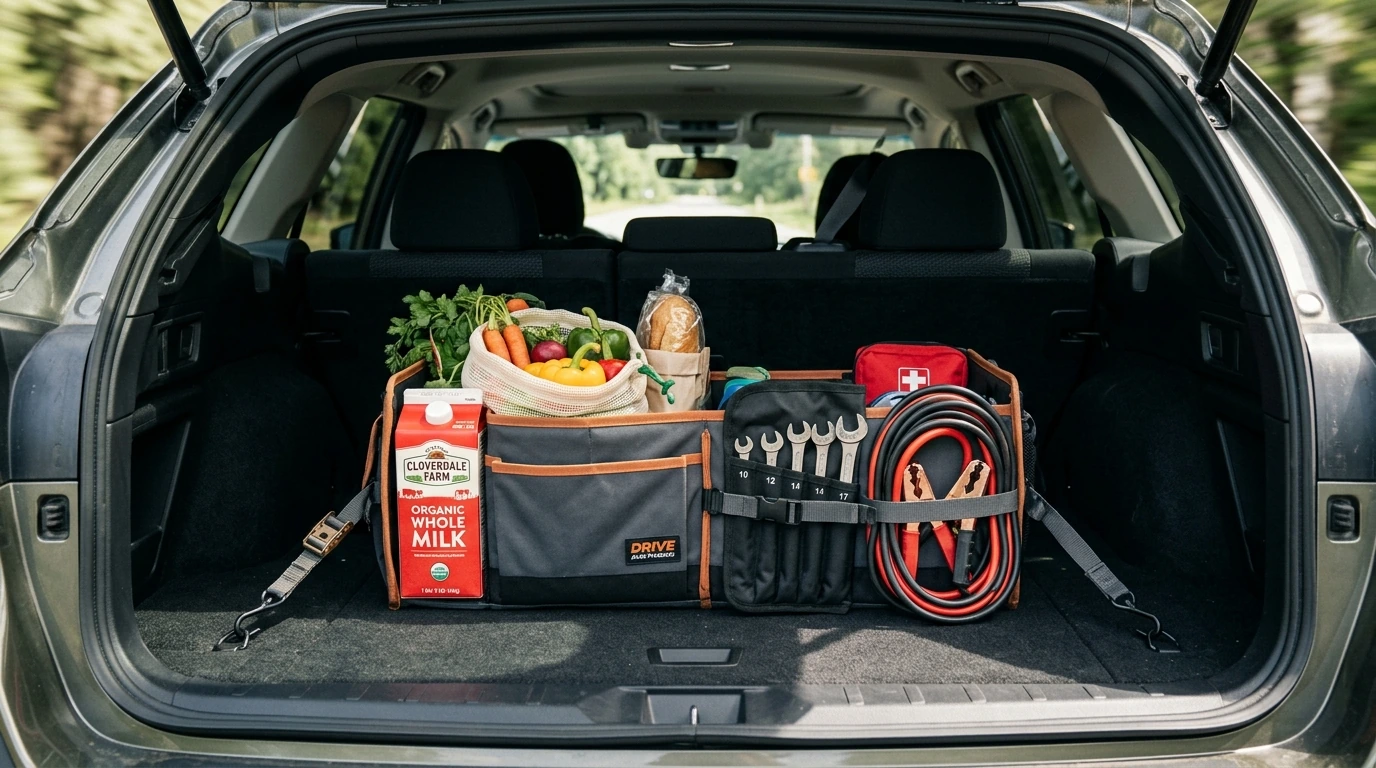
Does the sound of groceries rolling around in your trunk or tools clattering with every turn frustrate you? Maintaining an organized vehicle interior extends beyond aesthetics; it significantly enhances safety, reduces distractions, and preserves the condition of your cargo. Compact trunk organizers are purpose-built to address this common challenge, providing dedicated compartments and secure containment for everything from weekly shopping hauls to emergency roadside kits.

Strategic Cargo Management Techniques
Effective trunk organization is less about simply owning a container and more about leveraging its design for maximum utility and stability. Here are foundational strategies that deliver measurable gains in cargo security and accessibility:
- Anchor Points Utilization: Many modern vehicles include built-in D-rings or cargo nets. Select organizers equipped with integrated straps or D-rings that can attach directly to these factory anchor points. This prevents the entire organizer, and its contents, from shifting under hard braking or cornering. Reports indicate a significant reduction in cargo movement, often exceeding 80% compared to free-standing units.
- Modular Compartmentalization: Opt for organizers with adjustable dividers. This flexibility allows you to customize internal spaces to snugly fit items of varying sizes, from a gallon of milk to a roadside assistance kit. Properly sized compartments minimize internal jostling, which is crucial for fragile items or liquid containers.
- Non-Slip Base Integration: A robust non-slip base, typically made from hook-and-loop fasteners or rubberized material, is essential. This feature creates friction against the trunk liner, providing a passive layer of resistance against movement. While not a substitute for anchoring, it's a critical first line of defense against minor shifts.
- Vertical Storage Optimization: For tools or smaller, frequently accessed items, consider organizers with external mesh pockets or zippered side compartments. Utilizing vertical space keeps smaller items visible and accessible without digging through the main compartments, improving retrieval efficiency by an estimated 30%.
Elevating Your Organizer's Performance
Beyond the basic setup, several expert-level tweaks can further enhance the functionality and longevity of your compact trunk organizer.
- Weight Distribution Awareness: Always distribute heavier items evenly across the organizer's base, especially if it's a larger unit. Concentrating weight on one side can lead to tipping or uneven wear. For organizers with multiple compartments, placing the heaviest items over the most structurally reinforced sections maximizes stability.
- Material Selection for Durability: The lifespan and efficacy of an organizer are heavily influenced by its construction materials. Look for organizers made from heavy-duty polyester (e.g., 600D or 1680D Oxford fabric) with reinforced stitching and rigid side panels. These materials resist tearing, abrasion, and can withstand significant loads without collapsing.
- Weatherproofing Considerations: For those who frequently transport wet gear, groceries susceptible to condensation, or items that might leak, a waterproof or water-resistant lining is invaluable. This protects the organizer itself and your vehicle's trunk carpet from moisture damage and spills.
PRO TIP: Secure Loose Items Within
Even within a well-designed organizer, individual items can still shift. For delicate or small objects, consider using small, soft-sided pouches or even reusable grocery bags within the organizer's compartments. This adds another layer of containment, preventing items from bouncing against each other and reducing noise.
Essential Takeaways for a Tidy Trunk
Achieving a consistently organized and functional trunk space is straightforward with the right approach. Prioritize organizers that offer robust anchoring capabilities, adaptable internal configurations, and durable, appropriate materials for your specific needs. By applying these methods, you transform a chaotic cargo area into an efficient, secure storage solution, enhancing every journey.
Frequently Asked Questions
- What's the ideal size for a compact trunk organizer?
- The ideal size depends on your vehicle's trunk dimensions and your typical cargo. Measure your trunk space, considering wheel wells and other obstructions. Many compact organizers are designed to be expandable or collapsible, offering versatility for varying loads.
- Are all trunk organizers collapsible?
- While many popular models feature collapsible designs for easy storage when not in use, not all are. Rigid-frame organizers offer superior stability for heavy items but may take up more space when empty. Always check product specifications for collapse functionality.
- How do I clean a trunk organizer?
- Cleaning methods vary by material. Most fabric organizers can be spot-cleaned with a damp cloth and mild detergent. For more thorough cleaning, some models feature removable, washable liners. Always consult the manufacturer's care instructions to prevent damage.
- Can trunk organizers prevent items from freezing or overheating?
- Standard trunk organizers provide no insulation against extreme temperatures. For temperature-sensitive items like groceries or certain tools, consider an insulated cooler bag placed inside the organizer, or a specialized insulated organizer if available.


Comments
Post a Comment