
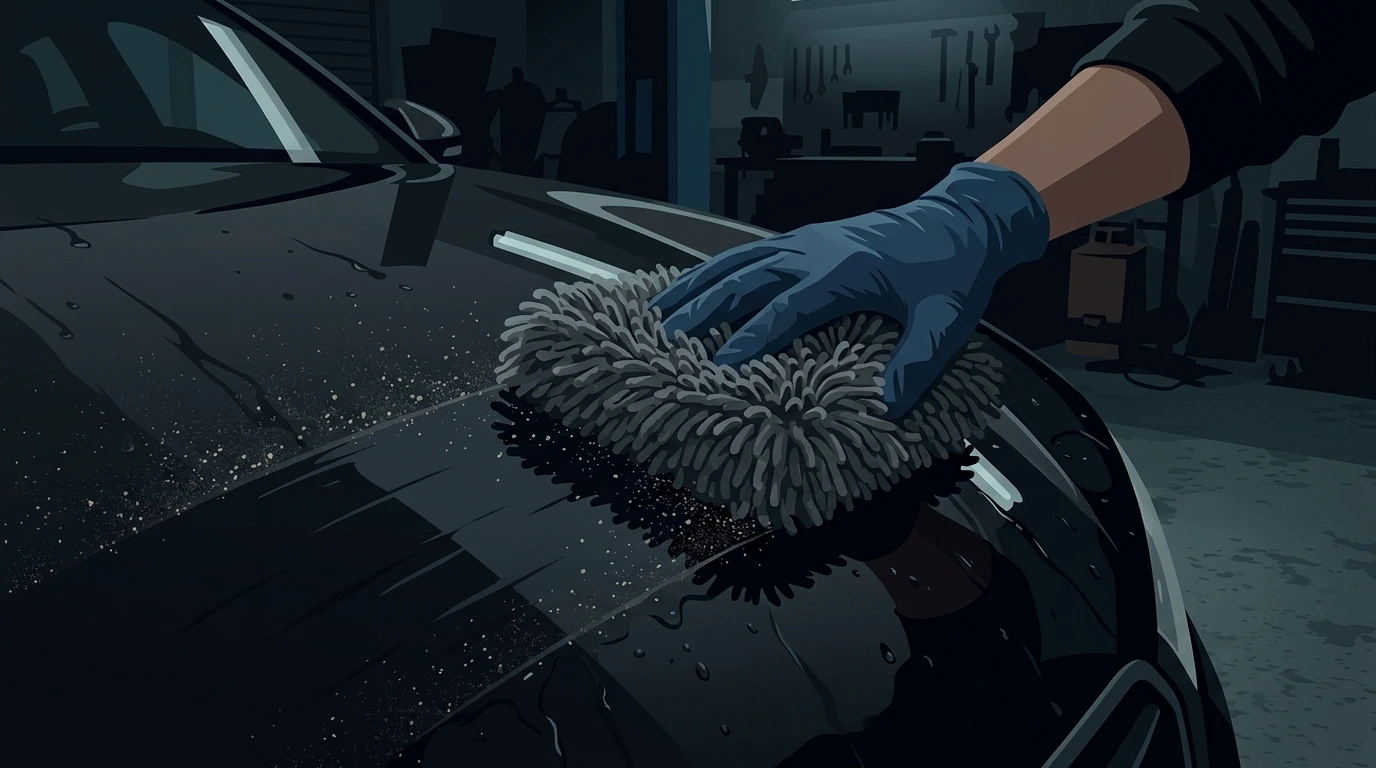
Many car owners often assume that any soft cloth or sponge will suffice for washing their vehicle, believing softness alone guarantees a scratch-free clean. However, this common misconception frequently leads to swirl marks and micro-scratches that dull a car's clear coat over time. The truth is, achieving a truly flawless finish hinges on the specialized design and material science of a high-quality microfiber wash mitt, engineered specifically to safely lift and encapsulate dirt away from delicate paintwork.
Key Takeaways
- Superior microfiber mitts utilize split-fiber technology to trap dirt, preventing scratches on clear coats.
- Pile density and length are critical factors for effective and safe dirt encapsulation.
- Adopting the two-bucket wash method and straight-line wiping minimizes paint damage.
- Regular and correct cleaning of your wash mitt is essential for maintaining its integrity and performance.
The Microscopic Advantage for Clear Coat Longevity
The integrity of a vehicle's clear coat is paramount for maintaining its aesthetic appeal and protecting the underlying paint. This thin, transparent layer is surprisingly vulnerable to abrasive particles. Traditional sponges or terry cloth towels, while seemingly soft, often push dirt particles across the surface, creating microscopic scratches. Microfiber, by contrast, is engineered with split fibers—typically a blend of polyester and polyamide—that create a vast surface area and countless tiny hooks. These microscopic hooks effectively lift and trap dirt, dust, and grime within the mitt's fibers, isolating them from the paint surface. This mechanism significantly reduces the friction and abrasive action that causes swirl marks, preserving the clear coat's reflective qualities.

Defining Attributes of a High-Performance Wash Mitt
Not all microfiber mitts are created equal. Several design and material specifications dictate their effectiveness and safety for automotive finishes:
Pile Density and Length
A higher pile density, meaning more individual microfiber strands per square inch, translates directly to a greater capacity for trapping dirt. Longer piles also provide additional cushioning and further separate trapped contaminants from the paint. Look for mitts with a substantial, plush feel, indicating a rich fiber count.
Material Blend and Construction
The common blend of 80% polyester and 20% polyamide offers a good balance of durability and absorbency. Polyester provides strength, while polyamide contributes to the absorbent and dirt-trapping qualities. Quality mitts feature robust stitching, often double-stitched, to prevent shedding and ensure longevity through repeated washes and uses. An elastic cuff design also helps keep the mitt securely on your hand during the washing process.
Varieties of Microfiber Mitts
Different constructions offer varied benefits:
| Mitt Type | Primary Benefit | Ideal Application |
|---|---|---|
| Chenille Noodles | High absorbency, excellent dirt trapping | General washing, heavily soiled vehicles |
| Twisted Loop | Dense, gentle, glides smoothly | Regular maintenance washes, sensitive finishes |
| Standard Weave (Flat) | Versatile, good for light dirt and rinsing | Interior dusting, wheel cleaning (dedicated mitt) |
Best Practices for Using and Maintaining Your Wash Mitt
Even the finest wash mitt requires proper technique and care to deliver optimal results and prevent clear coat damage:
- Pre-Rinse the Vehicle: Always rinse your car thoroughly to remove loose dirt and debris before touching it with a mitt.
- Employ the Two-Bucket Method: Use one bucket with car wash soap solution and another with clean rinse water. Dip your mitt in the soap bucket, wash a section, then rinse the mitt thoroughly in the clean water bucket before returning to the soap. This isolates contaminants.
- Wash in Straight Lines: Avoid circular motions, which can amplify the appearance of swirl marks. Work in straight, overlapping passes from top to bottom.
- Rinse Frequently: Regularly rinse your mitt in the clean water bucket to release trapped dirt. Consider using multiple mitts for different sections of the vehicle.
- Proper Mitt Care: After each wash, machine wash your mitt separately from other laundry using a dedicated microfiber detergent or a mild liquid detergent. Avoid fabric softeners, as they can clog the microfiber's split fibers, reducing its effectiveness. Air dry or tumble dry on low heat without dryer sheets.
Frequently Asked Questions
How often should I replace my wash mitt?
With proper care, a high-quality microfiber wash mitt can last for dozens of washes, often a year or more. Replace it if you notice it shedding fibers, feeling less plush, or if it has been dropped on the ground and cannot be thoroughly cleaned.
Can I use a wash mitt on matte finishes?
Yes, a soft microfiber wash mitt is suitable for matte finishes. However, ensure you use a car wash soap specifically formulated for matte paint, as traditional gloss-enhancing soaps can alter the matte appearance.
What's the difference between a wash mitt and a wash pad?
Functionally, they serve the same purpose: to safely clean vehicle surfaces. A mitt is designed to be worn on the hand, offering greater control and reducing the chance of dropping it. A pad is typically flatter and held in the hand, preferred by some for its larger surface area or specific ergonomic feel.
Is it okay to use my car wash mitt for other cleaning tasks?
It is strongly recommended to dedicate your car wash mitt solely to exterior paintwork. Using it for wheels, engine bays, or household cleaning can introduce abrasive particles or chemicals that could damage your car's delicate clear coat.
Understanding the nuanced engineering behind a quality microfiber wash mitt and adopting meticulous washing practices are fundamental steps toward preserving your vehicle's clear coat. Investing in the right tools and techniques ensures your car maintains its showroom shine, protecting its finish for years to come.


Comments
Post a Comment