
Few things compromise a vehicle's pristine finish as quickly and severely as bird droppings and tree sap. These organic contaminants, often overlooked until it's too late, possess chemical properties that can etch into clear coats and paint layers, leading to permanent damage if not addressed promptly and correctly. Understanding the nature of these threats and employing the right removal techniques is paramount for maintaining your car's aesthetic and resale value.
This guide delves into the most effective, paint-safe strategies for tackling these common nuisances, drawing on established automotive care principles and widely recognized best practices.
Quick Verdict: Essential & Time-Sensitive Care
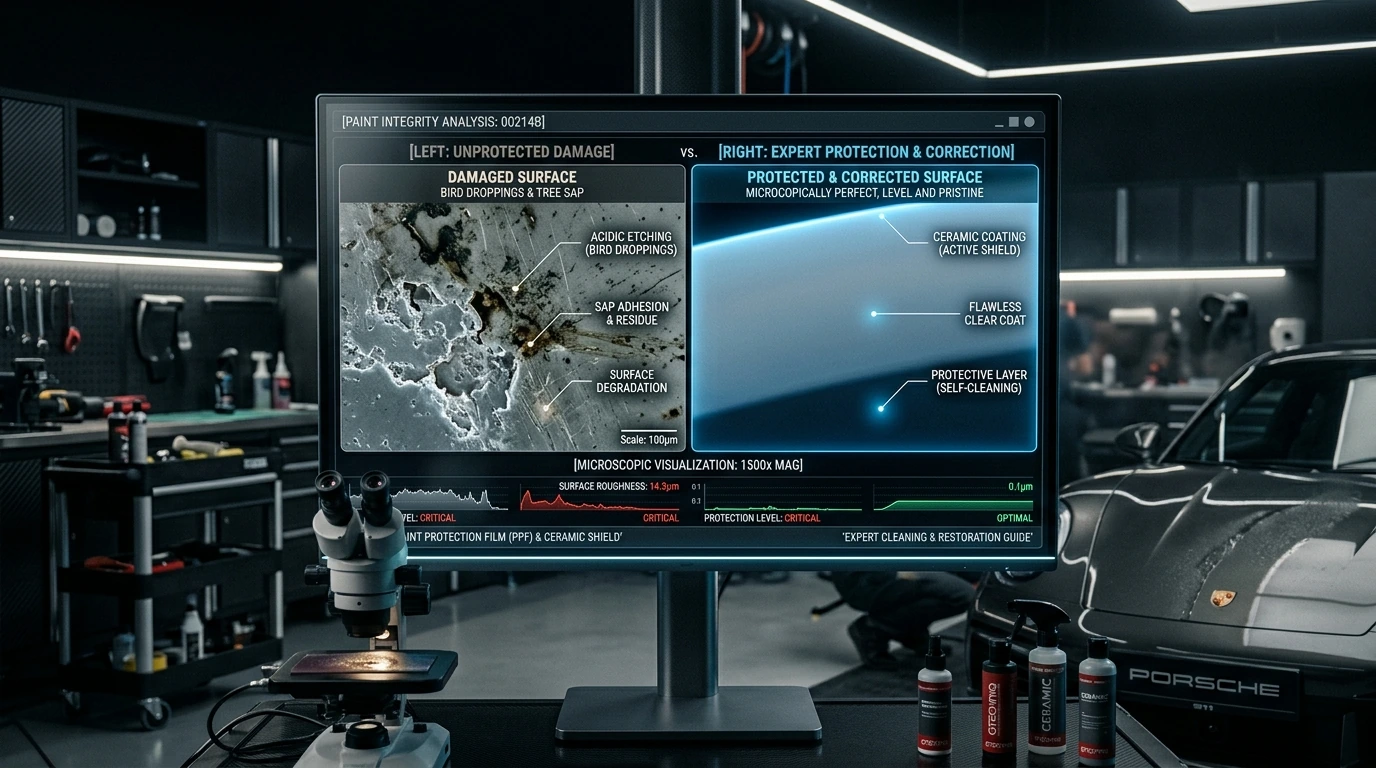
Addressing bird droppings and tree sap on automotive paint is not a matter of convenience; it's a critical, time-sensitive maintenance task. Bird droppings, acidic by nature and containing abrasive grit, can begin etching clear coat within hours, especially under sunlight. Tree sap, a sticky resin, bonds tenaciously to surfaces and can harden, making removal challenging while also attracting more dirt. Both require immediate, gentle, and appropriate chemical intervention to prevent irreversible paint damage. Neglecting these contaminants significantly accelerates paint degradation, leading to dull spots, discoloration, and potential clear coat failure.
The Corrosive Chemistry of Contaminants
The threat posed by bird droppings and tree sap goes beyond mere aesthetics; it's a chemical attack on your vehicle's paint system. Bird droppings typically have a pH range between 3 and 4.5, making them highly acidic. This acidity, combined with the digestive enzymes present, allows them to rapidly break down the polymer structure of automotive clear coats. When exposed to heat, such as direct sunlight, this corrosive process accelerates dramatically, leading to circular etch marks that can penetrate deep into the paint layers. The presence of tiny seeds or grit within the droppings also introduces a physical abrasion risk during improper cleaning attempts.
Tree sap, conversely, is a complex organic polymer. Its sticky, viscous nature allows it to adhere strongly to paint surfaces, and as it dries and cures, it forms a tough, resinous bond. While generally less acidic than bird droppings, certain types of sap can contain sugars and other compounds that, when exposed to UV light and heat, can polymerize and stain the clear coat. The primary challenge with sap lies in its adhesive strength and the potential for mechanical damage if scraped or scrubbed vigorously.
Your Arsenal: Tools & Preparations
Effective and safe removal of these contaminants hinges on using the right tools and techniques. Avoid household cleaners, which can strip waxes, damage sealants, or even harm paint finishes. Specialized automotive products are formulated to be pH-neutral or specifically designed for safe paint decontamination.
- Dedicated Car Wash Shampoo: For general cleaning and pre-soaking.
- Specialized Bird Dropping/Insect Remover: Often enzyme-based, designed to break down organic matter safely.
- Tree Sap Remover: Formulated with solvents that dissolve resin without harming clear coat.
- Multiple High-Quality Microfiber Towels: Crucial for gentle wiping and avoiding scratches. Opt for plush, edgeless towels.
- Spray Bottle with Water: For initial rinsing or diluting solutions.
- Detailer Spray or Quick Detailer: To provide lubrication and a final wipe.
- Wax or Sealant: For post-cleaning protection.
Step-by-Step Bird Dropping Eradication
Timeliness is critical when dealing with bird droppings. The sooner you act, the less likely permanent damage will occur.
- Initial Rinse (Optional, for loose debris): If the dropping is very fresh and wet, a gentle stream of water from a hose can help loosen some of the surface material without scrubbing. Avoid high-pressure washers directly on the dropping.
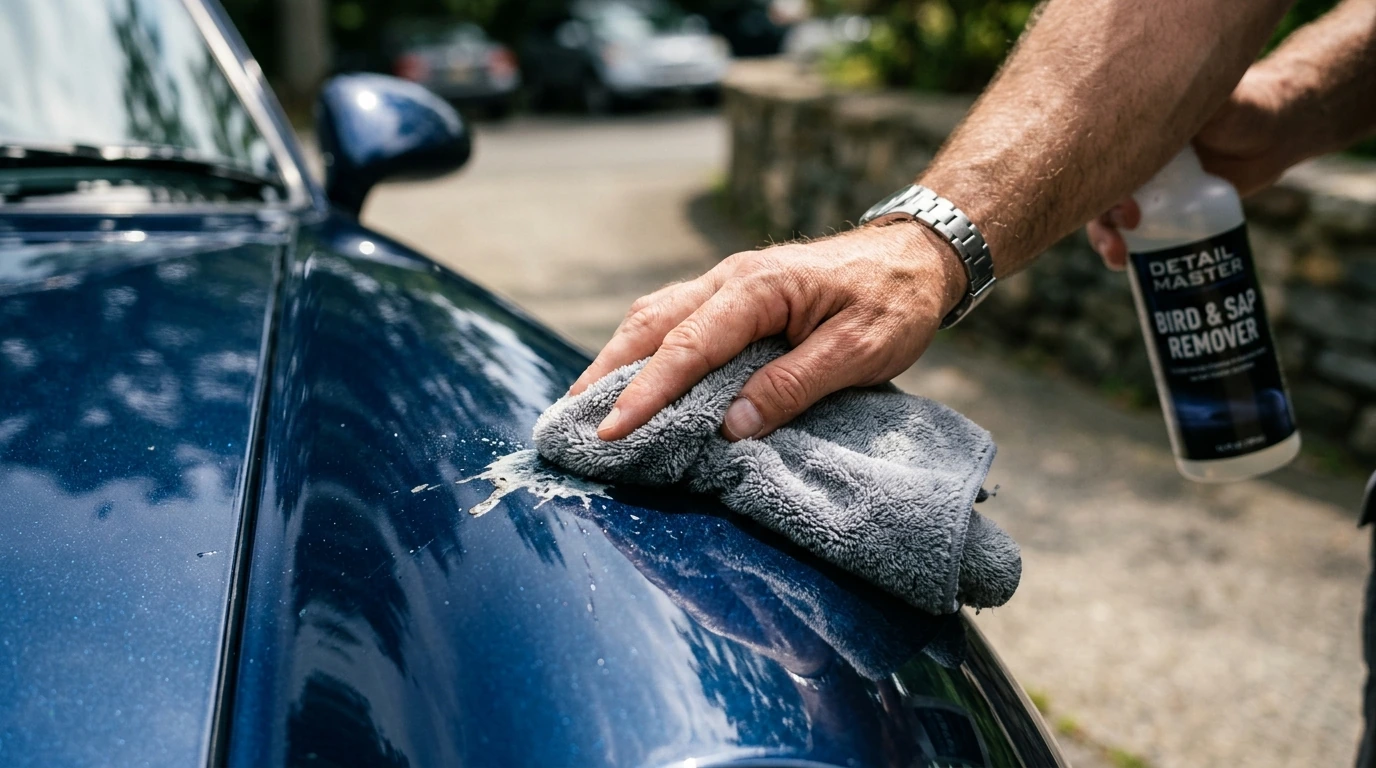
- Soak and Soften: Generously spray a dedicated bird dropping remover directly onto the affected area. If you don't have a specific product, a quick detailer or a mixture of car wash shampoo and water (1:1 ratio) can work. Allow it to dwell for 5-10 minutes. The goal is to rehydrate and break down the organic matter.
- Gentle Lift: Fold a clean, damp microfiber towel into quarters. Place it over the softened dropping and gently press down. Do NOT scrub or wipe back and forth. Allow the towel to absorb the softened material.
- Wipe Away: With a fresh section of the towel, gently wipe in one direction, lifting the residue. Repeat with clean sections of the towel until all traces are gone. Always use a clean side of the towel for each wipe to prevent spreading abrasive particles.
- Final Cleanse: Follow up with a quick detailer spray and a fresh microfiber towel to ensure no residue remains and to restore shine.
PRO TIP: Always work in the shade or on a cool surface. Cleaning in direct sunlight can cause solutions to dry too quickly, potentially leaving water spots or making the removal process less effective and more prone to scratching.
Tackling Stubborn Tree Sap
Tree sap requires a different approach due to its resinous nature. Patience and the correct solvent are key.
- Pre-Soak (if fresh): If the sap is still somewhat fresh and tacky, a warm, wet microfiber towel placed over it for a few minutes can help soften it slightly.
- Apply Sap Remover: Spray a specialized tree sap remover directly onto the sap. These products often contain mild solvents designed to break down the resin. Allow it to dwell according to the product's instructions, typically 1-5 minutes.
- Gentle Dissolution: Using a clean, soft microfiber towel, gently dab and wipe the sap. The goal is to let the solvent do the work, dissolving the sap into the towel. Do not rub aggressively, as this can smear the sap or scratch the paint.
- Repeat as Needed: For larger or hardened sap spots, you may need to repeat the application and gentle wiping process multiple times, using a fresh section of the towel each time.
- Cleanse and Protect: Once the sap is completely removed, clean the area with a quick detailer or a mild car wash solution to remove any solvent residue. Apply a fresh layer of wax or sealant to the treated area to restore protection.
Product Selection & Application Nuances
Choosing the right products can significantly impact the outcome. Look for reputable brands that specify their products are safe for clear coats and painted surfaces. For bird droppings, enzyme-based cleaners are highly effective at breaking down organic proteins. For tree sap, products containing citrus-derived solvents or mineral spirits are common, but always ensure they are formulated for automotive paint. The key to successful application for both is allowing adequate dwell time for the product to work, followed by extremely gentle, single-direction wiping with clean, plush microfiber towels. Avoiding cross-contamination between tools used for sap and droppings is also a good practice.
Long-Term Paint Health & Prevention
While effective removal techniques are crucial, prevention and ongoing protection offer the best defense against these contaminants. Regularly applying a high-quality wax, sealant, or ceramic coating creates a sacrificial barrier that makes contaminants less likely to bond directly with the clear coat and significantly easier to remove. Parking under cover, away from trees, and being mindful of areas with high bird activity can also reduce exposure. Prompt attention to any new spots is the single most important factor in preventing permanent damage.
Hyundai Creta's Connected Cabin: Is Its High-Tech Interior Ideal for Small Families? →
Frequently Asked Questions
- Q: Can I use rubbing alcohol to remove tree sap?
- A: While rubbing alcohol (isopropyl alcohol) can dissolve sap, it can also dry out and potentially damage clear coats and waxes if used improperly or too frequently. Specialized tree sap removers are generally a safer, more formulated option for automotive paint.
- Q: How long do I have before bird droppings permanently damage paint?
- A: The timeline varies based on temperature, humidity, and the specific bird's diet, but etching can begin within hours, especially in direct sunlight. It's best to remove them as soon as they are noticed.
- Q: Will a ceramic coating protect against bird dropping and tree sap etching?
- A: Ceramic coatings provide a highly durable, hydrophobic layer that significantly resists chemical etching and makes contaminants much easier to remove. However, no coating offers 100% immunity; timely removal is still recommended to prevent potential damage to the coating itself or the underlying paint.
- Q: What if the dropping or sap has already etched the paint?
- A: Minor etching can sometimes be corrected by a professional detailer using paint correction techniques like compounding and polishing. Deep etching may require more extensive repair, potentially including repainting the affected panel.


Comments
Post a Comment