
Dealing with a Messy Car Seat Spill?
Accidental spills in a child's car seat are inevitable, but restoring cleanliness and hygiene doesn't have to be an all-day ordeal. This simple method focuses on efficiency and effectiveness, allowing you to quickly tackle common messes without a full car seat disassembly.
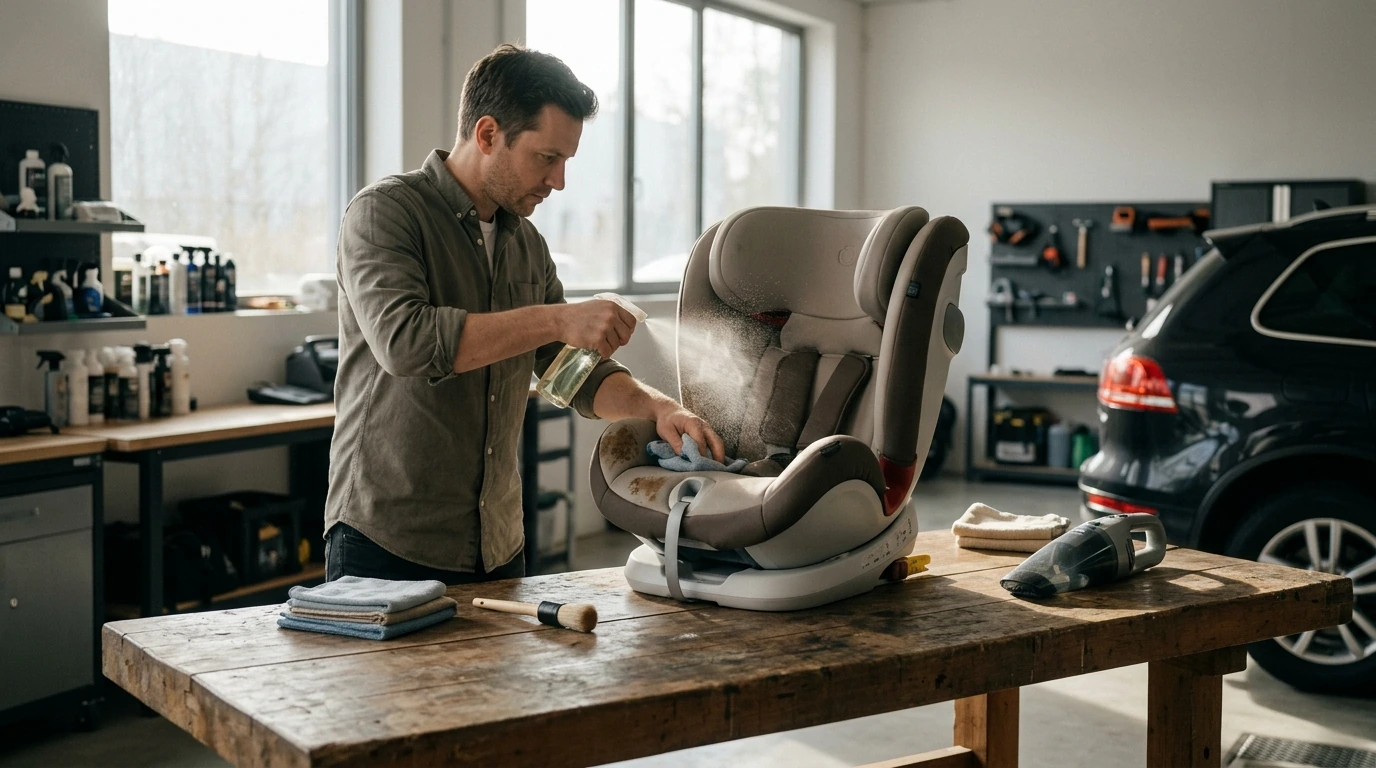
The Quick Clean Verdict for Spills
This streamlined approach to cleaning and disinfecting child car seats is ideal for addressing isolated liquid or semi-solid spills and general surface grime. It suits busy parents needing a rapid response to maintain a hygienic environment for their child without extensive effort.
Those facing extensive contamination, solid food mashed deep into crevices, or a seat that requires a complete wash due to prolonged neglect should likely bypass this method and prepare for a full manufacturer-recommended deep clean, which often involves strap and cover removal. The biggest trade-off with this simple method is its limitation to surface-level issues; it won't address saturation deep within the foam padding or intricate strap mechanisms.
Understanding the Simple Spill Cleanup Method
This method prioritizes speed and targeted action to remove fresh spills and surface contaminants. Unlike a comprehensive deep clean that might involve removing fabric covers and straps for machine washing, this approach uses minimal moisture and specific cleaning agents to treat the affected area directly. It's designed for immediate intervention, preventing stains from setting and inhibiting bacterial growth from organic spills.
Core Components of the Quick Clean Method
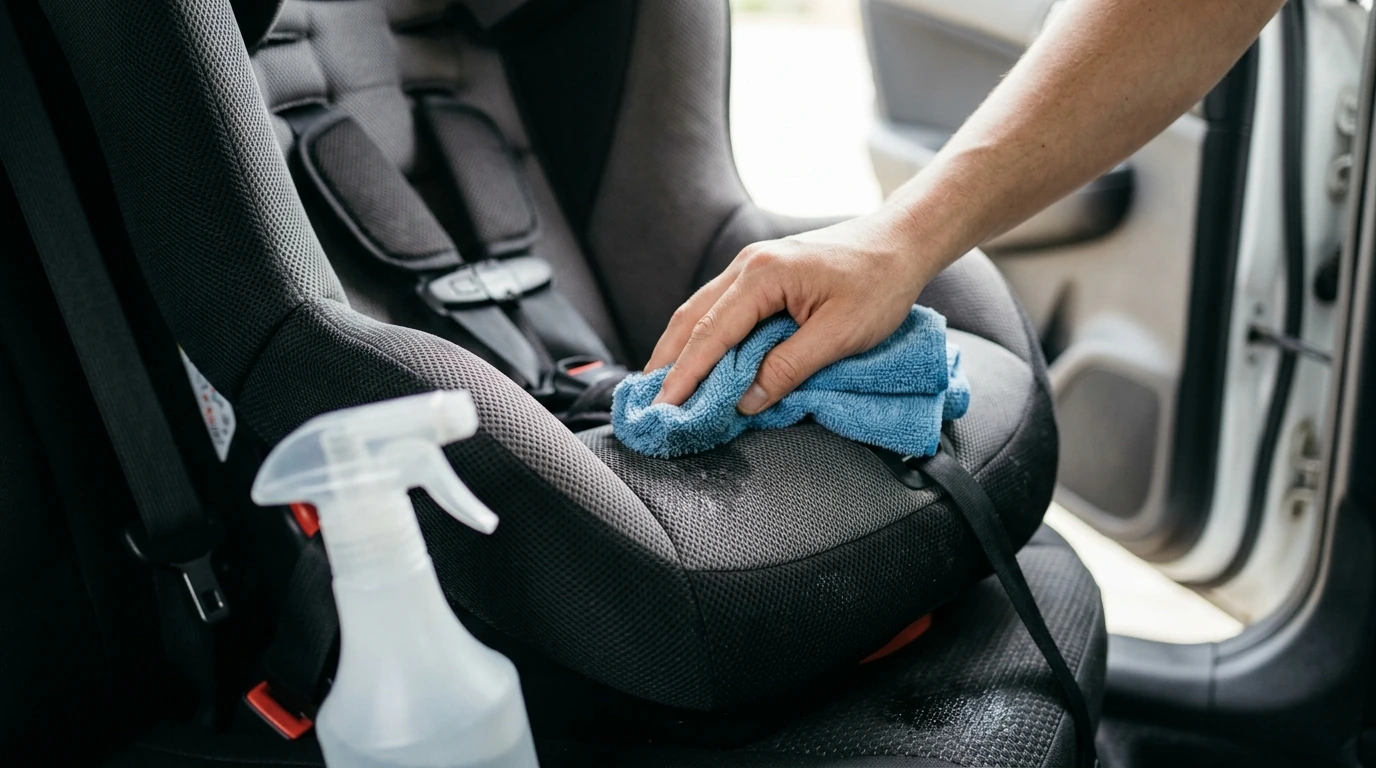
Choosing the right tools and agents is crucial for an effective yet gentle cleanup. Here's a breakdown of what makes this method work:
| Method Component/Tool | Recommended Approach/Tool | Verdict (Plus / Minus / Neutral) | Who Feels It Most |
|---|---|---|---|
| Cleaning Solution | Mild soap (e.g., dish soap) diluted in water, or a dedicated car seat cleaner. | Plus: Effectively lifts fresh stains without harsh chemicals. | Parents concerned about chemical exposure, those needing quick stain removal. |
| Disinfectant | 70% Isopropyl Alcohol (IPA) in a spray bottle, or a manufacturer-approved car interior disinfectant. | Plus: Rapidly kills bacteria and viruses on surfaces. | Anyone needing to sanitize after organic spills (milk, vomit) for child health. |
| Cleaning Tools | Soft-bristle brush, several clean microfiber cloths, absorbent paper towels. | Plus: Gentle on fabric, effective for agitation and absorption. | Users prioritizing fabric longevity and thorough spot cleaning. |
| Drying Method | Air drying in a well-ventilated area, blotting with dry microfiber cloths. | Plus: Prevents mold and mildew, avoids fabric damage from heat. | All users, especially those in humid climates or with limited time for extensive drying. |
Real-World Spill Scenarios and This Method's Effectiveness
This quick clean method proves highly effective for various common spills, provided they haven't deeply saturated the seat's internal padding:
- Milk Spill: For a fresh milk spill, immediately blotting with paper towels to absorb as much liquid as possible is key. The mild soap solution can then tackle the residue, followed by IPA to disinfect and neutralize odors. This method should adequately prevent sour smells if addressed promptly.
- Juice or Soda Stains: Sugary drinks can leave sticky residues and attract pests. The mild soap solution is excellent for breaking down sugars and lifting the stickiness. A quick wipe-down with the disinfectant after cleaning will ensure no lingering stickiness or bacterial growth.
- Small Food Crumbs & Grime: While not a liquid spill, accumulated crumbs and general grime can be tackled by using a soft brush to dislodge particles, followed by the mild soap solution on a microfiber cloth to wipe down surfaces. This maintains overall seat hygiene between deeper cleans.
Advantages of This Fast Cleaning Approach
Key Advantages
- Time-Efficient: The focused application of a mild cleaning solution and quick-drying methods significantly reduces the time required compared to a full disassembly, making it ideal for immediate spill response.
- Prevents Deep Stains: By addressing spills promptly with absorbent tools and a targeted cleaning solution, this method minimizes the chance of liquids soaking into the padding and causing permanent stains.
- Effective Disinfection: Using 70% Isopropyl Alcohol or an approved disinfectant ensures that common bacteria and viruses from organic spills are neutralized on contact surfaces, enhancing hygiene for the child.
- Preserves Seat Integrity: Avoiding full immersion or harsh scrubbing, as facilitated by soft brushes and microfiber cloths, helps maintain the structural integrity and fabric condition of the car seat over time.
Potential Drawbacks
- Surface-Level Only: This method's reliance on minimal moisture application means it cannot effectively clean spills that have deeply saturated the internal foam or inaccessible areas of the car seat.
- Not for Severe Odors: While disinfection helps, deeply embedded odors from old milk or vomit, which may have seeped into padding, will likely require a more thorough, deep-cleaning process beyond this quick method.
- Risk of Residue Build-up: If cleaning solutions are not thoroughly blotted and allowed to dry, there's a slight risk of soap residue accumulating on the fabric, which could attract more dirt over time.
- Limited for Complex Stains: Tough, set-in stains like crayon marks or oil-based spills may require specialized stain removers or more aggressive cleaning techniques than this simple, gentle approach provides.
PRO TIP: Always test any cleaning solution or disinfectant on an inconspicuous area of the car seat fabric first to ensure it doesn't cause discoloration or damage, especially with darker or patterned materials.
Alternative Cleaning Approaches Worth Considering
While the quick clean method handles immediate spills, other options exist for different levels of contamination:
- Full Disassembly and Machine Wash: For extensive spills or general grime that has penetrated deeply, many car seat covers and some harness pads can be removed and machine washed according to manufacturer instructions. This is the most thorough method for deep cleaning and odor removal.
- Professional Car Detailing: If you're hesitant to disassemble the seat yourself or face particularly stubborn stains and odors, a professional car detailer specializing in interior cleaning can often provide deep cleaning services using professional-grade equipment and solutions.
Value and Practical Advice
This simple cleaning method offers excellent value in terms of time saved and immediate hygiene restored, requiring only basic household supplies or readily available car care products. It minimizes the need for specialized equipment, making it a cost-effective first line of defense against spills. Always refer to your car seat's specific owner's manual for any cleaning restrictions or recommended products, as some manufacturers have strict guidelines to maintain warranty and safety standards. Check current prices for dedicated car seat cleaners or automotive disinfectants at official stores or trusted retailers if you prefer specialized products over common household alternatives.
Final Recommendation: Use If / Skip If
Use this method if: You need to quickly address a fresh liquid or semi-solid spill, remove surface grime, or disinfect an area after a minor incident, and you want to avoid a lengthy deep-cleaning process.
Skip this method if: The car seat has suffered a major, saturating spill that has soaked into the padding, if there are deeply embedded odors, or if you require a full, comprehensive clean of all fabric and strap components.
This review is compiled from official car seat cleaning guidelines and widely reported user feedback regarding quick spill management rather than a personal lab test. Specific details and material compatibility can differ by region or car seat variant, so always consult your owner's manual.


Comments
Post a Comment