
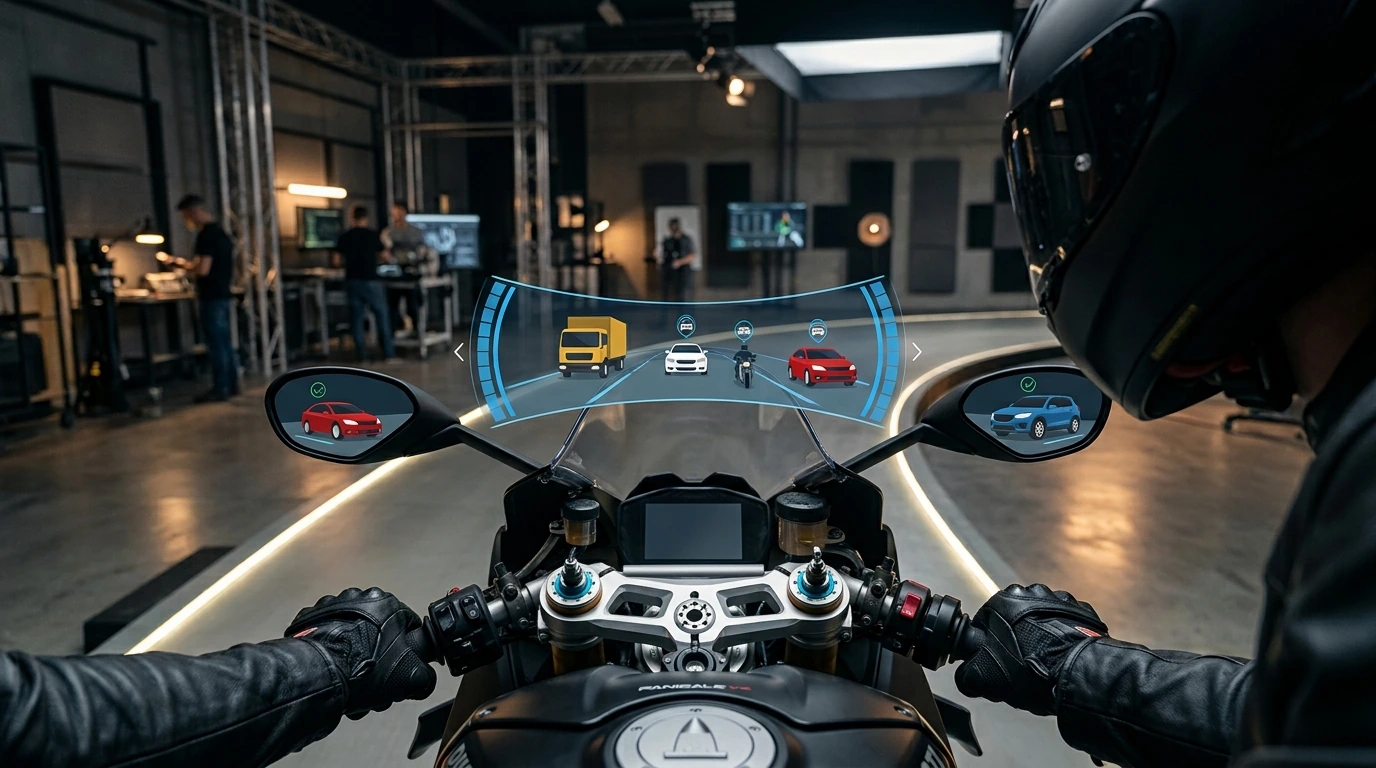
Navigating busy roads on a motorcycle demands an acute awareness of your surroundings, yet even with diligent head checks, those notorious blind spots can persist. Fortunately, a systematic approach to mirror adjustment can dramatically expand your field of vision, helping to mitigate these hazards and enhance overall riding safety.
Key Takeaways
- Proper mirror adjustment is a proactive safety measure, not merely a convenience.
- The 'lean and look' method is crucial for setting mirrors to cover areas just outside your peripheral vision.
- Minimize your bike's reflection in the mirrors to maximize the view of adjacent lanes.
- Regular re-evaluation of mirror settings is recommended, especially after any adjustments to seating position or bike modifications.
Understanding the Blind Spot Challenge
Motorcycle mirrors, while essential, often provide a limited view directly behind the rider. The critical area of concern lies in the adjacent lanes, particularly the zones slightly behind and to the side of the rider where other vehicles can disappear from view before they enter peripheral vision or are picked up by a head check. Traditional mirror setups, where a significant portion of the mirror shows the rider's own shoulders or the bike's rear fender, inherently sacrifice valuable road coverage. The goal of an optimized setup is to push the mirrors outward, capturing as much of the adjacent lanes as possible, bridging the gap between direct rearward vision and peripheral awareness.
Establishing Your Riding Posture
Before making any adjustments, it is fundamental to sit on your motorcycle in your typical riding position. This includes wearing your usual riding gear, as helmet size or jacket bulk can influence your seated posture. Ensure your feet are on the pegs and your hands are on the handlebars in a natural, relaxed grip. This authentic posture is critical because mirror settings are highly personal and dependent on the rider's specific seated geometry. Adjusting mirrors while standing beside the bike or in an unnatural stance will result in suboptimal settings once you are actually riding.
The 'Lean and Look' Adjustment Technique
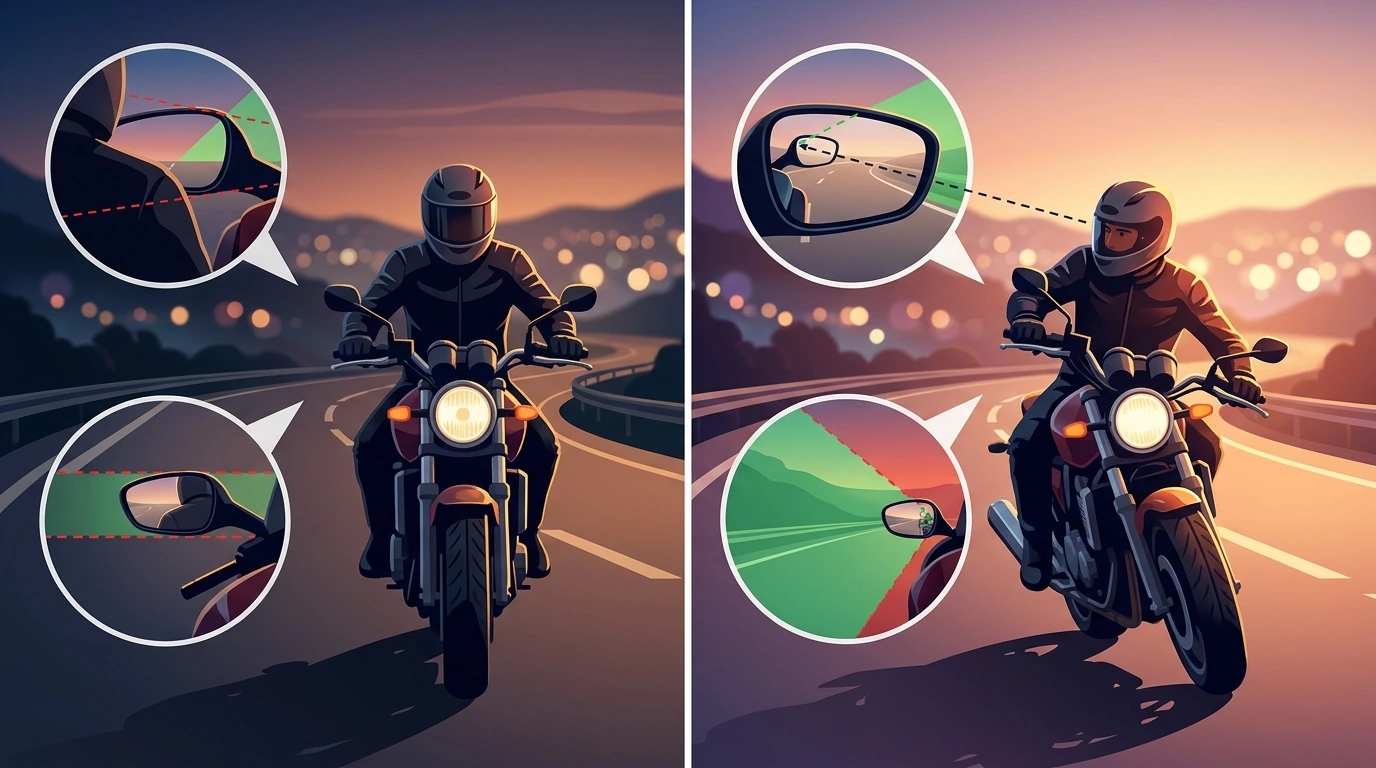
This widely recognized technique is designed to extend your field of view beyond the immediate rear. Begin by adjusting your left mirror. While seated in your normal riding position, lean slightly to the left, almost touching the mirror with your head. From this position, adjust the mirror so that you can just barely see the rear edge of your motorcycle in the innermost portion of the mirror. This ensures the mirror is angled as far out as possible while still providing a reference point for your bike's position. Repeat the process for the right mirror, leaning slightly to the right and adjusting until you can just see the bike's rear edge.
Verifying Your Expanded View
Once both mirrors are set using the 'lean and look' method, return to your normal, upright riding position. When you glance into your mirrors now, you should see very little, if any, of your own shoulders or the side of your motorcycle. The mirrors should primarily display the lanes directly adjacent to you. To test this, ideally in a safe, low-traffic environment, have a friend walk slowly past your motorcycle from behind in an adjacent lane. Observe how they transition from your rearview mirror into your peripheral vision. With optimal adjustment, there should be minimal, if any, gap where they are completely out of sight.
PRO TIP: The 'Overlap' Principle
Aim for a slight overlap in what your mirrors show and what your peripheral vision covers. This means a vehicle should ideally appear in your mirror just before it disappears from your direct rearward view, and then transition smoothly into your peripheral vision as it moves forward. This continuous visual coverage is key to truly eliminating blind spots.
Maintenance and Further Enhancements
Even with perfect adjustment, mirrors can shift due to vibrations or accidental bumps. Periodically check your mirror settings, especially before longer rides. For riders seeking additional visibility, several aftermarket options exist, such as convex mirrors that offer a wider field of view (though with some image distortion) or bar-end mirrors which often provide a less obstructed view. These can complement, but should not replace, the fundamental principles of proper conventional mirror adjustment.
Who Benefits from This Adjustment Method?
Every motorcycle rider stands to gain from optimizing their mirror setup. This isn't an advanced technique reserved for track riders or long-distance tourers; it's a foundational safety practice for daily commuters, weekend cruisers, and new riders alike. The marginal effort required to properly adjust your mirrors yields a significant return in terms of enhanced situational awareness and reduced risk on the road. Investing a few minutes in this simple procedure can provide a continuous, clearer picture of your surroundings, making every ride safer and more confident.


Comments
Post a Comment