
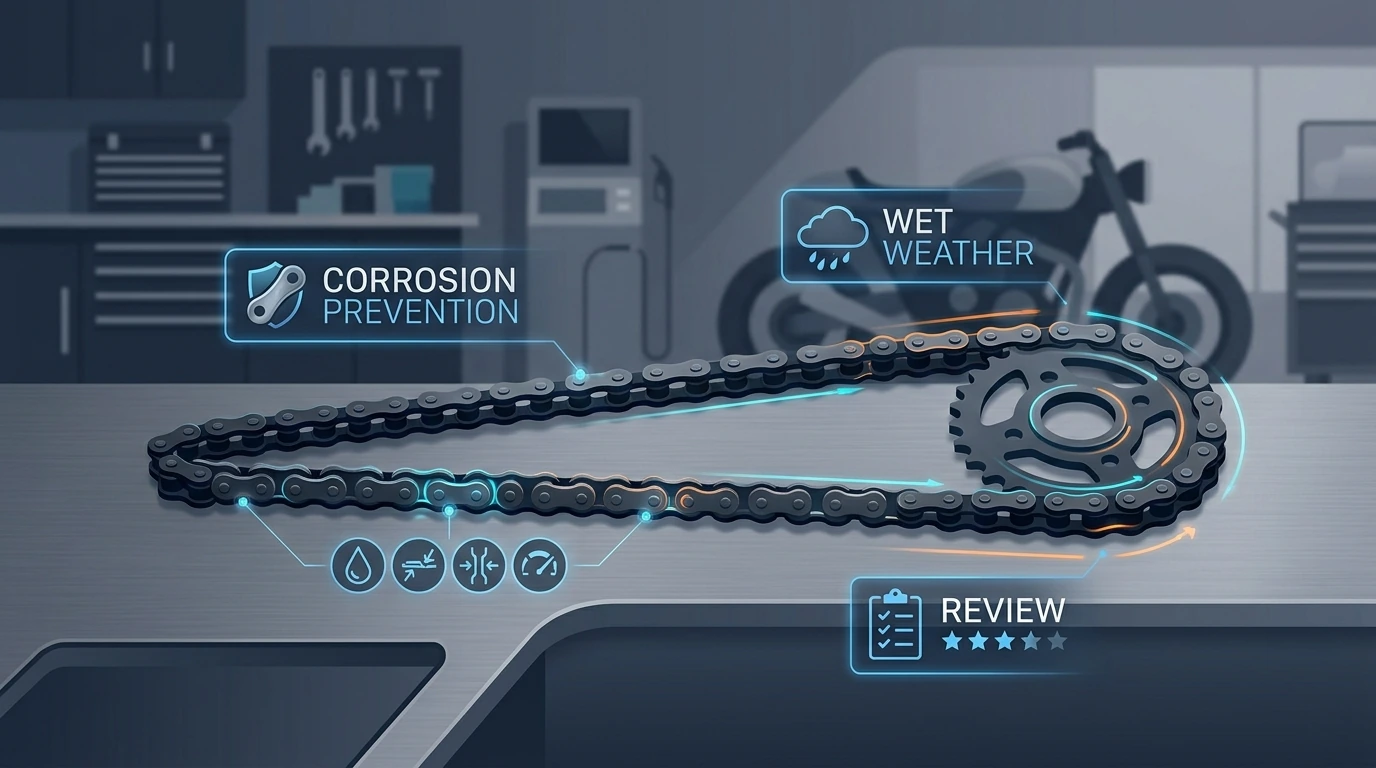
Few things compromise a motorcycle's reliability and rider safety as quickly as a neglected drive chain, especially when exposed to persistent moisture. The rainy season, with its constant dampness and road grime, presents a significant challenge to maintaining optimal chain health. Understanding how to proactively shield this critical component from corrosion is not just about aesthetics; it's fundamental to preserving drivetrain efficiency and extending the life of your motorcycle.
The Peril of Moisture: Why Your Motorcycle Chain Needs Attention
A motorcycle chain is a complex assembly of precision-machined steel components, including inner and outer plates, pins, bushings, and rollers, often sealed with O-rings, X-rings, or Z-rings to retain internal lubricant. When these components are exposed to water, particularly salty road spray or acidic rain, the steel begins to oxidize, forming rust. This corrosion leads to increased friction, accelerated wear on sprockets and chain links, and ultimately, a reduction in the chain's tensile strength. A rusty chain can seize, stretch unevenly, or even snap, creating a dangerous situation. Proactive maintenance during wet periods is therefore non-negotiable for any rider.
Anatomy of a Drive Chain: Materials and Vulnerabilities
Modern motorcycle chains are engineered for durability, typically utilizing high-carbon alloy steels for plates and pins, often heat-treated for strength. The crucial element for longevity, however, lies in the internal lubrication sealed by the aforementioned rings. These seals prevent dirt and moisture from entering the pin-bushing area while keeping the factory grease inside. The primary vulnerability in wet conditions isn't just the internal components, but the external surfaces—the rollers, side plates, and exposed pins—which are constantly bombarded by road spray and grime. Without a robust external protective layer, rust can quickly take hold, compromising the chain's smooth operation and eventually damaging the seals themselves.
Battling the Elements: A Comprehensive Wet-Weather Regimen
Maintaining a rust-free chain during the wet season requires a consistent, multi-step approach. It begins with diligent cleaning, followed by appropriate lubrication and, ideally, a protective barrier. After every wet ride, or at least every 200-300 miles in consistently damp conditions, a thorough cleaning is recommended. This involves:
- Initial Rinse: Gently rinse the chain with water to remove loose dirt and mud. Avoid high-pressure washers directly on the chain, as this can force water past the O-rings.
- Degreasing: Apply a dedicated motorcycle chain cleaner or a non-acidic degreaser. Allow it to soak for a few minutes to break down grime.
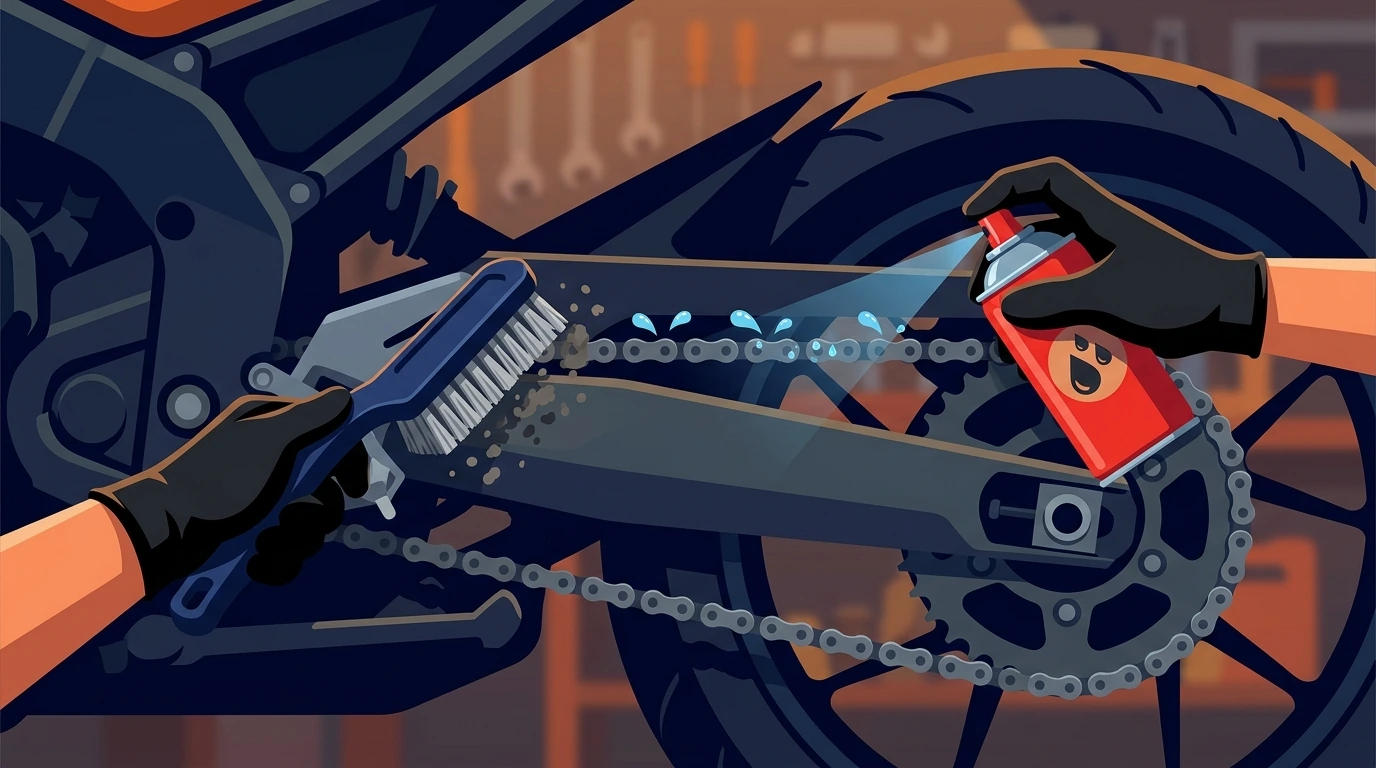
- Scrubbing: Use a specialized chain brush to scrub all sides of the chain, ensuring all residue is dislodged.
- Final Rinse & Drying: Rinse the chain thoroughly to remove all cleaner residue. Crucially, dry the chain completely using compressed air or a clean cloth. Moisture left on the chain is an open invitation for rust.
- Lubrication: Once dry, apply a high-quality, wet-weather specific chain lubricant. This creates a protective film that repels water and prevents corrosion.
Protective Arsenal: Comparing Lubricants and Coatings
Choosing the right product for wet conditions is pivotal. Chain lubricants are formulated with varying properties, impacting their ability to resist washout and provide corrosion protection. Here's a comparison of common types:
| Product Type | Primary Benefit | Water Washout Resistance | Corrosion Protection | Application Frequency (Wet) |
|---|---|---|---|---|
| Wax-based Lube | Minimal fling, clean application | Good to Excellent | Excellent | Every 200-300 miles |
| Synthetic Lube (Wet Formula) | Deep penetration, strong adhesion | Excellent | Very Good | Every 300-400 miles |
| Dry Lube (PTFE/Graphite) | Repels dirt, very clean | Fair to Good | Good | Every 150-200 miles |
| Chain Paste/Grease | Long-lasting, robust coating | Excellent | Excellent | Every 400-500 miles |
PRO TIP: Avoid Over-Lubrication
Applying too much lubricant, especially a sticky wet formula, can attract more dirt and grime, creating an abrasive paste that accelerates wear. Apply sparingly to the inner plates and rollers, allowing it to penetrate, then wipe off excess with a clean cloth.
Long-Term Value: Investing in Chain Health
The cost of replacing a worn-out chain and sprocket set far outweighs the minimal investment in quality chain care products and the time spent on regular maintenance. A well-maintained chain not only lasts longer but also ensures smoother power delivery and better fuel efficiency. For riders frequently encountering wet conditions, investing in a robust wet-specific chain lubricant and a dedicated chain cleaning kit is a wise decision. Some riders also consider chain oilers, which provide continuous, automated lubrication, though these require careful setup and monitoring.
Frequently Asked Questions About Wet Weather Chain Care
How often should I clean and lube my chain in the rainy season?
Ideally, after every significant wet ride. If daily commuting in the rain, a light wipe-down and re-lube every 150-200 miles, with a full clean every 500 miles, is a good baseline.
Can I use WD-40 on my motorcycle chain?
While WD-40 can displace water and clean, it is not a lubricant. It can actually dry out the crucial internal O-rings and wash away factory grease. Always follow up with a proper chain lubricant if you use it for cleaning.
What's the best way to dry my chain after washing?
The most effective method is using compressed air. If unavailable, thoroughly wipe the chain with a clean, lint-free cloth. Ensure it's completely dry before applying lubricant to prevent trapping moisture.
Should I use a chain cover or fender extender?
While not a substitute for proper maintenance, a rear fender extender can significantly reduce the amount of water and road grime flung onto the chain, making your cleaning efforts more effective and extending the time between applications.


Comments
Post a Comment