
Riding a scooter offers unparalleled freedom and efficiency, but an often-overlooked component can quickly turn a smooth commute into a roadside dilemma: the drive belt. This critical part connects the engine's power to the rear wheel, and its failure can leave you stranded, often without warning. Understanding how to identify signs of wear early is crucial for maintaining your scooter's reliability and ensuring your safety on every journey.

Understanding the Drive Belt's Role and Early Warning Signals
The Continuously Variable Transmission (CVT) drive belt on a scooter is engineered to transmit power smoothly from the crankshaft to the rear wheel, allowing for seamless acceleration and deceleration. Over time, this belt endures significant stress from friction, heat, and constant flexing, leading to inevitable wear. Recognizing the initial symptoms of a deteriorating belt can prevent a complete breakdown.
Common indicators of a worn drive belt include:
- Reduced Performance: A noticeable drop in acceleration, particularly from a standstill, or a feeling that the engine is revving higher than usual for a given speed.
- Unusual Noises: Squealing, slapping, or grinding sounds originating from the CVT cover area. These noises often become more pronounced during acceleration or deceleration.
- Vibrations: Increased vibration felt through the footboard or handlebars, especially at specific speeds or during power delivery.
- Slipping Sensation: A feeling that the engine is spinning but not fully engaging the rear wheel, resulting in a momentary loss of power.
Essential Gear for Drive Belt Assessment
Before you begin the inspection process, gathering the correct tools will streamline the task and ensure thoroughness. Most of these items are standard for basic scooter maintenance.
- Socket wrench set (metric, typically 8mm, 10mm, 12mm)
- Screwdriver set (Philips and flathead)
- Torque wrench (for reassembly)
- Parts tray or magnetic dish for fasteners
- Shop rags or clean cloths
- Gloves (optional, for grip and cleanliness)
- Service manual for your specific scooter model (for torque specifications and detailed diagrams)
Step-by-Step Drive Belt Inspection Process
A systematic approach to checking your scooter's drive belt will reveal its true condition. Always ensure the scooter is on its center stand and the engine is off and cool before starting any work.
- Remove the CVT Cover: Locate and remove all bolts securing the CVT cover, typically on the left side of the scooter. Carefully pull the cover away, noting any gaskets or alignment pins.
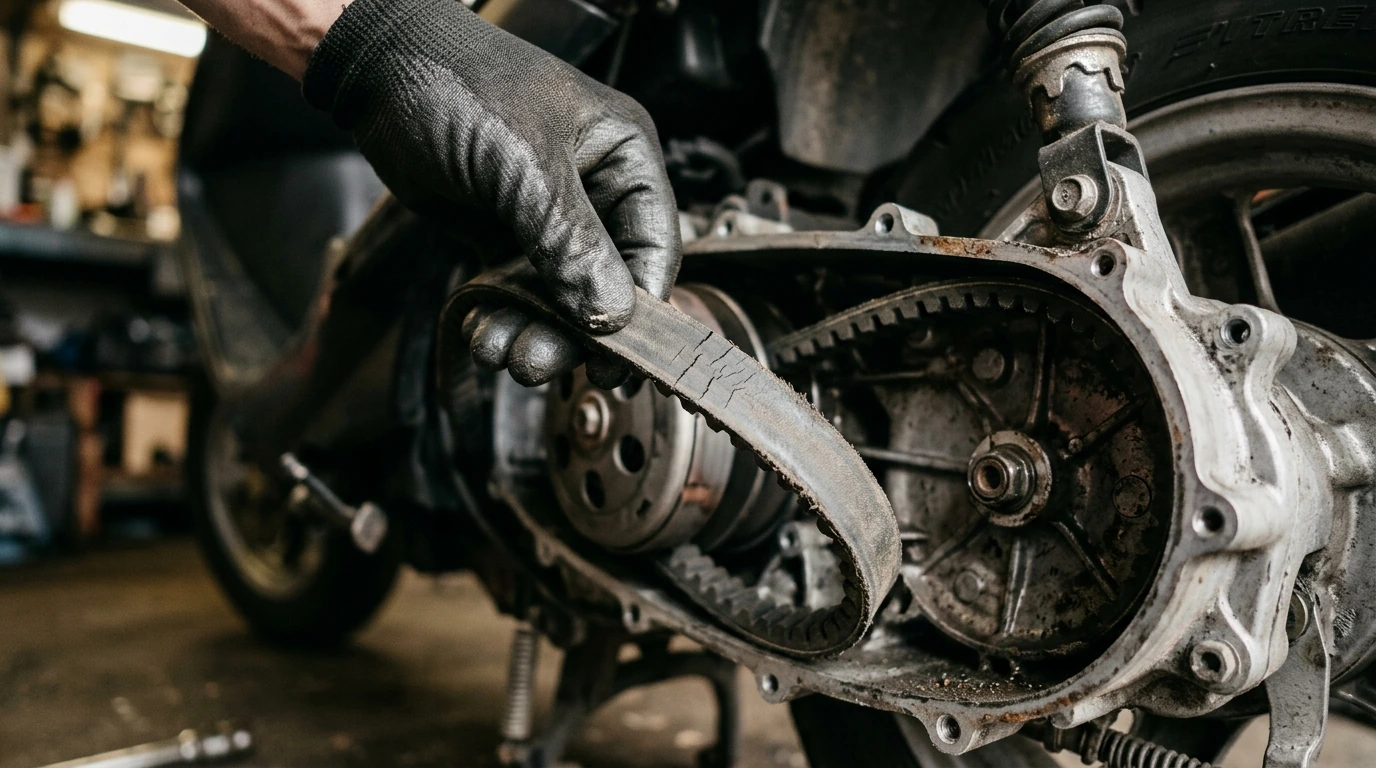
- Initial Visual Check: Once the cover is off, inspect the belt's visible surface. Look for any obvious signs of damage such as deep cracks, fraying edges, missing teeth, or glazing (a shiny, hardened appearance).
- Check Belt Tension and Flexibility: Gently try to twist the belt. A healthy belt should have some flexibility but feel firm. An overly loose or stiff belt can indicate wear.
- Inspect Belt Width: Measure the belt's width using a caliper. Compare this measurement to the minimum width specification provided in your scooter's service manual. A belt that has significantly narrowed indicates substantial wear and is a primary reason for replacement.
- Examine the Belt's Sidewalls: Pay close attention to the angled sides of the belt that contact the variator and clutch pulleys. These surfaces should be smooth and even. Any signs of uneven wear, scoring, or excessive glazing here suggest the belt is slipping or has been subjected to extreme heat.
- Check for Cracks and Delamination: Flex the belt by hand, bending it slightly to reveal any hairline cracks on the inside or outside surfaces. Look for any signs of the belt layers separating (delamination).
- Inspect Pulleys and Rollers: While the belt is accessible, take the opportunity to visually inspect the variator and clutch pulleys for any grooves, pitting, or discoloration. Also, check the variator rollers for flat spots, as worn rollers can accelerate belt wear.
Avoiding Common Mistakes During Belt Checks
Proper inspection requires attention to detail. Overlooking these common pitfalls can lead to an inaccurate assessment of your drive belt's condition.
- Not Removing the Belt for Thorough Inspection: A cursory glance at the belt while it's still on the pulleys may miss critical damage on the underside or sidewalls. For a complete check, it's often necessary to remove the belt.
- Ignoring Manufacturer Specifications: Guessing about belt width or tension can be misleading. Always refer to your scooter's service manual for exact minimum width specifications and recommended replacement intervals.
- Failing to Inspect Associated Components: A worn belt can be a symptom of issues with the variator, clutch, or rollers. Neglecting to inspect these parts can lead to premature wear on a new belt.
- Reusing Damaged Gaskets or O-rings: When reassembling the CVT cover, always ensure that gaskets and O-rings are in good condition. Damaged seals can allow dirt and moisture into the CVT system, accelerating wear.
- Over-Torquing or Under-Torquing Bolts: Using a torque wrench for reassembly is critical. Incorrectly torqued bolts can lead to stripped threads, loose components, or even damage to the CVT cover.
Verifying Your Scooter's Drive Belt Condition
After your inspection, you should have a clear understanding of whether your drive belt requires immediate replacement or if it's still in good working order. Here’s a checklist to confirm your findings:
- Visual Confirmation: Are there any visible cracks, fraying, or glazing on any part of the belt?
- Width Measurement: Does the belt's current width meet or exceed the minimum specification in your service manual?
- Flexibility Check: Does the belt feel supple and consistent, or is it overly stiff or brittle in sections?
- Performance Feedback: Have you experienced any of the warning signs (reduced acceleration, unusual noises, vibrations, slipping) prior to inspection?
- Pulley and Roller Condition: Are the variator and clutch pulleys smooth and free of significant wear? Are the variator rollers round and without flat spots?
If any of these checks indicate significant wear or damage, replacing the drive belt promptly is highly recommended to prevent an unexpected breakdown and potential further damage to your scooter's transmission system.
Frequently Asked Questions About Scooter Drive Belts
How often should a scooter drive belt be replaced?
Replacement intervals vary by scooter model and manufacturer, typically ranging from 7,500 to 15,000 miles. However, riding style, climate, and frequent stop-and-go traffic can accelerate wear, necessitating earlier replacement. Always consult your scooter's service manual for specific recommendations.
What happens if a drive belt snaps while riding?
If a drive belt snaps, power transmission to the rear wheel will immediately cease, causing the scooter to lose propulsion. This can be dangerous, especially at higher speeds, as it can lead to a sudden loss of control. The broken belt can also cause damage to other components within the CVT housing.
Can I replace a scooter drive belt myself?
For individuals with basic mechanical skills and the correct tools, replacing a scooter drive belt is a manageable DIY task. It involves removing the CVT cover, variator, and clutch bell to access the belt. Always follow your scooter's service manual for precise instructions and torque specifications.
Are all scooter drive belts the same?
No, drive belts are specific to scooter makes and models due to variations in length, width, and angle. Using the incorrect belt can lead to poor performance, accelerated wear, or damage to the CVT system. Always purchase a belt that matches your scooter's specifications.


Comments
Post a Comment