
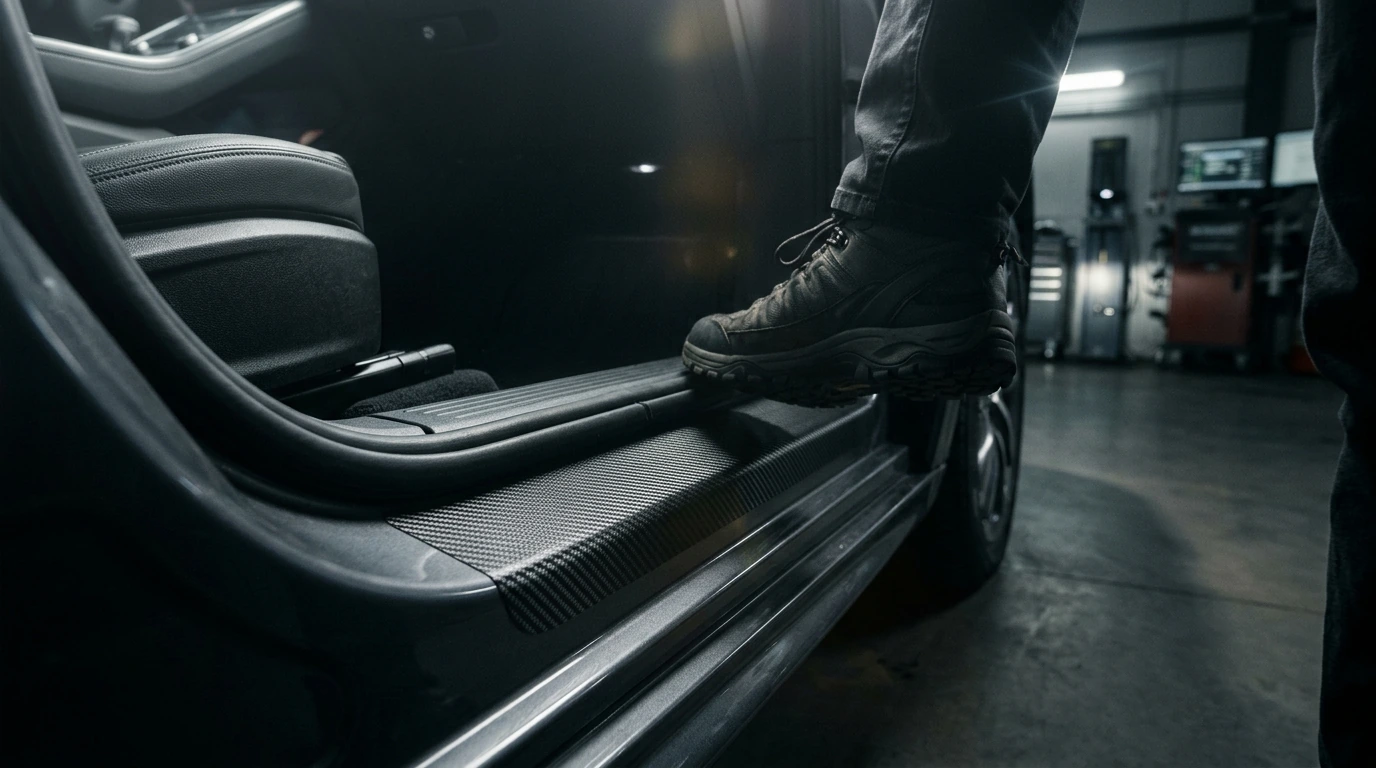
Every time a foot swings into your car, the door sills face an invisible assault. These frequently touched areas are prone to scratches, scuffs, and general wear from shoes, bags, and everyday entry and exit. Left unprotected, this minor damage accumulates, dulling your vehicle’s appearance and potentially impacting its resale value down the line. That's where a dedicated door sill scuff protector, particularly one made from carbon fiber film, steps in.
The Verdict on Carbon Fiber Sill Protectors
Carbon fiber door sill scuff protector film is a straightforward, visually distinct solution for preventing common entry-point damage. It suits car owners who want a clear, durable physical barrier against scuffs and appreciate the sporty aesthetic of a carbon fiber pattern. Those who prioritize a completely invisible form of protection or prefer a minimalist interior might find the textured finish too prominent. The biggest trade-off is often the installation process itself; achieving a bubble-free, perfectly aligned application can be challenging for DIY newcomers.
Understanding the Carbon Fiber Film Difference
These protectors are essentially self-adhesive vinyl or polyurethane films designed to be applied directly onto the car's door sills. Unlike clear paint protection film (PPF), which aims for invisibility, carbon fiber films offer a distinct visual upgrade with their woven texture and usually a slight sheen. They stand out as a visible accessory rather than a hidden layer, often chosen to complement other carbon-look interior or exterior accents. Compared to rigid plastic scuff plates, these films are thinner and conform more closely to the sill's contours, offering a more integrated look without adding bulk.
Key Specifications and What They Mean for You
When choosing a carbon fiber door sill protector, several specifications dictate its effectiveness and user experience:
- Material Composition: High-Density Polyurethane (PU) or PVC
- What It Means: These polymers offer excellent durability, flexibility, and resistance to abrasion, minor impacts, and common automotive chemicals. PU films are generally more flexible and self-healing, while PVC can be stiffer but often more cost-effective.
- Verdict: Plus. This material choice ensures a robust physical barrier against scuffs and scratches.
- Who Feels It: All car owners, particularly those with high-traffic vehicles or families, benefit from the long-term protection against daily wear.
- Film Thickness: Typically 0.2mm to 0.5mm
- What It Means: A thicker film provides a more substantial physical buffer against deeper scratches and impacts. However, overly thick films can be harder to manipulate around curves and corners during installation.
- Verdict: Neutral. While thicker offers more protection, finding a balance (around 0.3mm-0.4mm) is key for manageable DIY application.
- Who Feels It: DIY installers will notice the difference in ease of application, while those seeking maximum impact resistance will prefer the thicker end of the spectrum.
- Adhesive Type: Strong Acrylic-Based, Pressure-Sensitive
- What It Means: A quality acrylic adhesive ensures the film stays firmly in place through temperature changes, washes, and daily use. It's activated by pressure during application, requiring firm squeegeeing for a secure bond.
- Verdict: Plus. Reliable adhesion prevents peeling edges and premature failure, crucial for long-term protection.
- Who Feels It: Owners in varied climates and those who wash their cars frequently will appreciate the film's steadfast attachment.
- Surface Finish: 3D Textured Carbon Fiber Pattern
- What It Means: This visual texture mimics the look of real carbon fiber, adding a sporty and customized element to the car's interior. It's more visible than clear protection films.
- Verdict: Neutral/Minus. The aesthetic is a matter of personal preference; it enhances a sporty look but may clash with more luxurious or understated interior designs.
- Who Feels It: Buyers prioritizing specific interior aesthetics and those who want their protection to be a visible style statement.
Real-World Scenarios for Sill Protection
Understanding how these films perform in everyday situations helps gauge their utility:
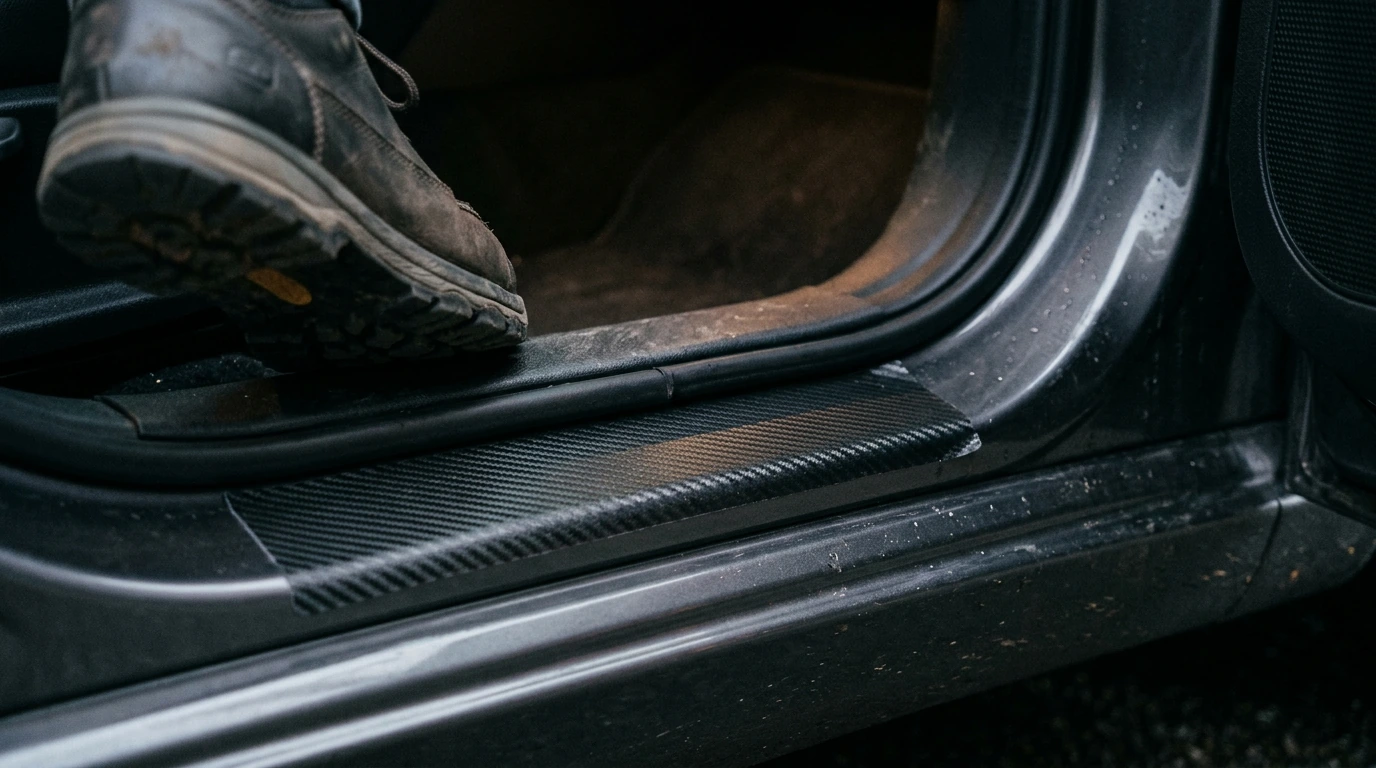
- The Daily Commute: For vehicles used daily, especially in urban environments, door sills are constantly exposed to shoe scuffs. The high-density PU/PVC film, with its abrasion resistance, should effectively absorb these impacts, keeping the underlying paint pristine. The adhesive's durability means it won't peel from frequent contact.
- Family Vehicles with Young Passengers: Kids are notorious for restless feet and accidental bumps when getting in and out of a car. A film with a thickness of 0.3mm or more provides a significant buffer against these minor but frequent impacts, protecting the sills from scratches and even small dents that rigid plates might prevent.
- Maintaining Resale Value: When it comes time to sell or trade in a vehicle, the condition of high-wear areas like door sills can influence its perceived value. By preventing accumulated damage, these films help maintain a "like new" appearance in critical areas, potentially contributing to a better offer.
Advantages and Drawbacks of Carbon Fiber Sill Film
Advantages
- Durable Physical Barrier: The high-density PU/PVC material composition provides a robust layer of protection, directly shielding the paint from scuffs and scratches from shoes, bags, and other objects.
- Cost-Effective Protection: Compared to professional paint protection film application or replacing damaged sills, these films offer an affordable way to prevent wear and tear, thanks to their accessible material and DIY potential.
- Aesthetic Enhancement: The 3D textured carbon fiber pattern adds a sporty and customized look to the vehicle's interior, which many owners appreciate as a visual upgrade.
- Preserves Resale Value: By keeping the door sills free from visible damage, the film helps maintain the overall pristine condition of the car, which can be a factor in future resale or trade-in value.
Drawbacks
- Visible Aesthetic: The distinct 3D textured carbon fiber finish is not for everyone. Owners preferring a factory-original, understated, or invisible protective solution may find this film too prominent.
- Installation Challenges: Achieving a perfectly smooth, bubble-free, and crease-free application can be difficult for DIYers, especially on sills with complex curves, due to the film's thickness and adhesive type.
- Potential for Residue: While the strong acrylic adhesive ensures longevity, if the film is left on for many years or improperly removed, there's a theoretical risk of adhesive residue being left behind on the paint, requiring careful cleaning.
- Limited Conformity on Extreme Curves: While flexible, thicker films (0.4mm+) can sometimes struggle to conform perfectly to extremely tight or compound curves without some stretching or heat, potentially leading to lifting edges if not applied expertly.
Alternatives Worth Considering
If carbon fiber film isn't quite right for your needs, other options exist:
- Clear Paint Protection Film (PPF): For those who want invisible protection, a high-quality clear PPF offers robust scratch and chip resistance without altering your car's aesthetic. It's often more expensive, especially for professional installation.
- OEM or Aftermarket Plastic Scuff Plates: Many vehicles offer rigid plastic scuff plates, either from the manufacturer or aftermarket. These provide excellent impact protection and are very durable, though they add bulk and might not cover the entire sill area as comprehensively as film.
Value and Buying Advice
Carbon fiber door sill protector film generally represents excellent value for proactive protection, especially considering the cost of repairing scratched or damaged sills. Its durability and aesthetic appeal make it a popular choice. Since prices can vary significantly by brand, material quality, and vehicle-specific sizing, always check the current price at reputable automotive retailers or the official manufacturer's store to ensure you're getting the best deal for your specific model.
Final Recommendation
Buy if: You want a durable, visible layer of protection for your door sills, appreciate the sporty carbon fiber aesthetic, and are prepared for a careful DIY installation or professional application. This is ideal for daily drivers, family cars, or anyone looking to add a custom touch while preserving their vehicle's interior condition.
Skip if: You prefer completely invisible protection, dislike the carbon fiber look, or are unwilling to commit to a potentially meticulous installation process. In such cases, clear PPF or rigid plastic scuff plates might be better alternatives.
Frequently Asked Questions
How long does carbon fiber sill film typically last?
With proper installation and care, a good quality carbon fiber sill film can last anywhere from 3 to 7 years, depending on exposure to elements, frequency of use, and the specific material's durability.
Is it difficult to install these protectors yourself?
Installation can be moderately challenging for beginners. While the process involves cleaning, spraying a slip solution, applying the film, and squeegeeing out bubbles, achieving a perfectly smooth, crease-free finish, especially on curved sills, requires patience and precision.
Can these films damage my car's paint upon removal?
When applied to factory paint in good condition and removed correctly (often with gentle heat), carbon fiber films generally do not damage the paint. However, if the paint is already compromised or the film is left on for an excessively long period, there's a slight risk of adhesive residue or minor paint lifting.
This review is compiled from official product specifications and widely reported user feedback, rather than a personal lab test. Details such as exact thickness or adhesive type can sometimes vary by region or specific product variant, so always consult the manufacturer's latest specifications.


Comments
Post a Comment