
Many drivers assume that blasting the cabin defroster at full temperature while hacking away with a plastic scraper remains the standard, unavoidable ritual of cold-weather commuting. The underlying belief suggests that fabric vehicle covers are cumbersome accessories that freeze to the glass or blow away in high winds. Radiative cooling physics tells a different story. Stopping frost accretion at the outer glass interface using a properly fitted magnetic shield reduces morning preparation from fifteen minutes of shivering idle time to fifteen seconds of lifting folded fabric.
Thermal Dynamics Behind Glass Radiative Cooling
During clear winter nights, a parked vehicle loses heat rapidly through thermal radiation toward the open sky. Windshield glass, being a dense ceramic structure, drops significantly below the ambient air temperature. As relative humidity reaches saturation, water vapor condenses directly onto the freezing glass surface, forming a stubborn crystalline lattice known as hoarfrost.
Aggressive physical scraping against frost-bound glass carries real risks. Fine road grit and windblown dust trapped beneath the ice act like coarse sandpaper when dragged across the surface under heavy hand pressure. Micro-scratches accumulate across the glass over consecutive winter seasons, creating blinding glare patterns under oncoming headlight beams at night. A physical protective barrier isolates the glass from atmospheric moisture, maintaining an air pocket above the dew point and keeping the outer laminate dry.
Magnetic Edge Retention Versus Flap-Only Designs
Traditional fabric glass covers rely entirely on side flaps pinched inside the front door frames. While this deters theft, lightweight designs without lower perimeter weighting frequently lift during winter squalls. Once high winds break the seal along the lower glass edge, cold air channels beneath the material, trapping moisture underneath and causing the cover fabric to freeze directly to the windshield wiper blades.
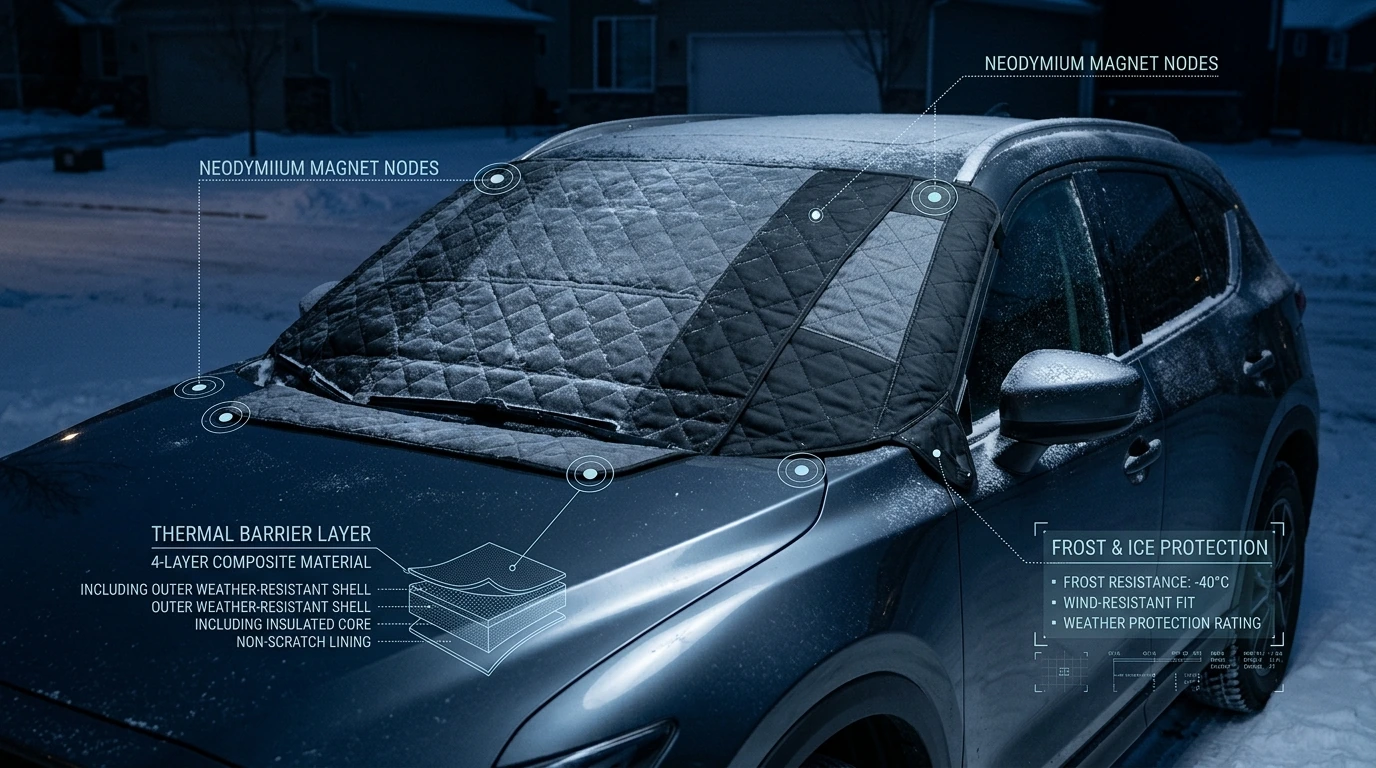
Modern high-spec covers address this issue by integrating heavy-duty N35 or N42 rare-earth neodymium magnets along the upper roofline and lower cowl margins. These enclosed magnetic nodes grip the ferrous steel perimeter surrounding the windshield, creating a taut, wind-resistant seal that prevents updrafts from lifting the edges.
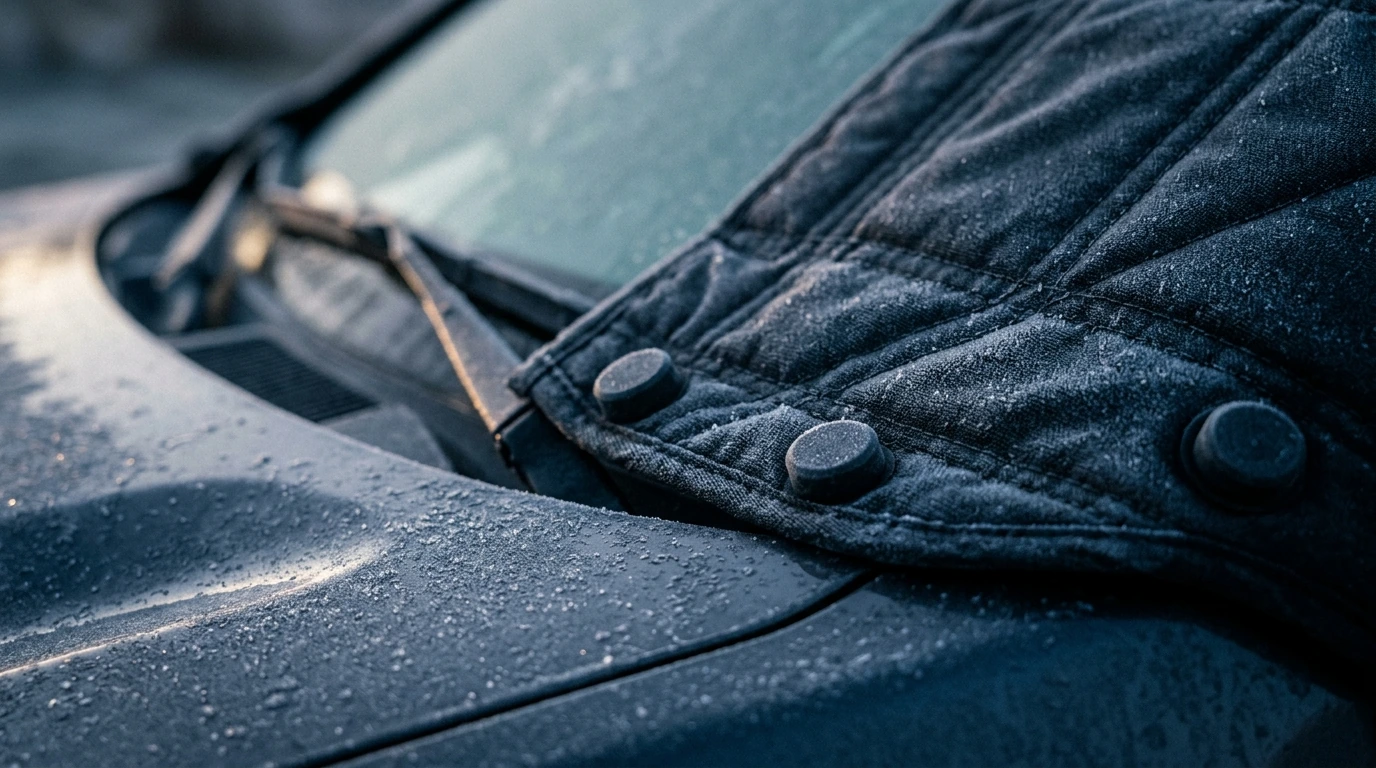
The construction quality of these panels varies widely across commercial options. Inferior covers utilize bare ceramic magnets stitched into single-layer polyester, which can scratch paint if dragged across dirty body panels. Premium designs wrap rare-earth magnets inside soft silicone or rubberized pockets beneath thick, multi-layer composites consisting of aluminum film, spunlace cotton, and soft non-woven backing materials.
Comparing Winter Windshield Clearance Systems
Evaluating winter preparation tools involves balancing setup speed, ongoing maintenance costs, fuel consumption, and long-term vehicle wear. The functional differences across common morning de-icing routines highlight key technical trade-offs:
| De-Icing Method | Average Clearance Time | Surface Scratch Risk | Fuel & Emission Impact | Wind Stability |
|---|---|---|---|---|
| Manual Scraper & Defroster | 10 – 20 Minutes | High (Grit abrasion) | High extended idling | N/A |
| Chemical Aerosol Spray | 3 – 5 Minutes | Low | Moderate engine warm-up | N/A |
| Door-Flap Fabric Cover | 1 – 2 Minutes | Moderate (Flap drag) | Zero extended idling | Moderate (Prone to lifting) |
| Multi-Layer Magnetic Cover | Under 1 Minute | Very Low (When clean) | Zero extended idling | High magnetic seal |
Year-Round Utility and Proper Storage Protocols
While designed primarily for snow and frost protection, high-reflectivity multi-layer covers serve a dual role in hot summer climates. Reversing the installation to face the silvered aluminum layer outward blocks intense solar radiation, lowering interior cabin temperatures by as much as 40 degrees Fahrenheit and protecting sensitive dashboard plastics from ultraviolet degradation.
To maximize the operational lifespan of a magnetic cover, proper post-use handling is critical:
- Shake off loose moisture: Give the cover a firm snap after lifting it from the glass to shed heavy surface ice and wet slush before folding.
- Avoid immediate trunk storage: Storing a soaking wet cover inside a sealed trunk promotes mold growth and persistent odors. Dry the panel in a garage or utility space whenever possible.
- Inspect magnet pockets regularly: Periodically check the inner stitching around magnetic nodes to ensure water ingress hasn't begun oxidizing steel components inside lower-cost units.
Transitioning from mechanical glass scraping to external thermal barrier protection yields immediate benefits in daily convenience, wiper blade durability, and fuel efficiency. Choosing a properly weighted, composite-fabric magnetic cover turns a frustrating winter delay into a clean, effortless drive out of the driveway.


Comments
Post a Comment