
Are those flimsy plastic hooks really enough to secure your groceries? Not always; selecting a robust headrest hook prevents spills and keeps your vehicle tidy.

Key Takeaways
- Material Matters: Opt for high-grade ABS plastic or aluminum alloy for superior durability and load capacity.
- Check Compatibility: Ensure the hook's design fits your headrest post diameter and allows for easy installation without damaging upholstery.
- Verify Load Ratings: Adhere to manufacturer-specified weight limits to prevent breakage and ensure stability for your items.
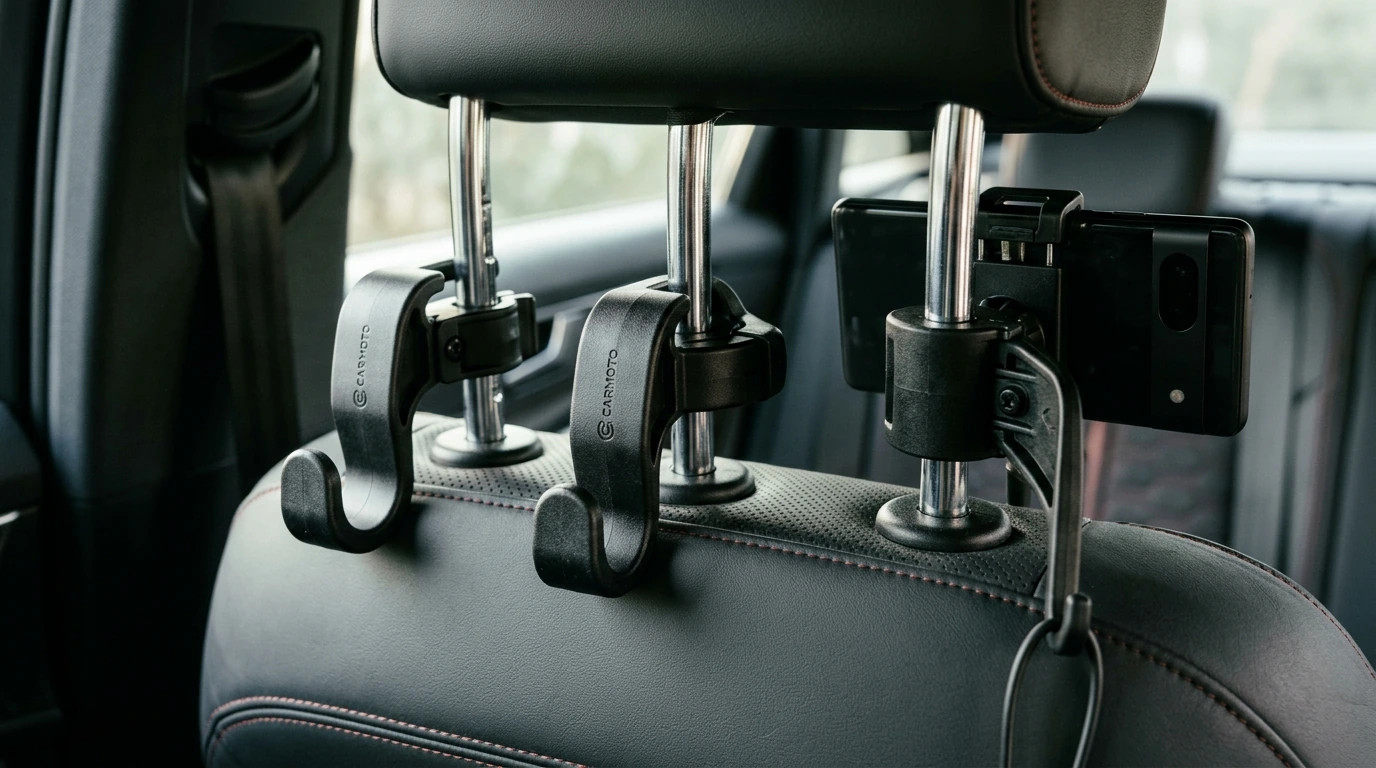
- Consider Multi-functionality: Some hooks offer additional features like phone holders, adding practical value to your vehicle.
Understanding the Core Utility: More Than Just a Hanger
Car headrest hooks serve a straightforward, yet often underestimated, purpose: transforming unused space into practical storage. These simple accessories prevent items from rolling around on seats or floors, which can be a significant distraction and safety hazard. Beyond just groceries and takeout, they are ideal for keeping purses, backpacks, dry cleaning, umbrellas, and even smaller sports equipment securely in place. The true value lies in maintaining a tidy cabin and ensuring your belongings are accessible and protected from damage during transit.
Material Matters: Durability and Vehicle Protection
The construction material of a headrest hook directly dictates its strength, longevity, and how it interacts with your vehicle's interior. Most hooks are made from either ABS plastic or various metal alloys.
- ABS Plastic: Known for its good balance of strength, flexibility, and impact resistance. High-quality ABS plastic hooks are lightweight and generally cost-effective. They are less likely to scratch headrest posts compared to metal, though lower-grade plastics can become brittle over time, especially with frequent exposure to extreme temperatures.
- Aluminum Alloy/Stainless Steel: These materials offer superior strength and durability, making them suitable for heavier loads. Metal hooks often have a more premium feel. However, users should look for designs with rubberized or silicone-coated contact points to prevent scratching the headrest posts or tearing seat fabric, particularly during installation or when items swing.
Pro Tip: Before purchasing, measure the diameter of your vehicle's headrest posts. Some hooks are designed for specific post sizes, and an ill-fitting hook can lead to instability or potential damage to your vehicle's interior.
Installation and Fit: Universal vs. Vehicle-Specific Designs
The ease of installing a headrest hook is a key factor in its overall user experience. Most designs aim for universal compatibility, but variations exist:
- Open-Ended Hooks: These typically slide directly onto the headrest post from the side, often requiring a slight gap between the headrest and the seatback. They are generally quick to install and remove.
- Closed-Loop Hooks: These designs often feature a latching mechanism or require the headrest to be lifted and the hook to be threaded around the posts before lowering the headrest back into place. While slightly more involved to install, they can offer a more secure, permanent fit.
- Integrated Solutions: Some hooks come with additional features, such as phone holders or tablet stands. These multi-functional designs aim to maximize utility from a single accessory.
For vehicles with non-removable headrests, ensure the hook's design allows for installation without needing to lift or remove the headrest entirely. Compatibility with your specific headrest post diameter is paramount for a snug and secure fit.
Load Capacity and Stability: What the Specs Really Mean
Manufacturer specifications for load capacity are critical. While many hooks claim to support several pounds, these figures are typically derived under ideal, static conditions. In a moving vehicle, dynamic forces from acceleration, braking, and turns can significantly increase the effective load on the hook. For instance, a hook rated for 20 pounds might struggle with a 15-pound bag of groceries during a sudden stop if its design lacks sufficient structural rigidity or anti-sway features. Always consider the typical weight of items you intend to hang and opt for hooks with a comfortable margin above that weight. Wider hooks or those with broader contact points tend to distribute weight more effectively and offer greater stability.
Common Headrest Hook Types at a Glance
| Feature | ABS Plastic Hooks | Aluminum Alloy/Stainless Steel Hooks |
|---|---|---|
| Typical Material | High-grade ABS plastic | Aluminum alloy, Stainless steel |
| Reported Load Capacity (per hook) | Up to 20-30 lbs (9-13 kg) | Up to 40-50 lbs (18-22 kg) |
| Scratch Risk to Interior | Low (unless low-quality plastic) | Moderate (if not coated/padded) |
| Flexibility/Durability | Good flexibility, can become brittle over time | High rigidity, excellent long-term durability |
| Typical Cost | Lower | Higher |
Common Pitfalls to Avoid with Headrest Hooks
Even the most practical accessories can lead to issues if not used correctly or if the wrong product is chosen:
- Overloading: Exceeding the stated weight limit is a primary cause of hook failure. This can lead to the hook breaking, items falling, and potentially damaging your vehicle's interior or the items themselves.
- Incorrect Installation: A hook that isn't properly secured can dislodge during driving, causing items to fall. Ensure it's snug against the headrest post and doesn't wobble excessively.
- Choosing Sharp-Edged Hooks: Hooks with sharp or abrasive edges, especially metal ones without protective coatings, can tear delicate bag materials, scratch plastic interior panels, or even damage leather upholstery over time.
- Obstructing Rear-View: While unlikely for most items, ensure that whatever you hang does not significantly obstruct your rear-view mirror or side window visibility, which is a critical safety consideration.
Looking Ahead: Innovations in Vehicle Organization
The evolution of vehicle interiors continues to drive innovation in accessories. Future headrest hook designs may integrate more seamlessly with vehicle aesthetics, offering advanced materials with even greater strength-to-weight ratios or smart features like inductive charging for small devices. The focus will likely remain on durability, user-friendliness, and multi-functionality, ensuring these simple solutions continue to adapt to the diverse needs of modern drivers and passengers.
Choosing the right car headrest hook is a small decision that yields significant practical benefits for vehicle organization and cleanliness. By considering material quality, installation compatibility, and realistic load capacities, you can select an accessory that genuinely enhances your driving experience and keeps your vehicle's interior in top condition for years to come.


Comments
Post a Comment