
The Essential Pre-Ride Tire Check
Your motorcycle tires are your only connection to the road.
A thorough tire inspection before any significant ride is non-negotiable for rider safety. This guide outlines a systematic approach to identify potential hazards like hidden nails and punctures. Every rider, from daily commuters to long-distance tourers, benefits from this diligence; skipping it risks dangerous roadside failures. The biggest trade-off is the time invested, which is a small price for peace of mind and accident prevention.

Why a Deep Dive into Your Tires Matters
Casual glances at your tires often miss critical issues. This detailed inspection process differs from a quick walk-around by emphasizing systematic, tactile, and visual scrutiny of every square inch. It's about moving beyond superficial checks to actively search for subtle signs of damage or embedded objects that could compromise tire integrity miles down the road.
Critical Inspection Points for Tire Health
Effective tire inspection hinges on several key areas, each contributing to a comprehensive safety check.
-
Tread Surface Visual Scan
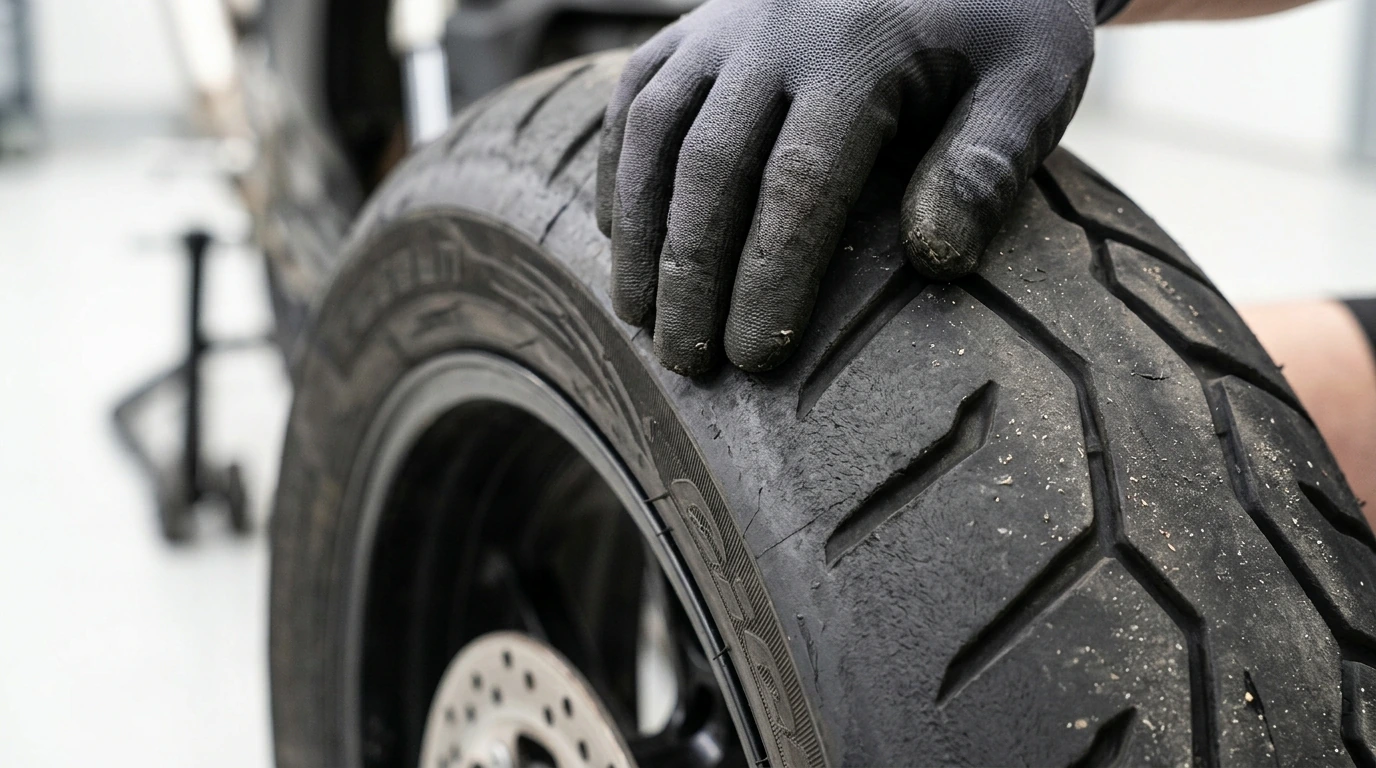
What It Means: Systematically rotating the wheel slowly while visually scanning the entire tread surface for foreign objects like nails, screws, glass shards, or embedded debris. This also includes looking for cuts, cracks, or unusual wear patterns.
Impact: Critical for preventing sudden deflation. Missing a hidden object can lead to rapid air loss or a blowout at speed, which is extremely dangerous.
Rider Benefit: All riders, especially those planning highway speeds or remote travel, benefit from the peace of mind and enhanced safety of a clear tread.
-
Sidewall Examination
What It Means: Carefully inspecting both sidewalls for bulges, cracks, cuts, dry rot, or any signs of impact damage. Sidewalls are thinner than the tread and more susceptible to damage from curbs or road hazards.
Impact: Crucial for maintaining structural integrity. Sidewall damage often leads to catastrophic failure without warning, as the tire's internal structure is compromised.
Rider Benefit: Riders who frequently encounter rough roads, perform aggressive cornering, or carry heavy loads will particularly feel the benefit of detecting early sidewall degradation.
-
Air Pressure Verification
What It Means: Using a reliable tire pressure gauge to check and adjust the tire pressure to the manufacturer's recommended specifications (usually found on a sticker on the swingarm or in the owner's manual). This should be done when tires are cold.
Impact: Essential for handling, fuel efficiency, and tire longevity. Incorrect pressure can lead to poor grip, increased stopping distances, uneven wear, and overheating, which increases blowout risk.
Rider Benefit: Every rider experiences improved handling predictability, better fuel economy, and extended tire life when maintaining correct pressures.
-
Valve Stem Integrity Check
What It Means: Inspecting the valve stem for cracks, damage, or looseness, and ensuring the valve cap is securely in place. A leaking valve stem can cause slow air loss.
Impact: Important for consistent pressure. A faulty valve stem can be a subtle source of air leaks, leading to underinflation over time, which carries all the risks associated with incorrect pressure.
Rider Benefit: Riders who leave their motorcycle parked for extended periods, or those who check their tires infrequently, will particularly appreciate preventing slow leaks from this often-overlooked component.
Scenarios Where Diligence Pays Off
A thorough tire inspection proves its worth in several critical situations.
Imagine embarking on a multi-state tour; catching a slow leak from a small screw during your pre-trip check means a simple repair at home instead of a dangerous, inconvenient flat tire on a remote highway. Similarly, for riders planning an aggressive canyon carving session, verifying sidewall integrity and proper pressure ensures predictable handling and maximum grip, preventing a loss of control from a compromised tire. Even for daily city commuting, identifying early signs of dry rot on the sidewall, which could lead to a blowout, allows for proactive tire replacement, avoiding a breakdown in heavy traffic.
The Advantages and Pitfalls of Thorough Inspection
Dedicating time to a detailed tire check yields significant benefits and avoids serious risks.
Advantages of a Careful Scan
- Enhanced Safety: A systematic tread scan and sidewall examination directly reduce the risk of unexpected blowouts or rapid deflation, which is critical for rider and passenger safety.
- Improved Handling and Performance: Verifying correct air pressure ensures optimal tire contact patch, leading to predictable steering, better braking, and responsive handling.
- Extended Tire Lifespan: Early detection of uneven wear patterns or minor damage during the visual scan allows for timely intervention, preventing premature tire replacement and saving costs.
- Peace of Mind: Knowing your tires are in optimal condition, confirmed by a thorough inspection, allows for a more relaxed and enjoyable riding experience, especially on long journeys.
Risks of Neglecting Your Tires
- Increased Accident Risk: Ignoring the tread surface visual scan can leave hidden nails or damage undetected, leading to sudden tire failure and a high risk of a serious accident.
- Compromised Ride Quality: Skipping air pressure verification results in suboptimal handling, reduced braking effectiveness, and an uncomfortable ride, making the motorcycle feel less stable.
- Costly Roadside Breakdowns: Failure to inspect sidewalls for damage or valve stems for leaks can lead to unexpected flats far from home, incurring towing costs and significant delays.
- Accelerated Tire Wear: Consistent under or over-inflation due to neglected pressure checks or undetected slow leaks will cause tires to wear out much faster, requiring more frequent and expensive replacements.
The Verdict: Inspect or Risk It
Buy if: You value your safety, your motorcycle's performance, and want to avoid unexpected roadside incidents. A thorough tire inspection is an essential pre-ride ritual for any responsible rider, especially before long weekend trips.
Skip if: You are comfortable with significantly increased risks of tire failure, compromised handling, and potential accidents on your rides. However, this approach is strongly discouraged for obvious safety reasons.
This review is compiled from official specifications and widely reported user feedback rather than a personal lab test. Details and specific recommendations can differ by motorcycle model or tire variant.


Comments
Post a Comment