
Road salt and mud are insidious enemies of your vehicle's undercarriage, silently accelerating corrosion far more aggressively than typical dirt. Regular cleaning of wheel wells is not just about aesthetics; it's a critical preventative measure against long-term damage, particularly after winter driving or off-road excursions.
Key Takeaways
- Accessible Cleaning: A garden hose is a fundamental, accessible method ideal for routine maintenance and those without pressure washer access.
- Targeted Rinse: Focus on dislodging loose contaminants and dissolving salt deposits rather than tackling heavily caked-on, dried mud.
- Technique Over Pressure: Maximize effectiveness by using a strong, focused stream and working from top to bottom, allowing gravity to assist.
- Regularity is Key: Frequent, lighter rinses are more effective at preventing build-up and corrosion than infrequent, intense cleaning sessions.
The Garden Hose Approach Explained
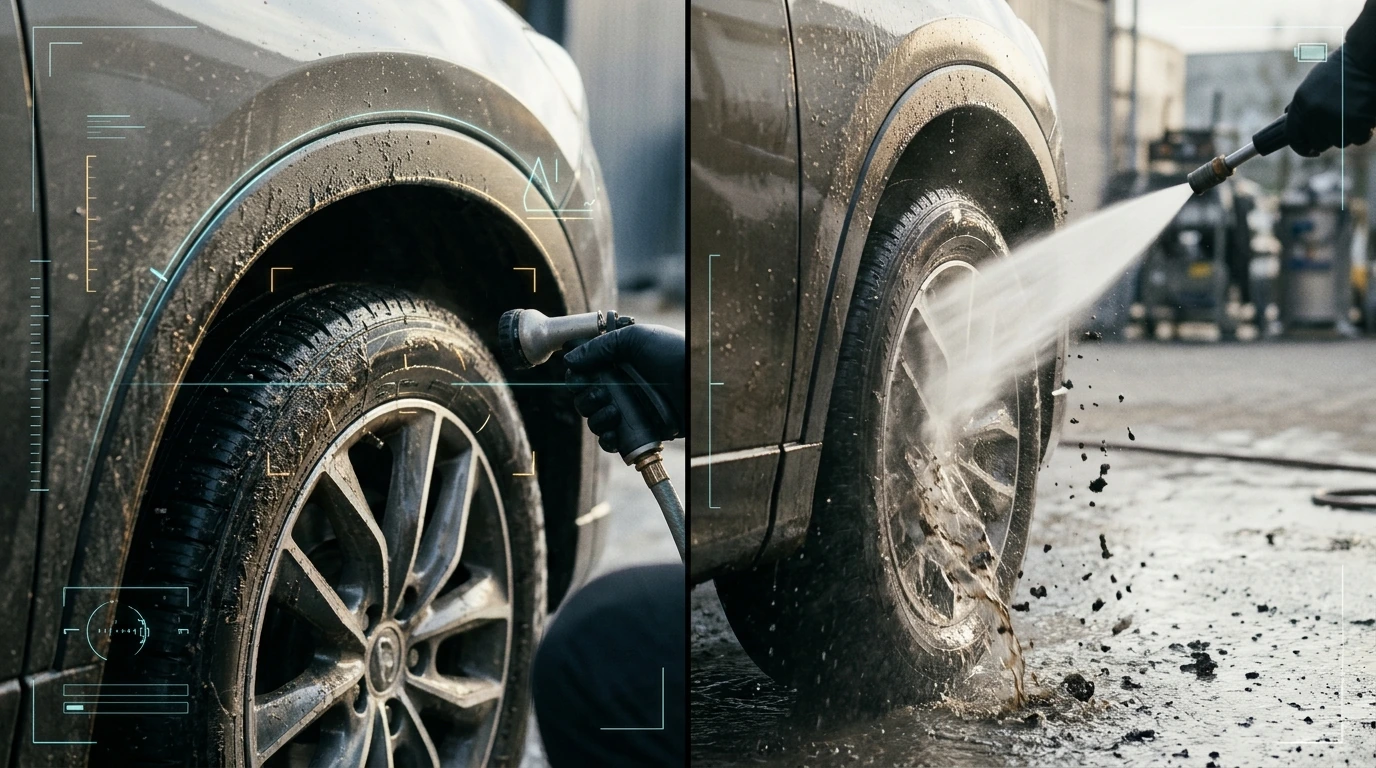
Using a garden hose for wheel well cleaning is a fundamental, accessible method, ideal for regular maintenance and those without pressure washer access. This technique primarily focuses on rinsing away road salt, loose mud, and light debris before they can adhere firmly or initiate corrosion. Its primary limitation is the lower pressure, which demands more time and manual effort for stubborn grime compared to a dedicated pressure washer.
This method shines in its simplicity and gentleness, making it a safe choice for all vehicle finishes and undercarriage components. It's about consistent, preventative care rather than aggressive deep cleaning.
Essential Tools and Techniques Breakdown
Achieving a clean wheel well with a garden hose relies heavily on selecting the right attachments and employing a systematic approach. The effectiveness isn't about brute force, but rather the strategic application of water flow.
| Step/Tool | Purpose & Effect | Impact (Plus / Minus / Neutral) | User Benefit/Challenge |
|---|---|---|---|
| Garden Hose with Adjustable Nozzle | Delivers water flow to dislodge loose contaminants. The adjustable nozzle allows for focused streams to break up grime or broader rinses for general debris. | Plus | Benefits the casual DIYer seeking a safe, non-aggressive cleaning. Challenging for deeply embedded debris. |
| Wheel Brush or Long-Handled Brush | Provides mechanical agitation to loosen caked-on mud and scrub away stubborn salt residues that water alone can't remove. | Plus | Essential for effective cleaning, especially on textured plastic liners. Requires some physical effort. |
| All-Purpose Cleaner (Diluted) | Breaks down greasy road film, mud, and salt deposits at a chemical level, allowing them to be rinsed away more easily. | Plus | Enhances cleaning power significantly. Requires careful dilution and rinsing to avoid residue. |
| Working Top-Down & Thorough Rinsing | Gravity assists in carrying loosened dirt downwards. A complete rinse ensures no cleaning product or loosened grime is left behind to dry and re-adhere. | Plus | Maximizes efficiency and prevents water spots or streaks. Requires patience and attention to detail. |
Real-World Cleaning Scenarios
Understanding when and how to deploy the garden hose method makes a significant difference in its effectiveness and the longevity of your vehicle's underbody.
Post-Winter Salt Rinse
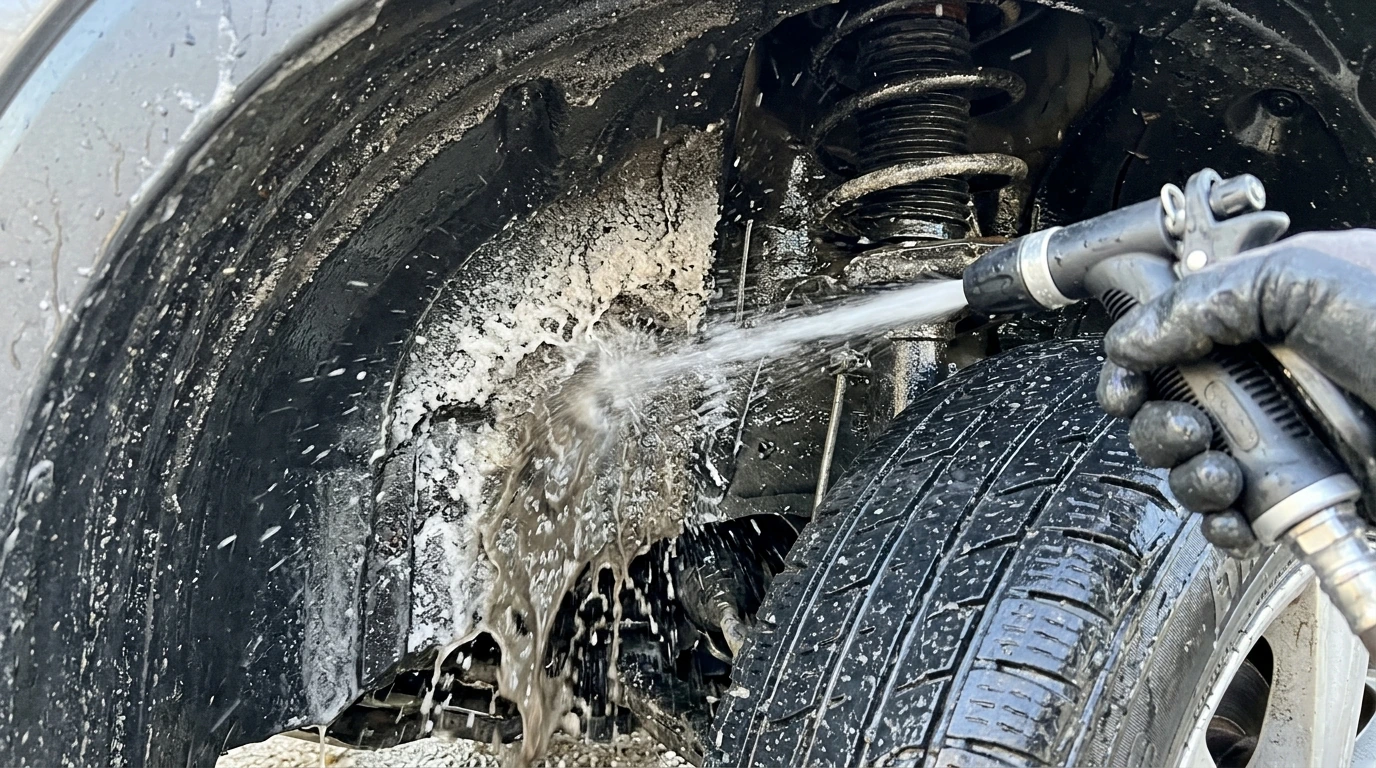
After driving through salted roads, the garden hose method is excellent for a quick, frequent rinse. Focus on the inner fender liners, suspension components, and the back of the wheel itself. The goal here is to dissolve and flush away corrosive salt brine before it can dry and crystalize. While it won't remove deeply embedded grime, its regular application will significantly mitigate salt-induced corrosion.
Light Mud After a Dirt Road Drive
For light to moderate mud splashes, especially when still wet, a garden hose can be highly effective. Use a strong, focused stream from your nozzle to blast away the fresh mud. If the mud has started to dry, a pre-soak with water followed by a brush and an all-purpose cleaner will be necessary to fully dislodge it. The lower pressure means dried, caked-on mud will require more manual scrubbing.
Pre-Detail Rinse for Surface Grime
Before a more thorough detail of your vehicle, the garden hose method serves as an excellent initial step to remove surface grime from wheel wells. This prevents larger particles from scratching painted surfaces or contaminating detailing tools. It's about clearing the path for finer cleaning, ensuring you're not rubbing abrasive dirt into your finish.
Advantages and Drawbacks of Hose Cleaning
Every cleaning method has its strengths and weaknesses, and the garden hose is no exception. Understanding these helps set realistic expectations.
Key Advantages
- Accessibility and Cost-Effectiveness: Nearly every household has a garden hose, making this method universally accessible and requiring no specialized equipment purchases beyond a nozzle and brush.
- Gentle on Surfaces: The lower pressure of a garden hose is inherently safer for delicate undercarriage components, paint, and plastic liners, minimizing the risk of damage compared to high-pressure washing.
- Frequent Application Friendly: Its simplicity and speed for light rinsing encourage more frequent cleaning, which is crucial for preventing salt and mud from caking on and causing long-term corrosion.
- Environmental Impact: Generally uses less water than a full pressure wash for light rinses, and avoids the need for harsh chemicals if only water is used.
Notable Drawbacks
- Limited Cleaning Power: The lower water pressure struggles with heavily caked-on, dried mud, thick grease, or deeply embedded grime, requiring significant manual scrubbing.
- Time and Effort Intensive: Achieving a thorough clean often demands more time and physical effort, especially when using brushes and all-purpose cleaners, compared to the rapid action of a pressure washer.
- Less Efficient for Large Vehicles: Cleaning the expansive wheel wells of trucks or SUVs can become a protracted task due to the lower flow rate and pressure, making it less efficient for larger vehicles.
- Water Spot Potential: Without proper drying or a final rinse with deionized water, tap water can leave mineral deposits and water spots, particularly on visible suspension components.
Other Approaches Worth Considering
While a garden hose is a solid baseline, other methods offer different levels of intensity and convenience.
- Pressure Washer: For heavily soiled wheel wells, a pressure washer provides significantly more force to blast away caked mud and grime quickly. It's the better choice for off-road vehicles or infrequent deep cleaning, but requires careful technique to avoid damaging sensitive components.
- Dedicated Wheel Well Cleaners & Degreasers: These specialized products are formulated to chemically break down tough grease, tar, and stubborn mud. They are often used in conjunction with a pressure washer or garden hose, providing enhanced cleaning power for challenging build-ups.
- Professional Car Washes (with undercarriage wash): Many automated car washes offer an undercarriage rinse, which can be a convenient option for regular salt removal. However, their effectiveness varies, and they may not fully reach all nooks and crannies.
Value & Practical Advice
The garden hose method offers exceptional value by leveraging readily available tools for essential car maintenance. It's arguably the most cost-effective way to regularly protect your vehicle's wheel wells from corrosive elements. The key investment is not monetary, but in time and consistent effort.
When selecting a nozzle, prioritize one with adjustable spray patterns, including a strong, focused stream. A good quality wheel brush with a long handle will also be invaluable for reaching deep into the wheel well and agitating stubborn dirt. Always check the current prices for these simple tools at your local hardware or automotive store to ensure you're getting the best deal.
Car Trunk Smells Like a Gym Locker? Here's How to Deep Clean for Lasting Freshness →
Final Recommendation
Opt for the garden hose method if you prioritize gentle, frequent cleaning, budget-friendliness, and are tackling light to moderate salt and mud. Skip this method if you regularly contend with extreme, dried-on mud or thick grease, or if you need the maximum efficiency and power that a pressure washer provides.
This article synthesizes official specifications and widely reported user feedback; it is not based on personal lab testing. Specific details regarding cleaning efficacy can vary based on the type of dirt, water pressure, and tools used.


Comments
Post a Comment