
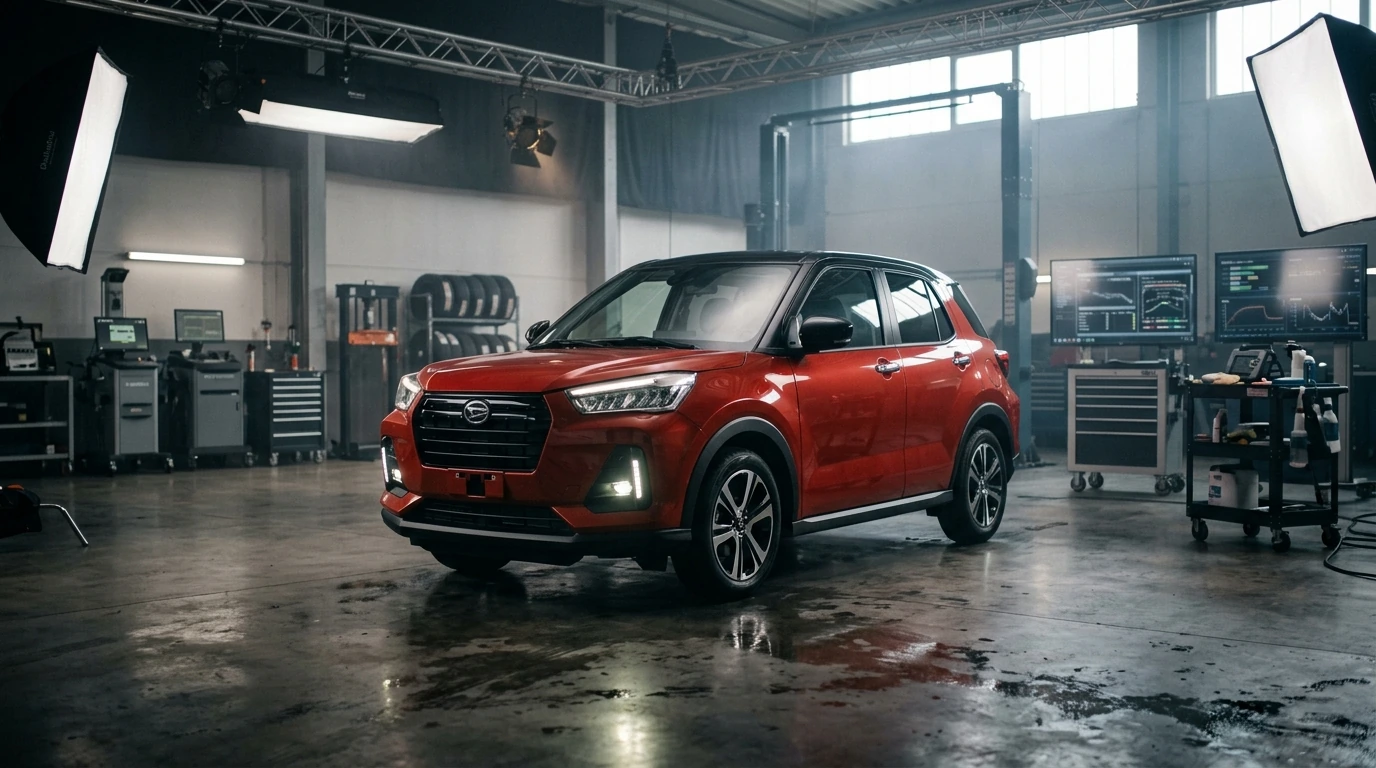
When you're looking for a new vehicle in 2026, the Daihatsu Rocky often comes up as a contender for those prioritizing affordability and practicality in urban settings. This compact crossover has carved out a niche for itself, especially among drivers who need a reliable daily runner without a hefty price tag.
First Impressions: Who Is the Rocky For?
The Daihatsu Rocky is primarily designed for first-time car buyers, small families, or urban dwellers seeking a compact, fuel-efficient vehicle that's easy to maneuver and park. Its elevated ride height gives it a more substantial feel than a traditional hatchback, appealing to those who prefer the crossover aesthetic. If your daily commute involves navigating congested city streets, tight parking spaces, and you're conscious about fuel costs, the Rocky is a strong candidate. However, if you frequently undertake long highway journeys, require significant cargo capacity for large items, or prioritize high-speed stability and premium interior finishes, you might find its limitations apparent. The biggest trade-off with the Rocky is undoubtedly its focus on city practicality and budget, which means some compromises on power and refinement at higher speeds.
Understanding the Rocky's Position
The Daihatsu Rocky typically sits at the more accessible end of the compact SUV/crossover segment. It shares its platform and many components with the Toyota Raize, positioning it as a value-oriented sibling. Compared to many competitors in its class, the Rocky often distinguishes itself with a lower entry price point and a focus on essential features rather than luxury. What's often different in newer iterations or against alternatives is its powertrain options, specifically the smaller displacement engines paired with a Continuously Variable Transmission (CVT), which are optimized for efficiency over outright performance.
Key Specifications and Their Practical Impact
Understanding the Rocky's core specs helps clarify its real-world performance and suitability.
| Spec/Composition | What It Means | Verdict (Plus / Minus / Neutral) | Who Feels It |
|---|---|---|---|
| 1.0L Turbocharged 3-Cylinder Engine (typically 98 PS / 140 Nm) | Provides adequate acceleration for city driving and merging onto highways, with the turbocharger compensating for the small displacement. It's designed for efficiency rather than raw power. | Plus (City driving), Neutral (Highway) | Urban commuters, drivers who prioritize fuel economy |
| CVT (Continuously Variable Transmission) | Optimizes engine RPM for fuel efficiency and provides smooth, gearless acceleration. Can sometimes feel less responsive during sudden acceleration compared to traditional automatics. | Plus (Fuel economy, smoothness), Minus (Enthusiastic driving) | Daily drivers, those sensitive to gear shifts, performance-oriented drivers |
| Compact Dimensions (e.g., ~4030mm length, ~1710mm width) | Makes the vehicle highly maneuverable in tight city streets, easy to park, and generally agile in traffic. | Plus | City dwellers, new drivers, those with limited parking space |
| MacPherson Strut Front, Torsion Beam Rear Suspension | A common and cost-effective setup that provides a reasonable balance of comfort and handling for daily driving. It may not offer the most refined ride over very rough surfaces compared to more complex multi-link systems. | Neutral | Most drivers, those sensitive to ride quality on poor roads |
| Claimed Fuel Economy (e.g., 18-20 km/L combined, varies by region) | Indicates strong efficiency, particularly in mixed driving conditions. Real-world figures often hover slightly below official claims but remain competitive for its class. | Plus | Budget-conscious buyers, high-mileage drivers |
Real-World Driving Scenarios
Based on its specifications and common owner feedback, here's how the Daihatsu Rocky typically performs:
Navigating Busy City Commutes
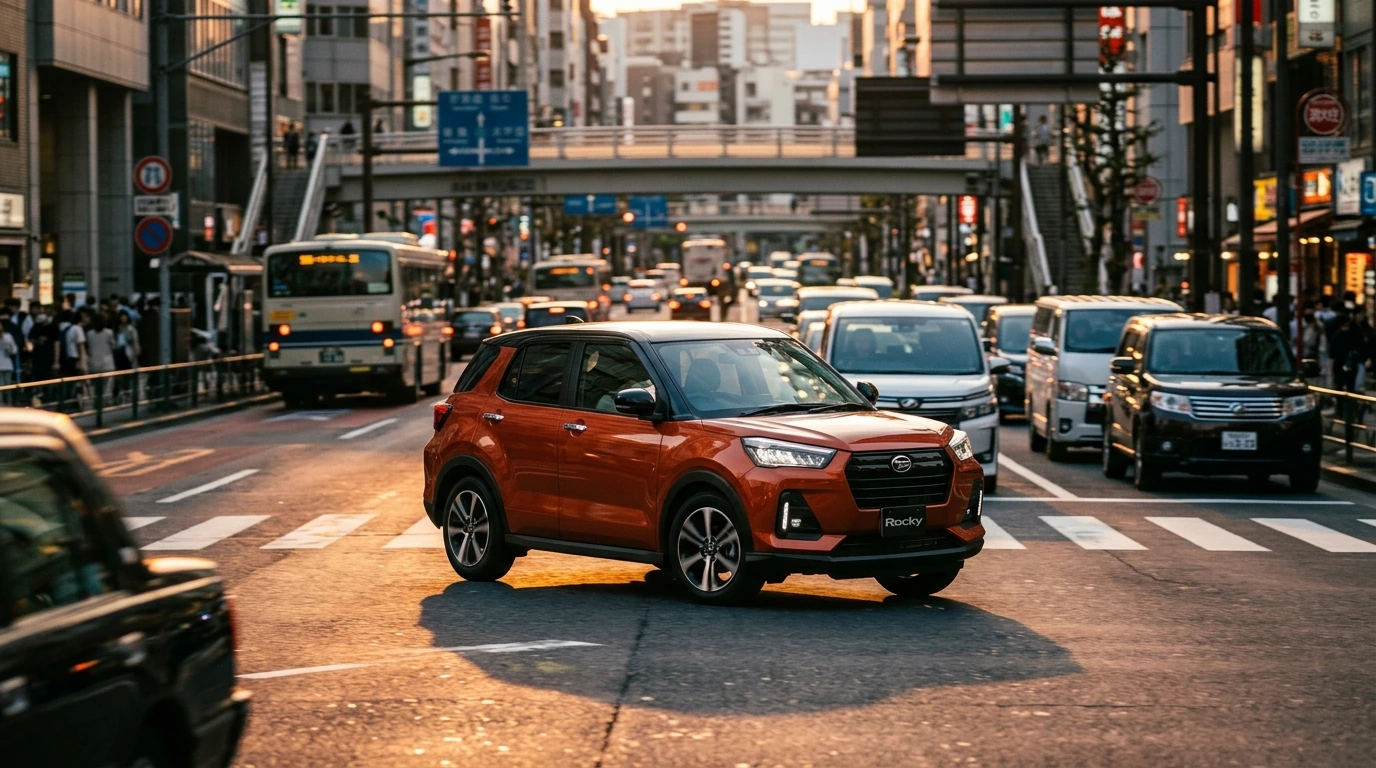
The Rocky truly shines here. Its compact dimensions and light steering, typical of its class, make it incredibly nimble in traffic. The 1.0L turbocharged engine provides sufficient low-end torque for quick acceleration from a stoplight, ensuring it keeps pace with urban flow. Parking in tight spots is also made simpler thanks to its small footprint and good visibility. Owners commonly report that the CVT contributes to a smooth, comfortable ride through stop-and-go traffic, minimizing driver fatigue.
Weekend Highway Trips
While capable, the Rocky's performance on extended highway runs is where its budget-friendly nature becomes more apparent. The 1.0L engine, while turbocharged, will need to work harder to maintain higher speeds, especially on inclines or during overtakes. This can lead to increased engine noise and potentially a slight dip in fuel economy compared to its city figures. The ride, while comfortable in the city, might feel a bit less planted at sustained highway speeds compared to larger, heavier vehicles, a common characteristic of compact crossovers with a torsion beam rear suspension.
Light Hauling and Daily Errands
For grocery runs, school drop-offs, or transporting a few bags, the Rocky's cargo space and rear seating are generally adequate for a small family. The rear seats, while not exceptionally spacious for adults on long journeys, are perfectly fine for children or short trips. The compact size means it's easy to load and unload in parking lots, and the fuel efficiency ensures that running multiple errands doesn't break the bank.
PRO TIP: Maximize Your Rocky's Fuel Economy
To get the best real-world fuel economy from your Daihatsu Rocky, particularly with the CVT, focus on smooth acceleration and anticipating traffic. Avoid aggressive braking and sudden bursts of speed, as the small turbocharged engine and CVT are most efficient when operating steadily. Regular tire pressure checks are also crucial for maintaining optimal mileage.
Advantages and Drawbacks
Every vehicle has its strengths and weaknesses, and the Daihatsu Rocky is no exception.
What the Rocky Does Well (Pros)
- Excellent Fuel Efficiency: The combination of the 1.0L turbocharged engine and CVT is engineered for economy, making it a cost-effective choice for daily driving, directly stemming from its claimed fuel economy figures.
- Agile City Driving: Its compact dimensions and light steering contribute to superb maneuverability in urban environments, making it easy to navigate tight streets and parking spots.
- Affordable Entry Price: Positioned as a budget-friendly option, the Rocky offers a crossover experience without the premium price tag often associated with larger SUVs.
- Smooth Urban Ride: The CVT ensures gearless, smooth acceleration in stop-and-go traffic, enhancing comfort for city commuters.
Where the Rocky Falls Short (Cons)
- Limited Highway Performance: The 1.0L engine, while adequate for the city, can feel strained and noisy at sustained high speeds, impacting comfort on long highway journeys.
- Basic Interior Materials: To meet its budget price point, some interior plastics and finishes may feel less premium compared to more expensive rivals, which is a common trade-off for its value proposition.
- Potential for CVT 'Rubber Band' Effect: While smooth, the CVT can sometimes produce a sensation of the engine revving without a proportional increase in speed during hard acceleration, a known characteristic of this transmission type.
- Ride Firmness on Rough Roads: The MacPherson Strut/Torsion Beam suspension setup, while generally comfortable, might transmit more bumps and vibrations over very poor road surfaces compared to vehicles with more sophisticated suspension.
Alternatives Worth Considering
If the Daihatsu Rocky isn't quite right for you, there are a couple of strong contenders in the same segment:
- Toyota Raize: As a mechanical twin, the Raize offers a very similar package to the Rocky, often with slightly different trim levels and branding. It might be a better pick if you prefer Toyota's dealer network or specific feature packaging.
- Kia Sonet: This compact SUV often boasts a more premium interior feel and potentially more powerful engine options in some markets. Consider the Sonet if you're willing to spend a little more for added refinement and highway capability.
Value and Buying Advice
The Daihatsu Rocky offers compelling value for its price class, particularly when you factor in its fuel efficiency and urban usability. It delivers on its promise of being an affordable, practical city car with the added benefit of a crossover stance. When considering a purchase, always check the current pricing at official dealerships and trusted retailers, as prices can vary by region, trim level, and ongoing promotions. Focus on the trim that offers the safety features and infotainment you need, as the higher trims often add significant value for a relatively small price increase.
Final Recommendation
Buy the Daihatsu Rocky if: You are a city driver, a first-time car owner, or a small family needing an economical, compact, and highly maneuverable vehicle for daily commutes and light errands. Its excellent fuel economy and budget-friendly nature are its strongest suits.
Skip the Daihatsu Rocky if: You frequently travel long distances on highways, require robust acceleration for spirited driving, or demand premium interior materials and a highly refined ride at all speeds.
What looks like a clean car can still attract pests, simple steps to keep ants and spiders away →
Frequently Asked Questions
- What is the real-world fuel economy of the Daihatsu Rocky?
- While official figures vary, owners commonly report real-world fuel economy for the 1.0L turbo variant in the range of 14-17 km/L in mixed city and highway driving, with city-only driving often seeing better numbers closer to official claims.
- Is the Daihatsu Rocky good for long drives?
- It can handle occasional long drives, but its 1.0L engine and compact chassis are optimized for city use. For frequent, extended highway journeys, some drivers might find it less comfortable or refined compared to larger vehicles.
- Does the Daihatsu Rocky come with advanced safety features?
- Depending on the region and trim level, the Rocky can be equipped with Daihatsu's Smart Assist suite, which may include features like pre-collision warning, lane departure assist, and adaptive cruise control, enhancing safety for urban driving.
- How does the Daihatsu Rocky compare to the Toyota Raize?
- The Rocky and Raize are essentially sister models, sharing the same platform and powertrains. Differences are typically minor, revolving around exterior styling cues, interior trim options, and specific feature packaging offered by each brand in different markets.
This review is compiled from official manufacturer specifications and widely reported user feedback rather than a personal lab test. Specific details and available variants can differ significantly by region.


Comments
Post a Comment