
For riders navigating the tight confines of city life, the Honda Scoopy consistently presents itself as a compelling choice. This stylish scooter, known for its distinctive retro-modern aesthetic, offers a blend of easy handling and practical efficiency tailored for short commutes and urban exploration.
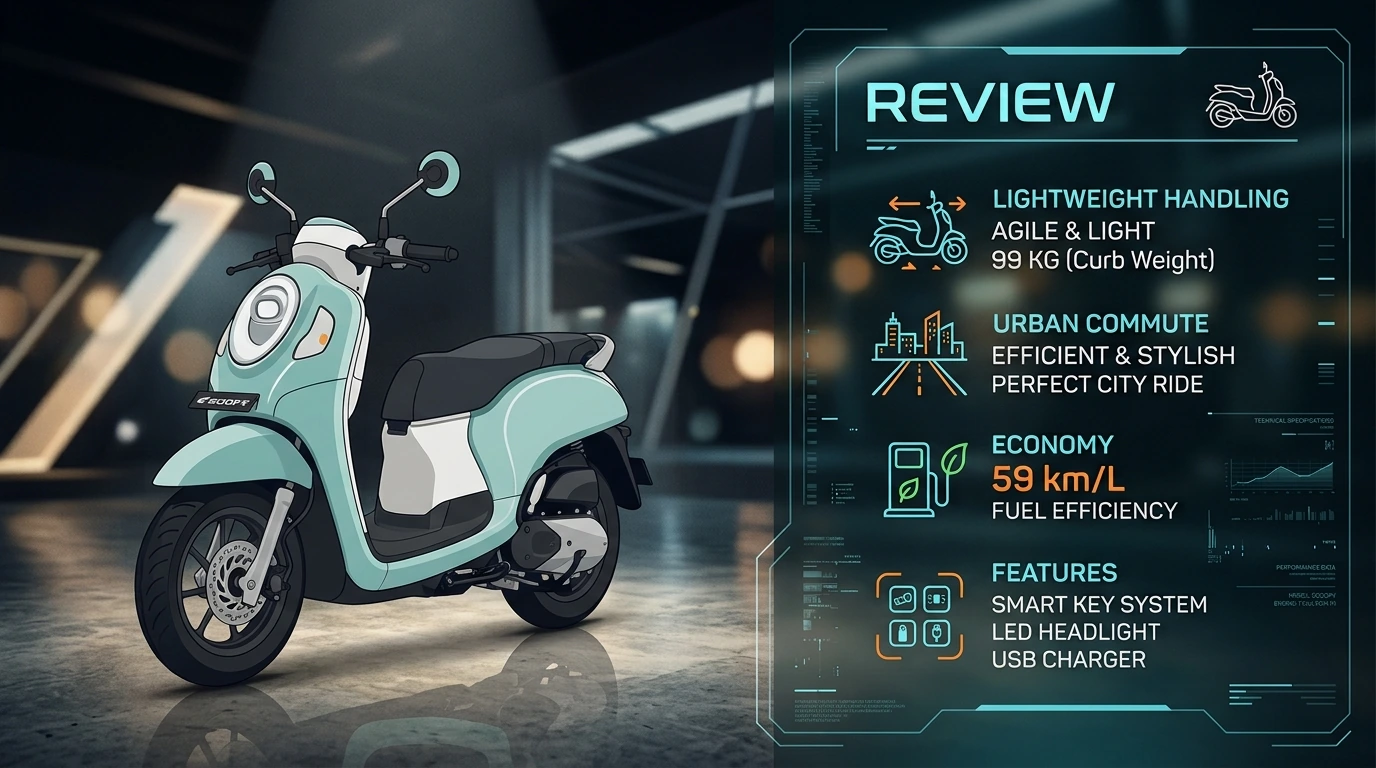
Quick Verdict: The Chic Urban Companion
The Honda Scoopy is a highly regarded urban scooter, celebrated for its 'cute' and fashionable design that stands out in city traffic. Its lightweight construction and compact dimensions contribute to exceptionally agile handling, making it an ideal candidate for navigating congested streets and tight parking spots. While not engineered for high-speed highway travel, its proven reliability and fuel efficiency solidify its position as a top contender for daily small commutes and casual city rides.
Scoopy's Engineering & Aesthetic Profile
Underneath its charming exterior, the Honda Scoopy features engineering optimized for its urban role. It typically utilizes a single-cylinder, air-cooled, four-stroke engine, often in the 110cc range, designed for smooth power delivery and economical fuel consumption. The frame is generally a lightweight underbone design, contributing significantly to its manageable curb weight, often reported around 94-95 kg (approximately 207-209 lbs).
Ergonomically, the Scoopy is designed with a low seat height, making it accessible for a wide range of riders, particularly those new to two-wheelers or shorter in stature. The build quality, consistent with Honda's reputation, features durable plastic body panels over a robust steel frame, intended to withstand the rigors of daily urban use.
Key Specifications Overview
| Feature | Typical Specification (2026 Model Year) |
|---|---|
| Engine Type | 110cc, 4-stroke, Air-cooled, SOHC, eSP |
| Fuel System | PGM-FI (Programmed Fuel Injection) |
| Max Power Output | Approx. 6.6 kW (8.9 hp) @ 7,500 rpm |
| Max Torque | Approx. 9.3 Nm @ 5,500 rpm |
| Fuel Tank Capacity | Approx. 4.2 Liters (1.1 US Gallons) |
| Reported Fuel Economy | Typically 45-50 km/L (approx. 106-118 mpg US) |
| Curb Weight | Approx. 94-95 kg (207-209 lbs) |
| Braking System | Combined Braking System (CBS) |
Agility in Urban Landscapes
The Honda Scoopy truly shines in its intended environment: the bustling city. Its low curb weight and optimized chassis geometry result in remarkably nimble handling. Riders commonly report that the scooter feels incredibly light and easy to maneuver, even in dense traffic or when performing tight turns in parking lots. The turning radius is notably small, facilitating U-turns and quick directional changes.

Ride comfort for short to medium distances is generally good, with a well-padded seat and a suspension setup that adequately absorbs typical urban road imperfections. Under-seat storage, while not cavernous, is usually sufficient for a half-face helmet or a small bag of groceries, adding to its practicality for daily errands. The Combined Braking System (CBS) is a standard safety feature, assisting riders by distributing braking force between the front and rear wheels, enhancing stopping stability.
Merits and Practical Considerations
Pros
- Distinctive & Stylish Design: Its unique retro-modern aesthetic makes it a head-turner.
- Exceptional Maneuverability: Lightweight and compact, ideal for city traffic and tight spaces.
- Excellent Fuel Efficiency: PGM-FI engine delivers impressive mileage for economical operation.
- Accessible Rider Ergonomics: Low seat height suits a wide range of rider heights.
- Proven Honda Reliability: Known for dependable performance and low maintenance.
Cons
- Limited Power Output: Not designed for highway speeds or extended high-speed travel.
- Modest Under-seat Storage: May be insufficient for larger items or full-face helmets.
- Basic Instrumentation: Lacks advanced digital displays or connectivity features found on some competitors.
- Suspension Tuned for City: Can feel less composed on very rough roads or at higher speeds.
Is the Scoopy Right for Your Commute?
The Honda Scoopy is an excellent choice for individuals seeking a stylish, reliable, and highly maneuverable scooter for urban environments. It particularly appeals to city dwellers, students, and first-time riders who prioritize ease of use, fuel economy, and a fashionable presence over raw power or long-distance touring capabilities. If your daily routine involves navigating congested streets, frequent stops, and short to medium commutes, the Scoopy offers a compelling value proposition.
However, if your travel frequently includes highways, requires extensive storage, or demands higher top speeds, alternative models with larger engines and more robust chassis might be more suitable. For its intended purpose, the Scoopy consistently delivers a charming and efficient urban mobility experience.
Frequently Asked Questions
- What is the typical top speed of the Honda Scoopy?
- The Honda Scoopy, with its 110cc engine, typically achieves a top speed in the range of 85-95 km/h (approximately 53-59 mph), depending on rider weight and road conditions. It is optimized for urban speeds, not high-speed highway cruising.
- Is the Honda Scoopy suitable for long-distance travel?
- While technically capable of covering longer distances, the Scoopy is primarily designed for urban and short-to-medium commutes. Its engine size, comfort, and top speed are not optimized for extended highway rides, which may lead to rider fatigue and engine strain.
- What kind of fuel economy can I realistically expect?
- Owners commonly report excellent fuel economy, often ranging from 45 to 50 km/L (approximately 106-118 mpg US) in mixed city riding conditions. This figure can vary based on riding style, traffic, and maintenance.
- Does the Honda Scoopy come with ABS (Anti-lock Braking System)?
- Most Honda Scoopy models are equipped with a Combined Braking System (CBS), which helps distribute braking force between the front and rear wheels for improved stability. Full ABS is typically not a standard feature on this model, especially in its primary markets.


Comments
Post a Comment