
A common scenario for many riders involves meticulously checking tire tread depth, finding it perfectly adequate, and assuming their motorcycle's rubber is ready for the road. However, the visual condition of the tread can be deceptive. While sufficient tread is undeniably vital for grip and water displacement, the age of a tire—and the unseen degradation it undergoes over months and years—can compromise safety and performance just as significantly, regardless of how much rubber remains.

Beyond the Tread: Why Rubber Ages
Motorcycle tires are complex compounds designed to provide optimal grip, handling, and durability. Over time, even when not in active use, these compounds are subject to environmental stressors that lead to degradation. Exposure to ultraviolet (UV) light from the sun, ozone in the air, extreme temperatures, and various chemicals can cause the rubber to harden, lose its elasticity, and become brittle. This process, often referred to as “dry rot” or “weather checking,” reduces the tire’s ability to flex, absorb road imperfections, and maintain crucial traction, especially in demanding conditions.
The internal structure of the tire, including its belts and plies, also experiences fatigue and weakening over extended periods. While the visible tread might appear robust, the underlying material integrity can diminish, increasing the risk of sudden failure, reduced stability, and compromised braking performance.
Deciphering the Date Code, a Critical First Step
The most objective indicator of a tire’s age is its manufacturing date code, mandated by the Department of Transportation (DOT). This code is typically found on the sidewall, often within an oval or a raised block of characters. Understanding this code is fundamental for assessing a tire’s suitability for continued use.
How to Read the DOT Manufacturing Date Code:
- Location: Look for the sequence of characters beginning with “DOT.” The date code is usually the last four digits of this sequence.
- Format: The four digits represent the week and year of manufacture. The first two digits indicate the week (01-52), and the last two digits denote the year.
- Example: A code of “3223” signifies the tire was manufactured in the 32nd week of 2023.
While opinions vary on the absolute maximum age for motorcycle tires, many manufacturers and safety experts recommend replacement after five years from the manufacturing date, regardless of tread wear, and a strict maximum of ten years, even if they appear visually sound and have been stored optimally. This guideline accounts for the unseen chemical changes within the rubber compound.
Visual Cues of Compound Degradation
Even if the date code suggests a tire is still within a reasonable age window, a thorough visual inspection for signs of degradation is essential. These signs often manifest subtly at first, gradually worsening over time.
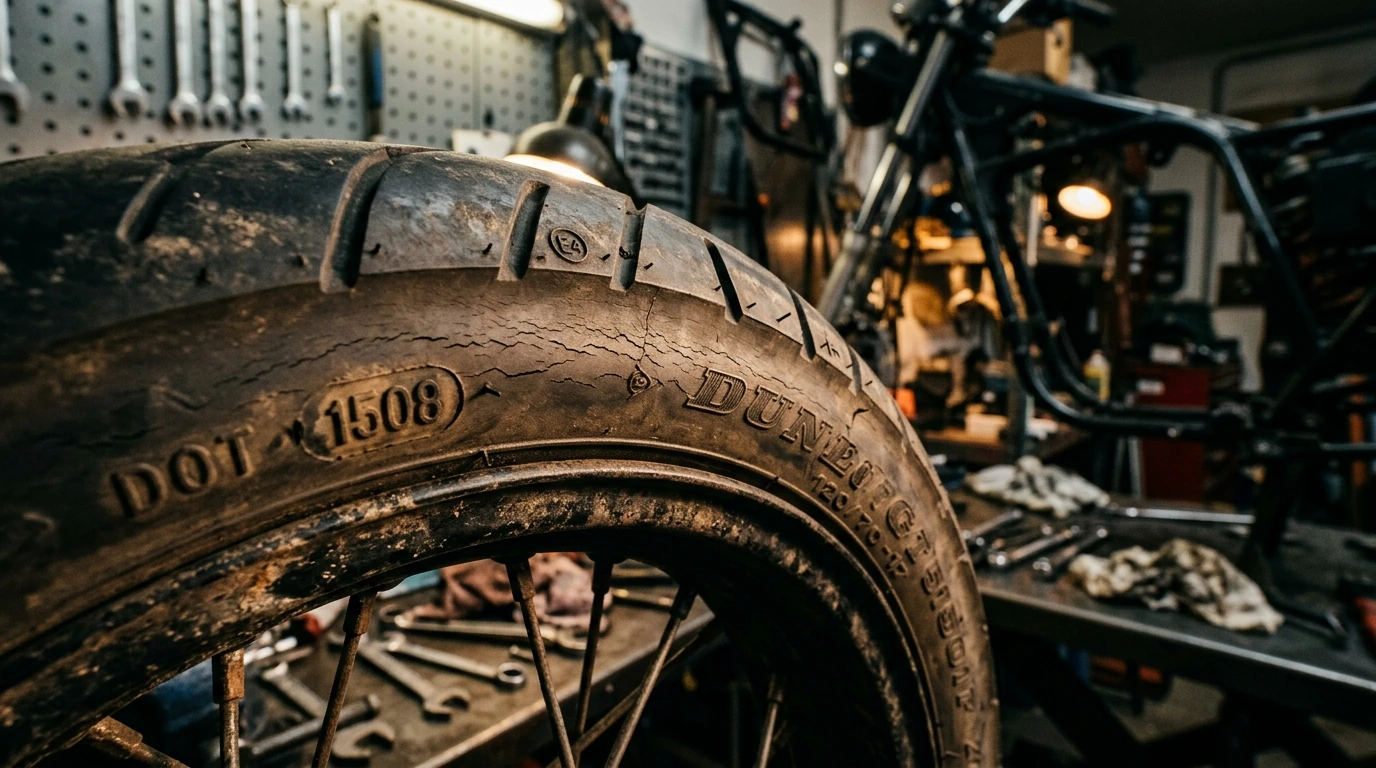
Specific Areas to Inspect for Cracks and Other Deterioration:
- Sidewalls: Carefully examine the sidewalls for any hairline cracks, often resembling fine spiderwebs. These are early indicators of rubber hardening and loss of flexibility.
- Tread Grooves: Look deep within the tread grooves for small cracks, which can be difficult to spot without close attention.
- Bead Area: The area where the tire meets the rim (the bead) is critical. Inspect for any signs of cracking or separation, especially around the rim protector.
- Discoloration and Hardness: Aged rubber can appear duller, chalky, or discolored compared to new rubber. Pressing a fingernail into the rubber can sometimes reveal if it has become noticeably harder and less pliable.
- Bulges or Distortions: Any unusual bulges, lumps, or distortions on the tread or sidewall can indicate internal structural damage, often exacerbated by aged materials.
These visual cues indicate that the tire’s material properties have changed, and its ability to perform safely is compromised, irrespective of tread depth.
Performance Indicators of an Aging Tire
Beyond visual inspection, how a motorcycle tire feels on the road can provide critical clues about its age and condition. A tire that has hardened with age will not perform like a fresh one, even if it looks superficially sound.
- Reduced Grip: One of the most noticeable effects of aging is a decline in grip, particularly in wet conditions or when cornering. The hardened rubber struggles to conform to the road surface, reducing friction.
- Longer Braking Distances: With compromised grip, the tires may take longer to bring the motorcycle to a stop, especially under hard braking.
- Less Compliant Ride: Aged tires tend to be stiffer, leading to a harsher, less comfortable ride. They transmit more road imperfections to the rider and chassis.
- Decreased Stability: The bike might feel less stable, especially at higher speeds or in crosswinds, as the tire’s ability to absorb forces is diminished.
These changes in handling characteristics are subtle and can develop gradually, making them easy to adapt to without realizing the underlying safety implications. Riders should be attuned to any changes in their bike’s feel.
Practical Strategies for Tire Longevity
While age is an unavoidable factor, certain practices can help maximize the lifespan and safety of your motorcycle tires:
- Proper Storage: When not in use, store motorcycles in a cool, dry place away from direct sunlight, ozone-producing equipment (like electric motors), and chemicals. If removing tires, store them upright or on their side, not hanging by the bead.
- Maintain Correct Tire Pressure: Consistently checking and maintaining the manufacturer-recommended tire pressure is crucial. Under-inflation can lead to excessive heat buildup and premature aging, while over-inflation reduces the contact patch and accelerates wear.
- Regular Cleaning: Keep tires clean from road grime, brake dust, and chemical spills. Use mild, tire-specific cleaners, avoiding harsh solvents that can degrade rubber compounds.
- Frequent Inspections: Beyond routine pressure checks, make it a habit to visually inspect your tires for any of the degradation signs discussed above.
Proactive inspection and timely replacement of motorcycle tires are paramount for rider safety. Relying solely on tread depth can lead to overlooking critical age-related degradation that compromises the tire’s structural integrity and dynamic performance. By understanding the aging process, interpreting date codes, and recognizing visual and performance cues, riders can ensure their motorcycle’s most vital contact patches remain in optimal condition, providing confidence and control on every journey.


Comments
Post a Comment