
Factory budget car seats rarely provide adequate lower back support.
An aftermarket memory foam lumbar cushion bridges the gap between flat economy car seating and long-distance ergonomic comfort. This accessory suits daily highway commuters and ride-share drivers who suffer from lower back fatigue on unsupportive stock upholstery. Drivers with deep bucket seats or vehicles equipped with aggressive factory power lumbar controls should skip this addition, as extra cushioning can push the lower torso too far forward. The primary trade-off comes down to cabin space displacement: adding three to four inches of foam reduces seat cushion depth, requiring minor adjustments to your steering wheel reach and backrest angle.
Key Takeaways
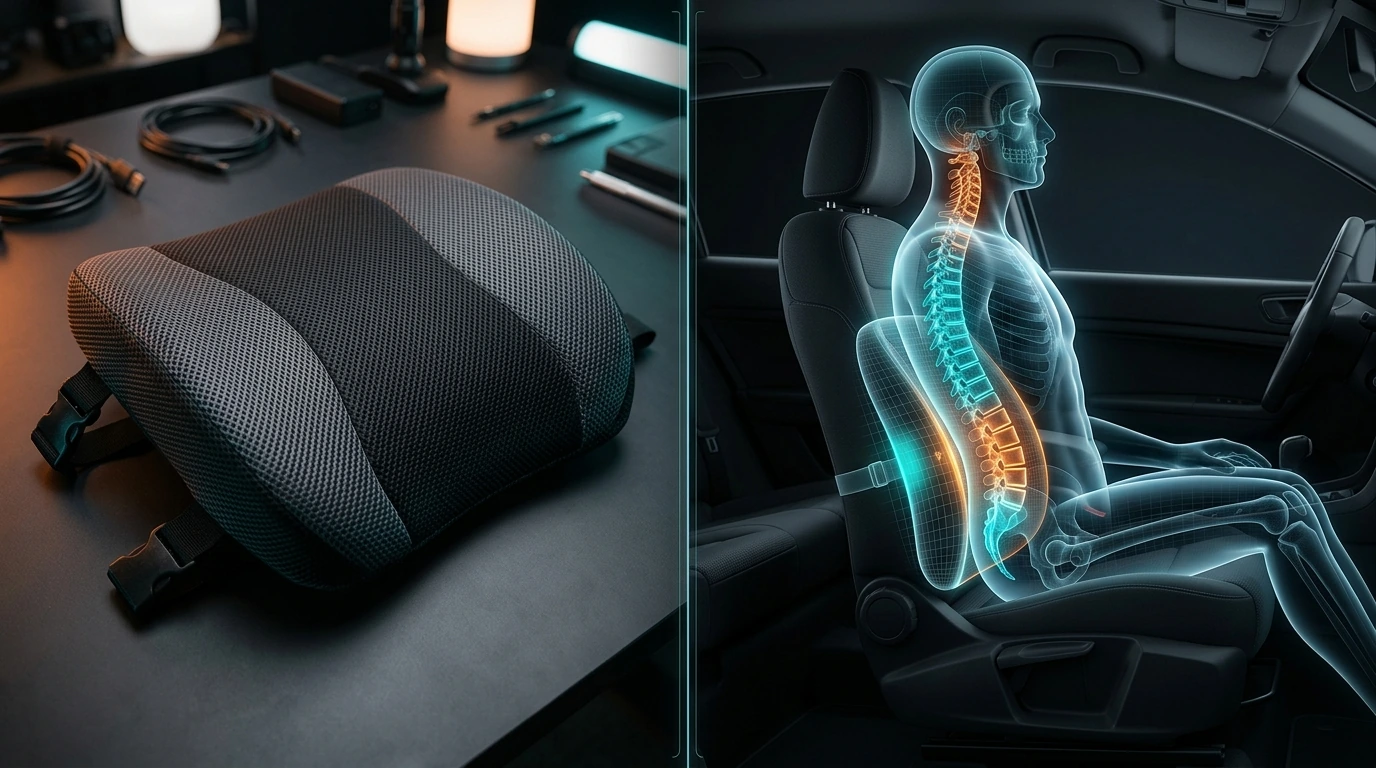
- High-density memory foam fills the lordotic cavity, preventing lower spine slouching on long drives.
- Breathable mesh covers dissipate trapped body heat far better than plain foam or neoprene alternatives.
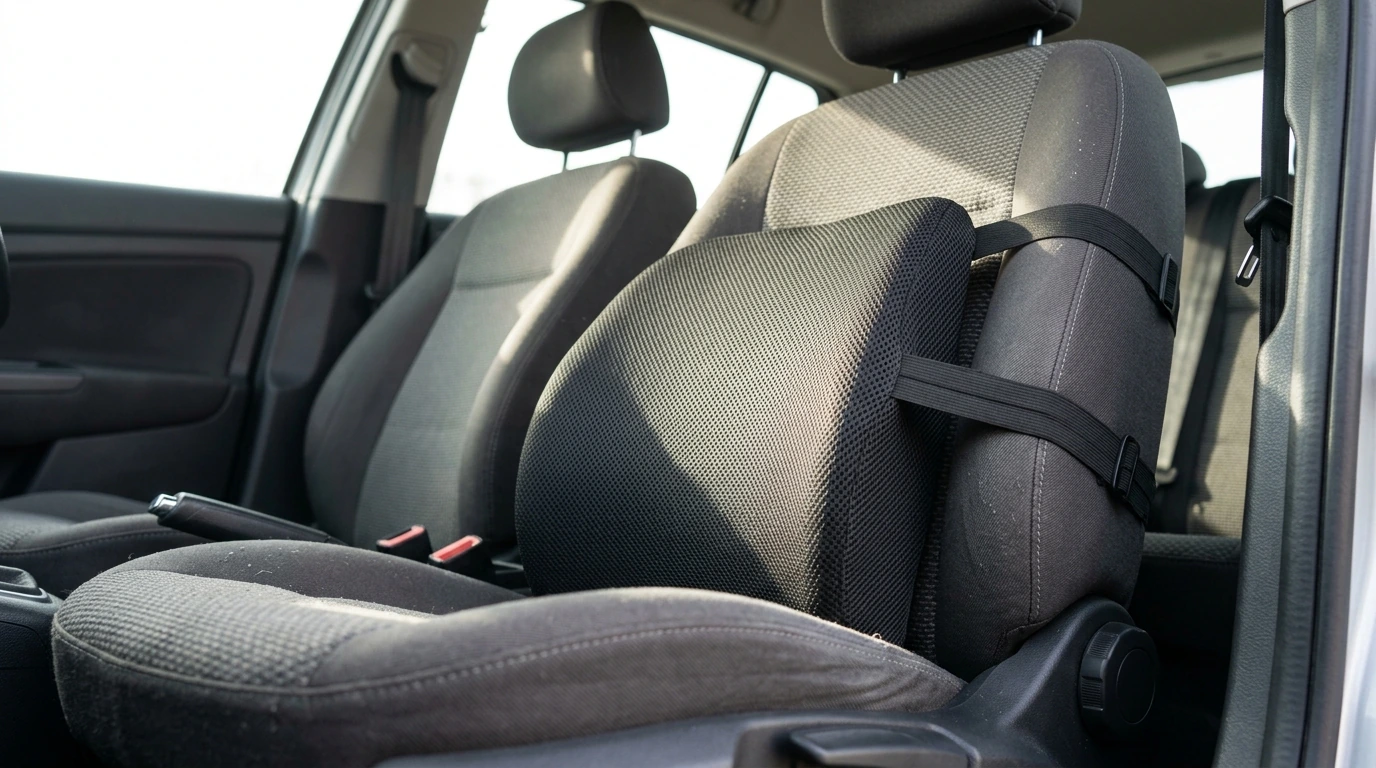
- Dual adjustable strap systems hold cushions firmly in place during entry and egress.
- Cushion thickness alters seating geometry, requiring steering column and seat track re-alignment.
Rethinking Budget Seat Ergonomics
Automakers building subcompact sedans and budget crossovers save manufacturing costs on interior upholstery. Stock driver seats in these price bands typically rely on flat, low-density slab foam lacking structured lower spine support. Over extended driving periods, your pelvis tilts backward, forcing the lower back into an unnatural C-shape slouch that strains muscles and discs.
An add-on lumbar support cushion places a slow-rebound foam pad directly into the lower back arch. Unlike temporary solutions like rolled towels, slow-rebound viscoelastic foam molds specifically to your body weight and body warmth. This distributes lumbar pressure evenly without creating localized pressure spikes across your lower ribs or sacrum.
Technical Specification and Material Analysis
Understanding how specific components affect daily driving comfort makes selecting the right cushion much easier. Here is how key design specifications translate into real-world back support on the highway.
Polyurethane Memory Foam Core (Viscoelastic High-Density)
What It Means: Reacts to weight and ambient temperature to soften under warmth while maintaining core firmness beneath load.
Verdict: Advantage — Prevents cushion flattening after two hours of continuous sitting.
Who feels it: Drivers over 170 lbs commuting long highway distances daily.
3D Air Mesh Outer Fabric Wrapper
What It Means: Honeycomb textile weave allows cabin climate control air to flow through the cushion face.
Verdict: Advantage — Eliminates hot spots and back sweating during warm seasonal driving.
Who feels it: Commuters driving in hot climates or vehicles with vinyl seats.
Dual Adjustable Nylon Straps with Buckles
What It Means: Secures the cushion vertically around the upper and lower backrest frames.
Verdict: Neutral — Highly effective on standard seats, but installation requires routing straps through seat gaps.
Who feels it: Drivers whose vehicles feature integrated seat covers or fixed headrest stalks.
4-Inch Contour Depth with Tapered Wings
What It Means: Thick central swell supports the spine while lateral edges cradle the lower ribcage.
Verdict: Advantage — Prevents lateral body sliding during gentle cornering.
Who feels it: Anyone driving winding rural roads in flat-backed commuter cars.
Anti-Slip Micro-Dot Rubberized Rear Backing
What It Means: High-friction dots grip smooth seat fabrics and finished leather surfaces.
Verdict: Advantage — Keeps cushion aligned even when entry straps slip slightly over time.
Who feels it: Delivery drivers frequently climbing into and out of the cabin.
Real-World Driving Scenarios
To evaluate how an aftermarket memory foam pad changes daily driving dynamics, consider three distinct usage patterns common to budget car owners.
Long Highway Commuting: On extended 60-minute interstate runs, basic car seats cause fatigue because static muscle tension builds up around an unsupported spine. High-density memory foam distributes back weight across a wider area. Driver feedback generally indicates a significant drop in lower back tightness when exiting the vehicle after long stretches.
Stop-and-Go City Traffic: Repeated pedal shifts in dense city traffic force your pelvis to pivot constantly. A firm lumbar cushion acts as an anchor point, preventing your lower back from shifting rearward every time you depress the brake pedal. This stability helps maintain consistent leg angles relative to the pedals.
Warm Weather Driving: Memory foam is naturally insulating and tends to store ambient heat. However, units fitted with 3D mesh covers perform well in hot summer cabins. Air circulation through the outer cover prevents moisture buildup on your shirt during long afternoon drives.
Safety Tip: Never run mounting straps across side-airbag deployment seams located on the outer edges of modern seatbacks. Check your vehicle owner manual to ensure strap placement does not block airbag expansion paths.
Key Strengths and Daily Trade-Offs
Grounding expectations in real physical traits helps determine if this interior accessory matches your driving habits.
Verified Strengths
- High-density core supports the lordotic curve without collapsing under body weight.
- 3D mesh fabric wrapper allows ventilation and prevents back heat retention.
- Anti-slip dot backing keeps alignment stable on smooth fabric or leather seats.
- Removable zippered cover makes machine washing straightforward.
Structural Trade-Offs
- 4-inch cushion thickness pushes torso forward, shortening effective thigh support.
- Memory foam stiffens noticeably in sub-zero winter temperatures until cabin warms up.
- Dual straps can be tricky to route through seats with solid rear carpet panels.
Alternative Lumbar Solutions
If memory foam does not align with your preferences, consider these established cabin alternatives:
- Inflatable Air Bladders: Highly adjustable via a manual hand pump, allowing you to fine-tune firmness on the fly. Best for drivers who share a car with partners of different heights, though rubber bladders lack the soft contouring of viscoelastic foam.
- Suspended Mesh Frame Supports: Lightweight steel wire frames wrapped in elastic mesh. These offer maximum airflow and zero heat retention, making them ideal for ultra-hot climates, though overall cushioning firmness is significantly lower.
Value Assessment and Final Guidance
In the broader scope of interior accessories, memory foam lumbar cushions represent a high-value upgrade for economy vehicle owners. Buying a dedicated cushion is drastically cheaper than aftermarket seat replacement or professional upholstery modifications. Rather than looking for complex electronic features, prioritize foam density rating and cover breathability. Check current pricing at official automotive accessory stores or major online retailers before choosing a model.
Buy this cushion if: You drive an entry-level car with flat seats, suffer lower back fatigue during highway trips, and have enough seat track adjustment to sit an inch further back.
Skip this cushion if: Your car seat already has aggressive built-in lumbar support, or if cabin legroom and headroom are already tight for your frame.
This review is compiled from technical product specifications and widespread driver feedback rather than hands-on lab testing. Individual fitment and posture results vary depending on vehicle trim, driver height, and seat contouring.


Comments
Post a Comment