
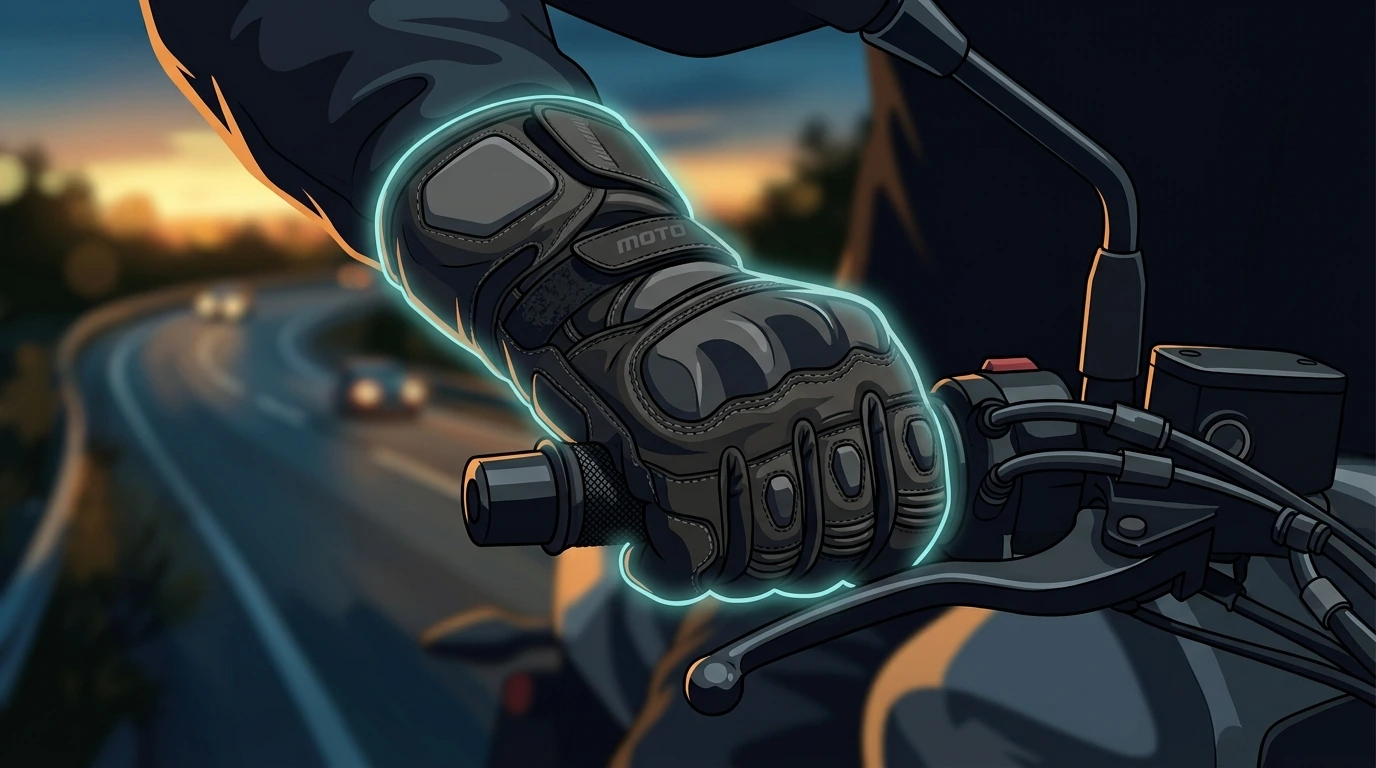
Reports from various rider surveys consistently indicate that wrist and hand fatigue rank among the top three discomforts experienced by motorcyclists on rides exceeding 60 minutes, often leading to a loss of focus and reduced control. While many riders attribute a cramped right wrist solely to holding the throttle, the reality is more nuanced. Effective prevention hinges not just on a relaxed grip, but on a holistic approach that includes preparing your body and optimizing your bike's setup. The good news is that a few simple, consistent exercises can make a significant difference in your long-distance comfort and overall riding enjoyment.
Key Takeaways
- Pre-ride warm-ups and regular mobility exercises are crucial for preventing wrist fatigue.
- Focus on dynamic stretches and gentle strengthening, not just static holds.
- Proper ergonomic setup of your handlebars and levers significantly reduces strain.
- Consistency in your exercise routine yields the best long-term comfort benefits.
Understanding the Root of Throttle Fatigue
Many riders instinctively blame a 'death grip' on the throttle for their wrist woes, and while excessive tension is certainly a factor, the underlying causes of right wrist cramping often extend deeper. The sustained isometric contraction required to maintain throttle position, coupled with vibrations transferred through the handlebars, can lead to muscle fatigue in the forearm and hand. Furthermore, improper wrist angle – often hyperextended or hyperflexed – can compress nerves and restrict blood flow, exacerbating discomfort. A lack of general flexibility and strength in the wrist and forearm muscles also leaves them more susceptible to strain under riding conditions.
Dynamic Warm-Ups for Pre-Ride Readiness
Before swinging a leg over your machine, a few minutes dedicated to dynamic warm-ups can prime your muscles and joints for the ride ahead. These aren't strenuous workouts, but rather gentle movements designed to increase blood flow and improve range of motion. Think of it as lubricating your joints and waking up the relevant muscle groups.
- Wrist Circles: Gently rotate your wrists in slow, controlled circles, 10 times clockwise and 10 times counter-clockwise. Keep your arms relaxed.
- Finger Stretches: Extend your arm forward, palm up. Use your other hand to gently pull your fingers down towards your body, stretching the forearm. Hold for 10-15 seconds, then repeat with palm down, pulling fingers towards the body.
- Grip and Release: Rapidly clench your fists tightly for a few seconds, then fully splay your fingers wide, repeating 10-15 times. This helps pump blood into the forearms and hands.

Targeted Mobility Drills for Lasting Comfort
For riders seeking more profound relief and long-term prevention, incorporating targeted mobility and gentle strengthening drills into a regular routine – even off the bike – can be transformative. These exercises aim to build resilience and correct imbalances.
- Wrist Flexor Stretch: Extend one arm straight out in front of you, palm up. Use your other hand to gently pull your fingers downwards towards the ground, feeling a stretch along the top of your forearm. Hold for 20-30 seconds, then switch arms.
- Wrist Extensor Stretch: Extend one arm straight out, palm down. Use your other hand to gently pull your fingers upwards towards your body, stretching the underside of your forearm. Hold for 20-30 seconds, then switch arms.
- Forearm Pronation/Supination: Hold a lightweight object (like a small hammer or a water bottle) with your forearm resting on a table, hand extended off the edge. Slowly rotate your wrist to turn the palm up, then down, keeping the forearm stable. Perform 10-15 repetitions per side.
- Nerve Glides: These are subtle movements designed to reduce nerve irritation. A common one involves extending your arm to the side, palm up, then gently bending your wrist and tilting your head away from the extended arm. Consult a physical therapist for proper nerve glide techniques.
Ergonomic Adjustments That Support Your Efforts
Beyond physical preparation, optimizing your motorcycle's ergonomics can significantly reduce the strain on your right wrist. Even minor adjustments can yield considerable benefits.
- Lever Position: Ensure your clutch and brake levers are angled so your wrists remain in a neutral, straight position when your fingers are resting on them. Many riders set their levers too high or too low, forcing a bend in the wrist.
- Handlebar Rotation: Experiment with rotating your handlebars slightly forward or backward. The goal is to find a position that allows your arms and wrists to fall naturally and comfortably.
- Throttle Boss/Cruise Control: For long highway stretches, a throttle boss or a simple friction-based cruise control can allow you to relax your grip entirely, giving your wrist a much-needed break.
- Grip Material and Diameter: Softer, more ergonomic grips can absorb vibrations better. Some riders find slightly larger diameter grips reduce the need for a 'death grip.'
Frequently Asked Questions About Motorcycle Wrist Comfort
- Can these exercises help with tingling or numbness in my hands?
- While these exercises can improve circulation and reduce general fatigue, persistent tingling or numbness might indicate nerve compression (like carpal tunnel syndrome). If symptoms persist, consult a medical professional.
- How often should I do these exercises?
- Pre-ride warm-ups should be done before every ride. Mobility and strengthening drills can be performed 3-4 times a week, even on non-riding days, for cumulative benefits.
- Will a heavier throttle spring make my wrist worse?
- A heavier throttle spring would require more effort to twist, potentially increasing fatigue. Most modern motorcycles have appropriately sprung throttles. Focus on a light, relaxed grip rather than fighting spring tension.
- Is a throttle lock a good solution for wrist cramps?
- A throttle lock or cruise control can be excellent for giving your wrist a break on long, straight stretches. However, it's a compensatory tool, not a preventative measure for the underlying causes of fatigue. Combining it with exercises and ergonomic adjustments offers the best results.
Achieving lasting comfort on your motorcycle doesn't require complex modifications or extreme efforts. By integrating simple warm-ups, consistent mobility drills, and thoughtful ergonomic adjustments into your riding practice, you can significantly mitigate right wrist cramping. Prioritizing your physical well-being ensures that every journey remains a pleasure, allowing you to focus on the road and the ride, not on discomfort.


Comments
Post a Comment