
Maintaining your motorcycle riding gear involves more than just wiping off road grime; proper washing is crucial for preserving its protective qualities and extending its lifespan. Many riders hesitate to wash their jackets and gloves, fearing damage to waterproof membranes, insulation, or integrated armor, but neglecting cleaning can lead to material breakdown and reduced performance.
Understanding the specific materials and construction of your gear is the first step toward effective and safe cleaning. This guide outlines the best practices for washing both textile and leather motorcycle jackets and gloves, ensuring they remain in top condition for countless rides ahead.

Quick Verdict: Essential Gear Cleaning for Durability
Safely washing motorcycle riding jackets and gloves requires a methodical approach, prioritizing manufacturer guidelines and specialized cleaning products. The core strength of this process lies in its ability to remove dirt, sweat, and oils that degrade materials, reactivate waterproofing, and maintain the breathability of technical fabrics. While it might seem daunting, careful cleaning preserves the structural integrity and comfort of your essential riding apparel, directly impacting its protective efficacy and longevity. The key is gentle treatment and appropriate detergents, avoiding harsh chemicals that strip protective coatings or damage delicate liners.
Understanding Your Gear's Construction and Materials
Motorcycle jackets and gloves come in a variety of materials, each requiring specific care. Textile gear, often made from Cordura, ballistic nylon, or proprietary blends, frequently incorporates waterproof and breathable membranes such as Gore-Tex or similar laminates. These materials are designed to withstand abrasion while offering weather protection. Leather gear, whether full-grain or synthetic, demands a different approach due to its natural oils and susceptibility to drying out or cracking if improperly treated. Liners, which can be thermal, waterproof, or mesh, are often removable but sometimes integrated, adding another layer of complexity to the washing process.
- Textile Jackets & Gloves: Typically feature robust outer shells with internal waterproof/breathable membranes and sometimes removable thermal liners. Armor inserts are almost always removable.
- Leather Jackets & Gloves: Made from various leather types, often with integrated liners that are not designed to be removed. Armor inserts may be removable.
- Membranes: Waterproof and breathable layers (e.g., Gore-Tex, Drystar, Reissa) are critical and can be compromised by harsh detergents or excessive heat.
- Armor: CE-rated protectors in shoulders, elbows, back, and knuckles should always be removed before washing to prevent damage to the armor or the garment.
Gentle Cleaning Techniques for Lasting Protection
The practical application of washing motorcycle gear revolves around preserving its technical properties. For most textile jackets and gloves with integrated membranes, hand washing or a delicate machine cycle with a technical wash specific to performance fabrics is recommended. These cleaners are formulated to remove dirt without clogging the membrane's pores or degrading water-repellent treatments. Leather gear, conversely, should almost always be cleaned by hand using a dedicated leather cleaner and conditioner, followed by air drying away from direct heat.
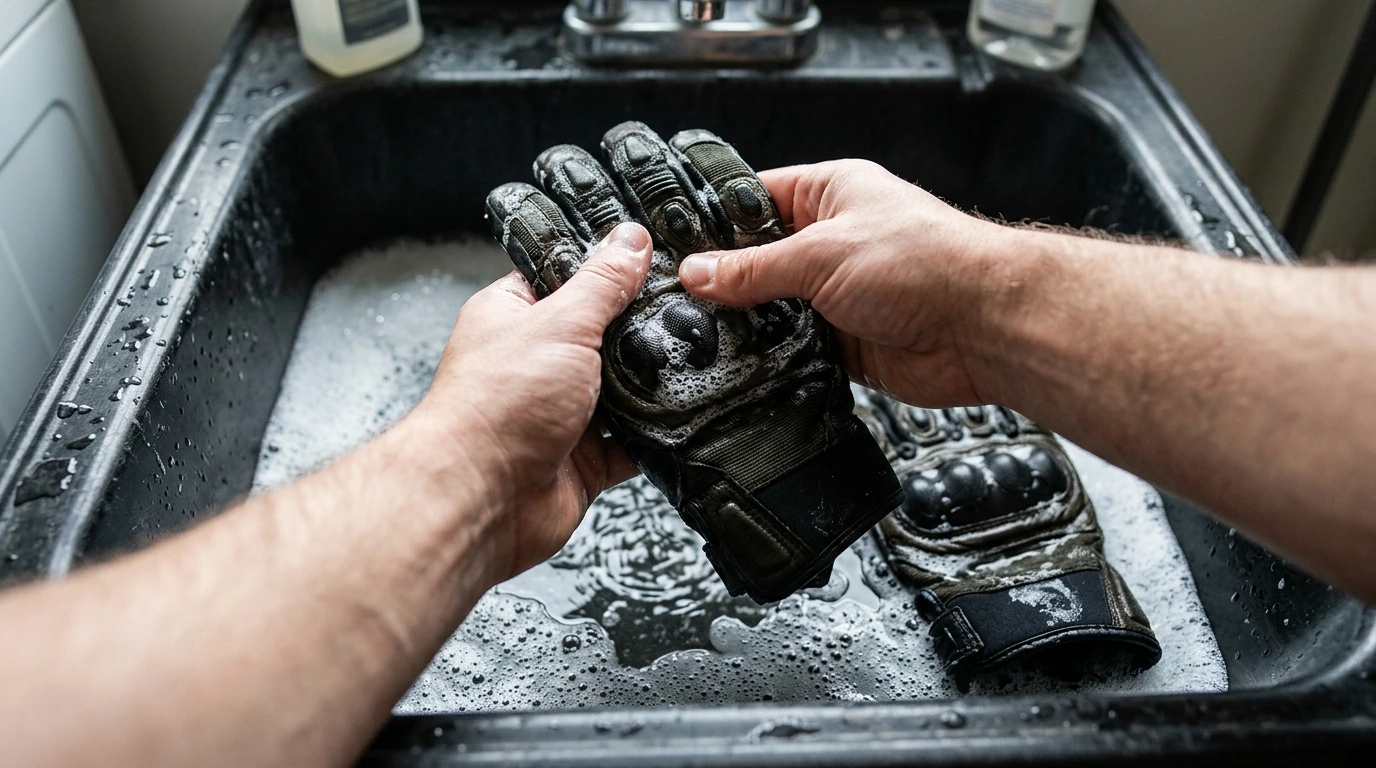
Step-by-Step Washing Guide:
- Preparation: Remove all armor, detachable liners, and anything stored in pockets. Close all zippers, Velcro straps, and snaps. Turn jackets inside out if machine washing to protect outer shell details.
- Detergent Choice: Use a technical wash designed for waterproof-breathable fabrics (e.g., Nikwax Tech Wash, Grangers Performance Wash) for textile gear. For leather, use a specialized leather cleaner. Avoid conventional laundry detergents, fabric softeners, or bleach, as these can strip DWR (Durable Water Repellent) coatings and clog membranes.
- Washing Method:
- Machine Wash (Textile only): Use a front-loading machine on a gentle cycle with cold or lukewarm water. Run an extra rinse cycle to ensure all detergent is removed.
- Hand Wash (Textile & Leather): Fill a basin with lukewarm water and the appropriate cleaner. Submerge the item and gently agitate. For stubborn spots, use a soft brush. Rinse thoroughly under running water until no suds remain.
- Drying: Air dry all gear. Hang jackets on a sturdy hanger and lay gloves flat or hang by the fingertips. Avoid direct sunlight, tumble dryers, or radiators, as excessive heat can damage membranes, melt adhesives, or cause leather to shrink and crack. Allow ample time for thorough drying, especially for multi-layered items.
- Re-Waterproofing (Textile only): After washing and drying, consider applying a DWR treatment (e.g., Nikwax TX.Direct) to textile gear to restore water repellency.
PRO TIP: Avoid Fabric Softeners!
Fabric softeners leave residues that can clog the microscopic pores of waterproof-breathable membranes (like Gore-Tex), rendering them ineffective. They can also degrade the DWR coating on the outer fabric. Always skip fabric softener when washing any technical riding gear.
Benefits of Careful Washing Versus Risks of Neglect
The advantages of meticulously washing your riding gear are substantial, primarily revolving around enhanced performance and extended product life. Regular, correct cleaning helps maintain the breathability of textile fabrics, preventing moisture buildup inside the garment. It also revitalizes the water-repellent finish, ensuring rain beads off rather than soaking in. For leather, proper cleaning prevents the accumulation of dirt and sweat that can dry out and crack the material, while conditioning restores its suppleness. Conversely, neglecting to wash gear allows dirt, sweat, and body oils to break down fibers, compromise membranes, and foster bacterial growth, leading to unpleasant odors and a significant reduction in the garment's protective capabilities and comfort over time.
Extending Gear Life, When to Wash and When to Seek Help
Investing time in proper gear maintenance is a direct investment in your safety and comfort on the road. For most riders, a thorough wash every few months or after particularly intense or dirty rides is a good guideline. The value of this approach lies in preserving the factory-engineered performance of your gear, which is critical for protection in an accident and comfort during long tours. While most textile gear is amenable to home washing with the right products, some highly specialized items or delicate leather garments might benefit from professional cleaning services. This is particularly true for items with complex integrated electronics or those made from exotic leather types where a mistake could be costly. Ultimately, the decision to wash yourself or seek professional help depends on the garment's specific materials, your comfort level with the process, and the value you place on preserving its condition.
Frequently Asked Questions
- How often should I wash my motorcycle jacket and gloves?
- It depends on your riding frequency and conditions. For regular riders, washing every 2-3 months or after particularly dirty rides is a good rule of thumb. If you notice a loss of waterproofing or an unpleasant odor, it's time for a wash.
- Can I put motorcycle leather jackets in a washing machine?
- Generally, no. Leather should almost always be hand-cleaned with specialized leather cleaners and conditioners. Machine washing can strip natural oils, cause cracking, shrinking, or permanent damage to the leather.
- What if my jacket has integrated electronics or airbag systems?
- Always consult the manufacturer's instructions for gear with integrated electronics or airbag systems. Many require specific cleaning methods or professional servicing to avoid damaging sensitive components. Often, these sections are not designed to be submerged in water.
- How do I dry my gear thoroughly, especially multi-layered items?
- Air drying is essential. Hang jackets on a wide, sturdy hanger in a well-ventilated area away from direct heat or sunlight. For gloves, you can use a glove dryer or stuff them lightly with paper towels (replaced periodically) to absorb moisture and maintain shape. Ensure everything is completely dry before storage to prevent mildew.


Comments
Post a Comment