
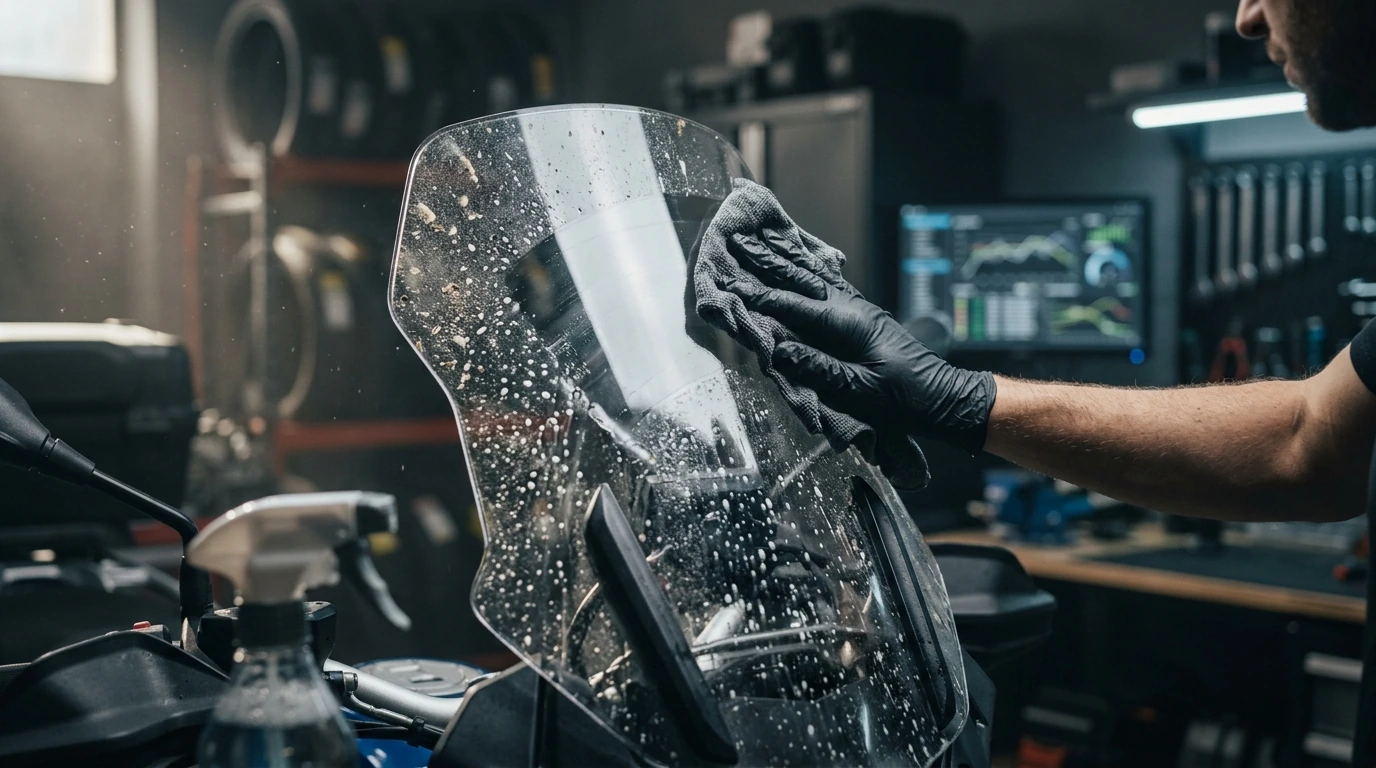
Riding a motorcycle often means a direct confrontation with nature, and few things accumulate faster or stick harder than dried insects and road grime on a windshield. Attempting to scrub these off with the wrong materials or technique can quickly turn a minor annoyance into a permanent scratch, compromising visibility and the aesthetic of your ride. Many riders instinctively reach for harsh cleaners or abrasive cloths, only to discover too late the damage they've inflicted on their delicate acrylic or polycarbonate screens. Achieving a crystal-clear view without marring the surface requires a specific, gentle approach.
Key Takeaways for a Scratch-Free Windshield
- Pre-Soak is Paramount: Always soften dried bugs and grime before attempting any wiping to prevent abrasive particles from scratching the surface.
- Microfiber is Your Friend: Use only high-quality, plush microfiber towels designed for delicate surfaces to absorb dirt without scratching.
- Gentle Cleaners Only: Opt for pH-neutral, ammonia-free cleaners specifically formulated for plastics or automotive use, or simply use warm water.
- Avoid Dry Wiping: Never wipe a dry windshield, as this is the quickest way to drag abrasive debris across the surface.
The Gentle Approach to Windshield Clarity
This guide outlines a gentle, multi-stage cleaning approach designed to safely remove even the most stubborn insect splatter and road grime without introducing scratches. It prioritizes softening debris and using appropriate tools over brute force, ensuring your windshield remains optically clear and free from damage.
Why Traditional Scrubbing Fails
Many riders instinctively reach for glass cleaner and a paper towel, or even a sponge, to tackle bug guts. This method is highly problematic. Dried insect exoskeletons and road grit are inherently abrasive. When rubbed against a plastic windshield, these particles act like sandpaper, etching fine scratches into the surface. Over time, these micro-scratches accumulate, leading to a hazy, light-diffracting windshield that impairs visibility, especially in direct sunlight or at night.
What Makes This Method Different
Our recommended strategy prioritizes softening the offending grime before any physical contact. By allowing a suitable solution to dwell on the surface, the dried proteins and chitin in insect remains break down, making them easy to lift away with minimal friction. This significantly reduces the risk of scratching compared to direct scrubbing, preserving the windshield's integrity and clarity.
Essential Steps and Materials for Safe Cleaning
The success of scratch-free cleaning hinges on using the right materials and following a specific sequence. Each component plays a vital role in protecting your windshield.
| Step/Material | What It Does | Verdict (Plus / Minus / Neutral) | Who Benefits |
|---|---|---|---|
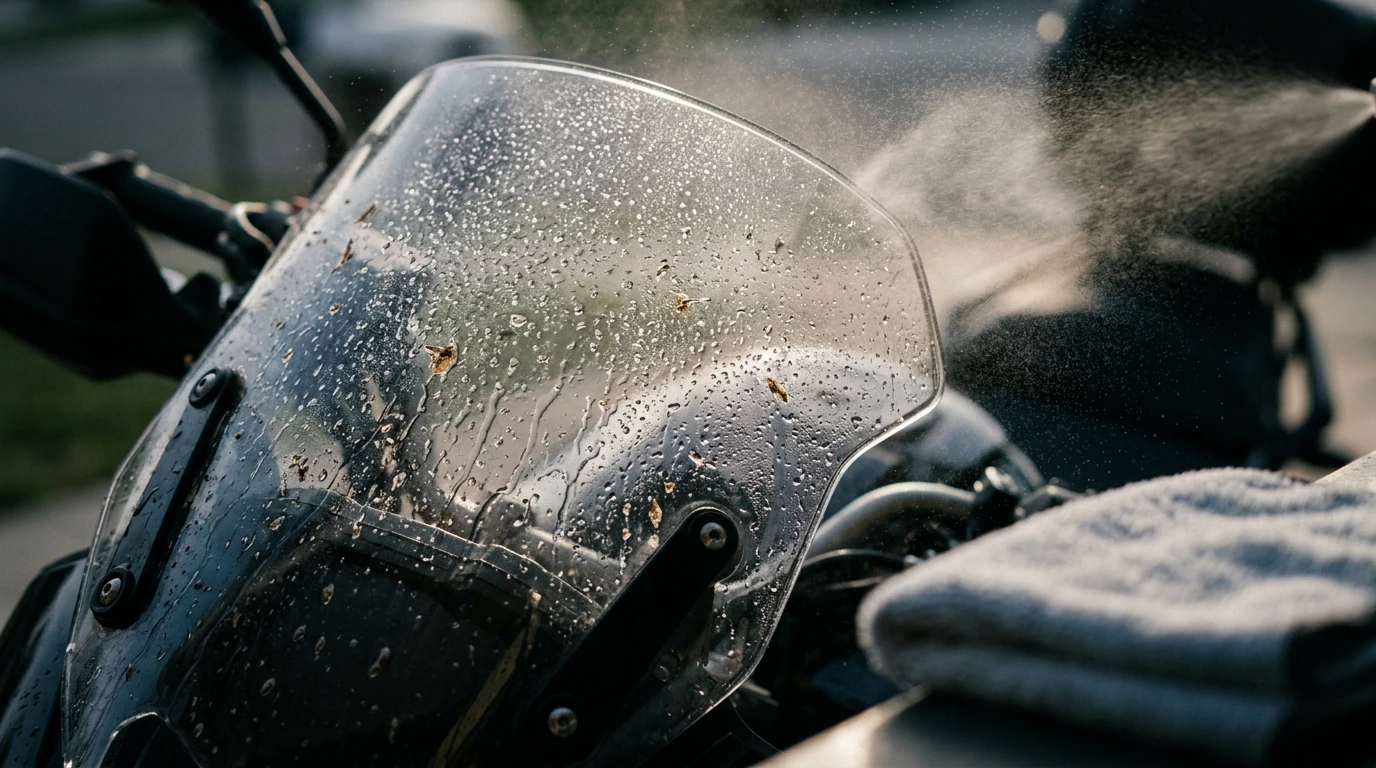
| Warm Water Pre-Soak | Softens dried insect guts and road grime, allowing them to release their grip on the surface without abrasion. | Plus | Every rider, especially those with heavily bug-splattered windshields. |
| pH-Neutral Cleaner (e.g., diluted car wash soap or dedicated bug remover) | Breaks down organic matter and oils more effectively than water alone, aiding in gentle removal. Ammonia-free formulas are crucial for plastic. | Plus | Riders seeking optimal cleaning power without damaging delicate plastic. |
| Plush Microfiber Towels (multiple) | High pile traps dirt particles away from the surface, reducing friction and preventing scratches. Highly absorbent. | Plus | Anyone valuing a scratch-free finish and streak-free clarity. |
| Gentle, Straight-Line Wiping Technique | Minimizes the chance of circular swirl marks. Allows for consistent pressure and thorough coverage. | Plus | Detail-oriented riders who want a flawless finish. |
| Rinsing with Clean Water | Removes any remaining cleaning solution residue and loose debris, preventing streaks and ensuring a clear finish. | Plus | All riders, as it's a critical final step for clarity. |
Real-World Scenarios for Windshield Cleaning
Understanding how this method applies to common riding situations helps solidify its practical value.
- After a Long Highway Trip: Your windshield is likely covered in a dense layer of dried insects. In this scenario, the initial warm water pre-soak is crucial. Drenching the windshield with a wet microfiber towel or a spray bottle of warm water and letting it sit for 5-10 minutes will significantly loosen the grime. This preparation makes subsequent cleaning with a pH-neutral solution far more effective and less risky for scratches.
- Daily Commute Grime: For lighter accumulations of dust, fingerprints, and a few fresh bug splatters, a quick spray of diluted pH-neutral cleaner (or a dedicated quick detailer safe for plastics) followed immediately by a gentle wipe with a clean, plush microfiber towel should suffice. The key is to address the grime before it dries and hardens, reducing the need for extensive soaking.
- Cleaning Before Applying a Protective Coating: If you're preparing to apply a ceramic coating or a sealant to your windshield, a thorough, scratch-free clean is paramount. After the initial bug removal steps, follow up with an automotive glass cleaner (ensure it's plastic-safe) and a fresh microfiber towel to remove any lingering residues. This ensures maximum adhesion and performance of your protective product.
Pro Tip: The Two-Bucket Method for Microfiber
When using multiple microfiber towels, consider a two-bucket system: one for soaking/rinsing dirty towels and one with clean water for final rinses. This prevents reintroducing grit onto your clean surfaces. Always wash microfiber towels separately from other laundry, without fabric softener, to maintain their absorbency and delicate texture.
Advantages and Drawbacks of This Cleaning Method
Every approach has its trade-offs. Here's what to expect from this careful cleaning process.
Key Advantages
- Minimizes Scratching: The primary benefit, directly stemming from the pre-soaking and use of plush microfiber, is a dramatically reduced risk of introducing swirl marks or deep scratches. This preserves visibility and the windshield's lifespan.
- Superior Clarity and Finish: By effectively lifting debris without abrasion, the method ensures a truly clear, streak-free finish, which is critical for rider safety and comfort, especially in varying light conditions.
- Extends Windshield Life: Preventing scratches means the windshield remains optically sound for longer, delaying the need for costly replacements due to haze or damage from improper cleaning.
- Versatile for Various Grime Types: While focused on bugs, the softening and gentle wiping technique is also highly effective for road tar, tree sap, and general road film, making it a comprehensive cleaning solution.
Potential Drawbacks
- Time-Consuming: The pre-soak step, while essential, adds dwell time to the cleaning process, making it less ideal for riders seeking a very quick wipe-down.
- Requires Specific Supplies: This method necessitates dedicated pH-neutral cleaners and multiple high-quality microfiber towels, which can be an initial investment compared to using household cleaners and old rags.
- Not for Deep Scratches: While it prevents new scratches, this method cannot repair existing deep scratches or hazing. Those issues typically require specialized polishing compounds or professional intervention.
Alternatives Worth Considering
While the gentle soaking method is highly effective, other options exist, each with its own benefits and limitations.
- Dedicated Bug Remover Sprays: Products like Chemical Guys Bug & Tar Remover or Meguiar's Bug & Tar Remover are formulated with specific surfactants to break down insect proteins quickly. They can reduce pre-soak time but still require a gentle wiping technique with microfiber.
- Steam Cleaners (Low Pressure): A low-pressure steam cleaner can be effective at softening and lifting stubborn grime without chemical reliance. However, extreme care must be taken to avoid excessive heat on plastic windshields, which could cause warping or damage.
Value and Practical Advice
Investing in the right technique and materials for cleaning your motorcycle windshield offers significant long-term value. While the initial outlay for quality microfiber towels and a suitable cleaner might seem more than a bottle of generic glass cleaner, the preservation of your windshield's clarity and lifespan easily justifies the cost. A clear, undamaged windshield contributes directly to rider safety by ensuring unobstructed vision.
Always check the current prices for automotive-specific, pH-neutral cleaners and high-quality microfiber towels at official automotive care retailers. Prioritize products explicitly labeled as safe for plastics or clear coats.
Final Recommendation
Buy into this method if: You prioritize long-term windshield clarity, want to avoid scratches at all costs, and are willing to invest a little extra time and the right materials for superior results.
Skip this method if: You consistently need extremely fast cleaning solutions, are unwilling to purchase specialized cleaning supplies, or your windshield is already heavily scratched and requires restoration rather than maintenance.
This review is compiled from official specifications of cleaning products and widely reported user feedback on best practices, rather than a personal lab test. Details on specific product formulations and their suitability can differ by region or variant, so always consult product labels.


Comments
Post a Comment