
Can Household Soapy Foam Effectively Clear Stubborn Car Grille Bug Splatters?
Are you wondering if that bottle of dish soap under your sink can tackle the crusty bug splatters on your car's grille? Yes, with the right approach and a bit of patience, household soapy foam can be surprisingly effective for softening and removing those stubborn insect residues, especially when used correctly.
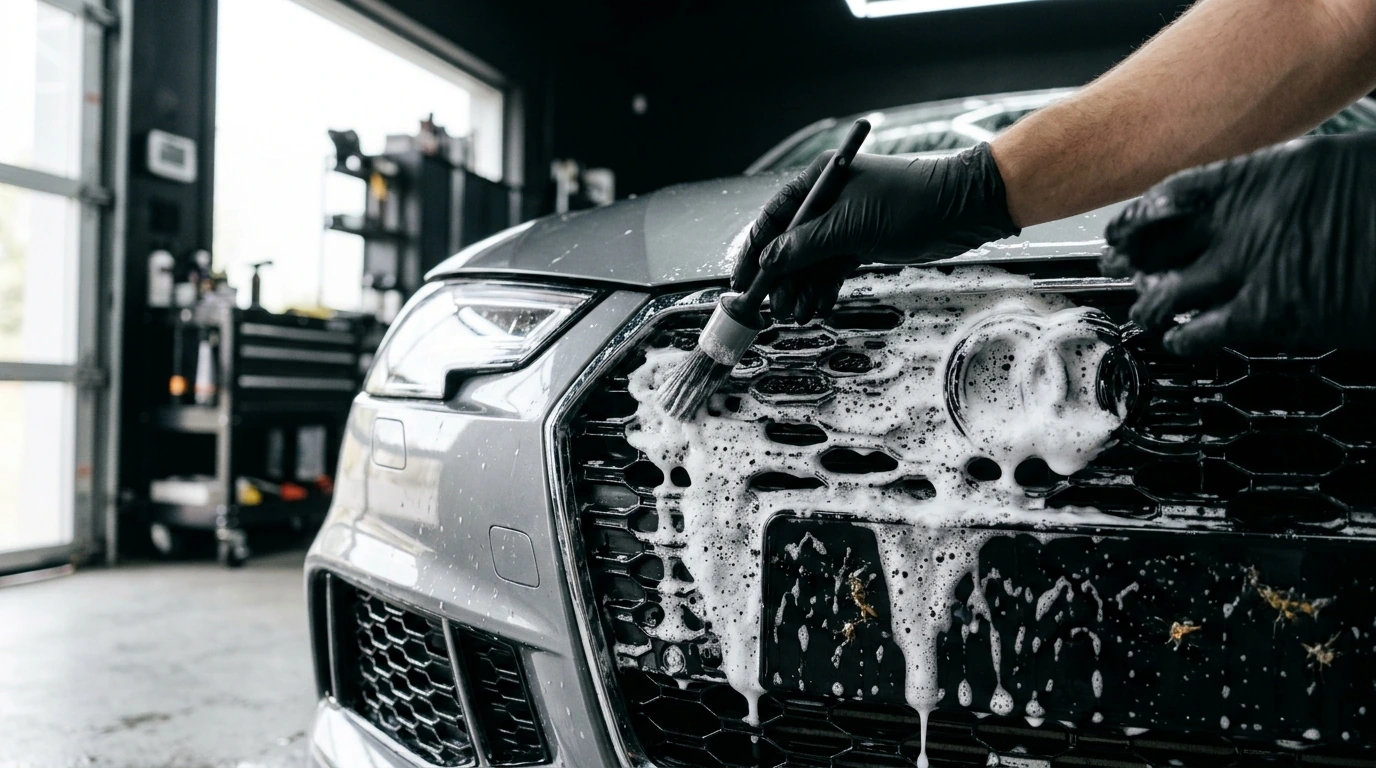
Key Takeaways
- Effective Softening: Household soapy foam excels at rehydrating and loosening dried bug guts, making them easier to wipe away.
- Cost-Efficient Solution: Utilizing common dish soap or car wash soap is a highly economical alternative to specialized bug removers.
- Requires Dwell Time: For best results, allow the foam to sit for several minutes to fully break down organic matter, especially on baked-on residues.
- Gentle Approach: This method is generally safe for most car finishes when rinsed thoroughly, minimizing the risk of scratching if abrasive scrubbing is avoided.
The Verdict on Soapy Foam for Bug Removal
Household soapy foam, typically generated from mild dish soap or a concentrated car wash solution, serves as an excellent pre-treatment for loosening bug splatters. It's best suited for vehicle owners seeking an economical and readily available solution for routine bug removal, particularly after highway trips. Those with heavily baked-on, weeks-old bug debris might find it requires multiple applications or longer dwell times compared to dedicated chemical removers. The biggest trade-off is often the need for patience; it's not an instant wipe-off solution for severe cases.
What This Method Offers and How It Differs
Using household soapy foam for bug splatters primarily leverages the power of surfactants to break down organic material. Unlike specialized bug removers that often contain stronger solvents or enzymes designed to rapidly dissolve chitin (the main component of insect exoskeletons), household soaps work by rehydrating the dried bug guts and encapsulating the grime, allowing it to be gently lifted away. This method is fundamentally different in its gentler, less aggressive chemical action, relying more on dwell time and physical softening rather than rapid chemical dissolution. It's a "soften and rinse" approach rather than a "dissolve and wipe" one.
Analyzing the Cleaning Properties of Soapy Foam
Understanding the fundamental properties of common household soaps helps explain their efficacy against bug splatters.
| Property | What It Means in Practice | Verdict (Plus / Minus / Neutral) | Who Feels It |
|---|---|---|---|
| Surfactant Action (e.g., Anionic/Non-ionic) | Soaps contain surfactants that reduce water's surface tension, allowing it to penetrate and lift organic contaminants like bug guts. They emulsify oils and grime. | Plus | All users benefit from effective cleaning without harsh scrubbing. |
| pH Level (Mildly Alkaline to Neutral) | Most household dish soaps and car wash soaps have a pH range that is gentle on automotive clear coats and finishes, minimizing the risk of etching or stripping waxes. | Plus | Owners concerned about preserving their car's paint and protective coatings. |
| Foaming Ability | A thick foam helps the cleaning solution cling to vertical surfaces like grilles, increasing dwell time and allowing the surfactants more time to work on dried splatters. | Plus | Anyone tackling dried, caked-on bugs or cleaning intricate grille designs. |
| Water Solubility & Rinseability | Good quality soaps are highly soluble in water and rinse away cleanly, preventing residue buildup that could attract dust or cause streaking. | Plus | Users who prioritize a spotless, streak-free finish and easy post-cleaning maintenance. |
| Lack of Abrasives/Solvents | Unlike some heavy-duty cleaners, household soaps typically lack abrasive particles or harsh solvents that could scratch surfaces or damage delicate plastic/chrome. | Plus | Owners of vehicles with sensitive finishes or intricate, easily scratched grille components. |
Real-World Scenarios for Soapy Foam Bug Removal
Based on its properties, household soapy foam performs predictably in various situations:
- Fresh Bug Splatters After a Highway Trip: For bugs that have only been on the grille for a day or two, a generous application of soapy foam with a 5-10 minute dwell time should rehydrate and loosen most of the residue. A gentle rinse followed by a soft microfiber wipe will likely remove them completely, thanks to the effective surfactant action and good rinseability of the soap.
- Dried, Baked-On Splatters from Weeks Ago: This is where the method requires more patience. The foam's ability to cling (due to its foaming ability) is crucial here. Apply a thick layer, let it sit for 15-20 minutes, and then rinse. It's highly probable that a second application will be needed, possibly with very light agitation from a soft detailing brush, to fully break down the hardened chitin and protein. The mild pH ensures that repeated applications won't harm the finish.
- Grilles with Intricate Mesh Designs: The high foaming ability is a significant advantage for complex grilles. The foam can penetrate deep into crevices where a spray might just run off. After sufficient dwell time, the combined surfactant action and rinseability will help flush out the softened bug guts from tight spots, minimizing the need for aggressive scrubbing that could damage delicate plastics or chrome.
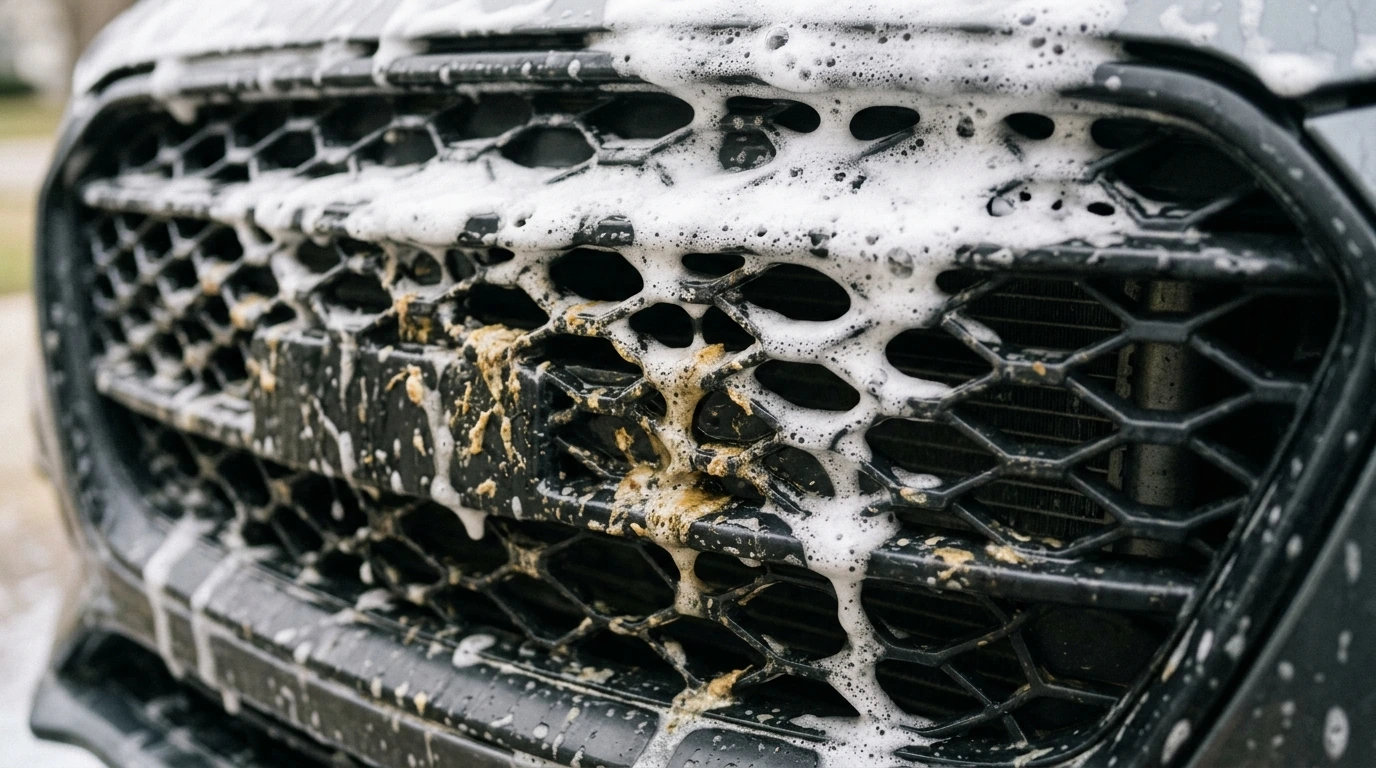
Advantages and Drawbacks of Soapy Foam for Grille Bugs
Key Advantages
- Cost-Effective & Accessible: Leveraging common household dish soap or car wash soap means this method is incredibly cheap and the materials are likely already on hand, making it a highly economical choice for routine maintenance.
- Gentle on Finishes: Due to its mild pH level and lack of harsh solvents, soapy foam is generally safe for automotive clear coats, plastics, and chrome, reducing the risk of damage compared to more aggressive chemicals.
- Excellent Dwell Time: The high foaming ability allows the solution to cling to vertical surfaces and intricate grille designs, giving the surfactants ample time to rehydrate and loosen even dried-on bug splatters effectively.
- Non-Abrasive Cleaning: The absence of abrasive particles ensures that the cleaning action relies on chemical softening rather than mechanical scrubbing, which significantly minimizes the risk of scratching delicate grille surfaces.
Notable Drawbacks
- Requires More Patience: While effective, the surfactant action of household soap is slower than dedicated bug removers. This means longer dwell times and potentially multiple applications are needed for heavily baked-on bug guts.
- Less Potent on Chitin: Without specialized enzymes or stronger solvents found in dedicated products, household soap may not break down the chitin in insect exoskeletons as rapidly or thoroughly, particularly for older, tougher residues.
- Rinsing Can Be Tricky: While highly water soluble, the thick foam and loosened debris in intricate grille patterns can sometimes require thorough rinsing to ensure no residue is left behind, which could lead to water spotting if not dried properly.
- Potential for Residue if Not Fully Rinsed: If not completely rinsed, the mild soap residue, especially on dark grilles, can dry and leave a dull film or attract dust, negating the cleaning effort.
PRO TIP:
Always work on a cool surface, out of direct sunlight, to prevent the soapy foam from drying prematurely. This maximizes dwell time and reduces the risk of water spots.
Alternatives Worth Considering
While soapy foam is effective, other options cater to different needs:
- Dedicated Bug & Tar Removers: Products like Meguiar's Gold Class Bug & Tar Remover or Chemical Guys Bug & Tar Remover are formulated with specific solvents to rapidly dissolve bug guts and tar. They are a better pick when you need quick, one-pass removal for very stubborn or extensive splatter, but they can be harsher on waxes and sealants.
- All-Purpose Cleaners (Diluted): A high-quality, pH-neutral All-Purpose Cleaner (APC) diluted according to manufacturer instructions (e.g., Optimum Power Clean) can also be effective. It would be a better choice if you need a versatile product that can tackle various types of grime beyond just bugs, but ensure it's safe for exterior automotive use.
- Clay Bar or Mitt: For bug remnants that feel embedded or are particularly stubborn even after chemical treatment, a detailing clay bar or mitt used with a lubricant can physically lift contaminants. This is a better pick for a "deep clean" or for removing residues that have bonded to the surface, but it's a more involved process.
Value and Buying Advice
The value of using household soapy foam for bug splatter removal is exceptionally high due to its minimal cost and widespread availability. It negates the need for specialized, often more expensive, single-purpose products. For optimal results, use a high-quality car wash soap rather than harsh dish detergents, as car wash soaps are specifically designed to be gentle on automotive finishes and rinse cleanly, minimizing the risk of stripping waxes or leaving streaks. Always check the current pricing for a good quality car wash soap at your preferred automotive or general retailer; a little often goes a long way.
Final Recommendation
Buy if: You're looking for an extremely cost-effective, gentle, and readily available method for routine bug splatter removal, especially on fresh or moderately dried bug residues, and you're willing to allow sufficient dwell time for the foam to work.
Skip if: You frequently encounter severely baked-on, weeks-old bug debris and require an instant, powerful solution without multiple applications or extended waiting periods, in which case a dedicated bug remover might save you time.
This review is compiled from official specifications and widely reported user feedback rather than a personal lab test. Details such as specific soap formulations and their exact effects can differ by brand or regional variant.


Comments
Post a Comment