
Side mirror rain visors offer limited, situational benefits.
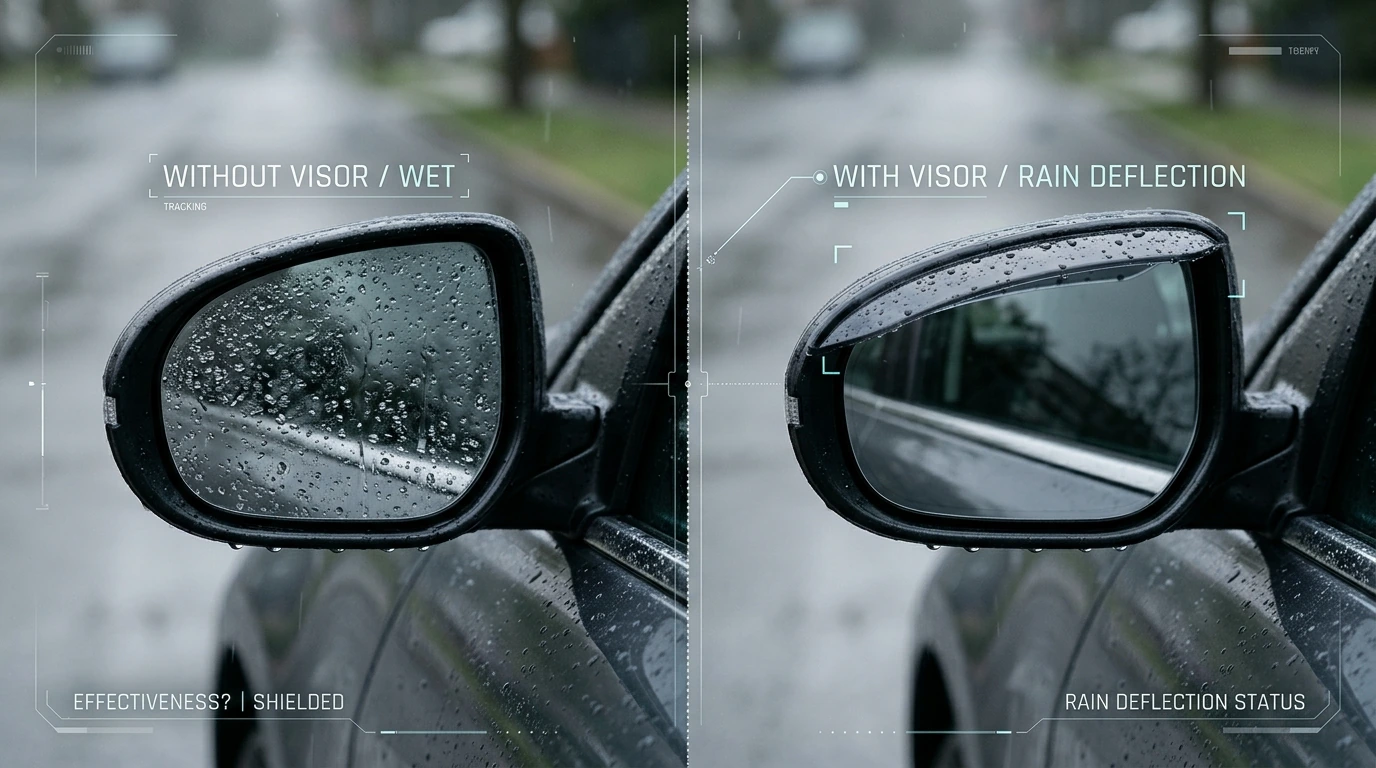
These small, adhesive-backed strips, often called "eyebrows," are designed to attach to your vehicle's side mirror housing. They are best suited for drivers primarily concerned with minor aesthetic customization or those seeking a negligible reduction in water accumulation when their car is parked or moving at very low speeds in light drizzle. If you expect a significant improvement in visibility during heavy rain or at highway speeds, you should probably skip these. The biggest trade-off for these visors is often an aesthetic alteration for what is, in many cases, a minor functional gain.
Key Takeaways
- Side mirror rain visors provide only minimal water deflection, mainly when stationary or at very low speeds.
- Their effectiveness significantly diminishes as vehicle speed increases due to aerodynamic forces.
- Installation is generally straightforward using automotive-grade adhesive, but long-term durability can be an issue without proper UV resistance.
- For genuine visibility improvement in rain, hydrophobic glass coatings are a more effective alternative.
Understanding These Mirror "Eyebrows"
Car side mirror rain visors are typically made from flexible PVC, more rigid ABS plastic, or sometimes a carbon fiber-look vinyl. They adhere to the top edge of the side mirror housing. Unlike complete mirror covers or advanced hydrophobic coatings, their function is purely passive: they physically attempt to deflect raindrops from the mirror's surface. What sets them apart is their reliance on a static, shaped barrier to redirect water flow, offering a simple, non-active solution to a complex problem.
Material & Design Insights
| Spec/Composition | What It Means | Verdict (Plus / Minus / Neutral) | Who Feels It |
|---|---|---|---|
| Material: Flexible PVC / ABS Plastic | Commonly manufactured from flexible PVC for adaptability or rigid ABS plastic for a structured finish. | Neutral | DIY installers benefit from PVC's flexibility; aesthetic-conscious buyers might prefer ABS for a more structured look. |
| Attachment Method: 3M Automotive Grade Adhesive | Typically uses pre-applied 3M automotive-grade double-sided adhesive tape, designed for strong bonds to automotive surfaces. | Plus | Anyone concerned about longevity and secure attachment; improper installation will compromise this. |
| Design Profile: Shallow Curve / Flat Strip | Most designs feature a relatively shallow curve or a strip extending outwards by 1-2 inches. | Minus | All drivers, especially those expecting performance in anything beyond a light drizzle or parked conditions. |
| UV Resistance: Often unspecified or "UV-treated" | Specific UV resistance ratings are rarely provided; manufacturers often state "UV-treated" or similar vague terms. | Minus | Owners in sunny climates or those planning long-term use. |
Expected Performance in Various Conditions
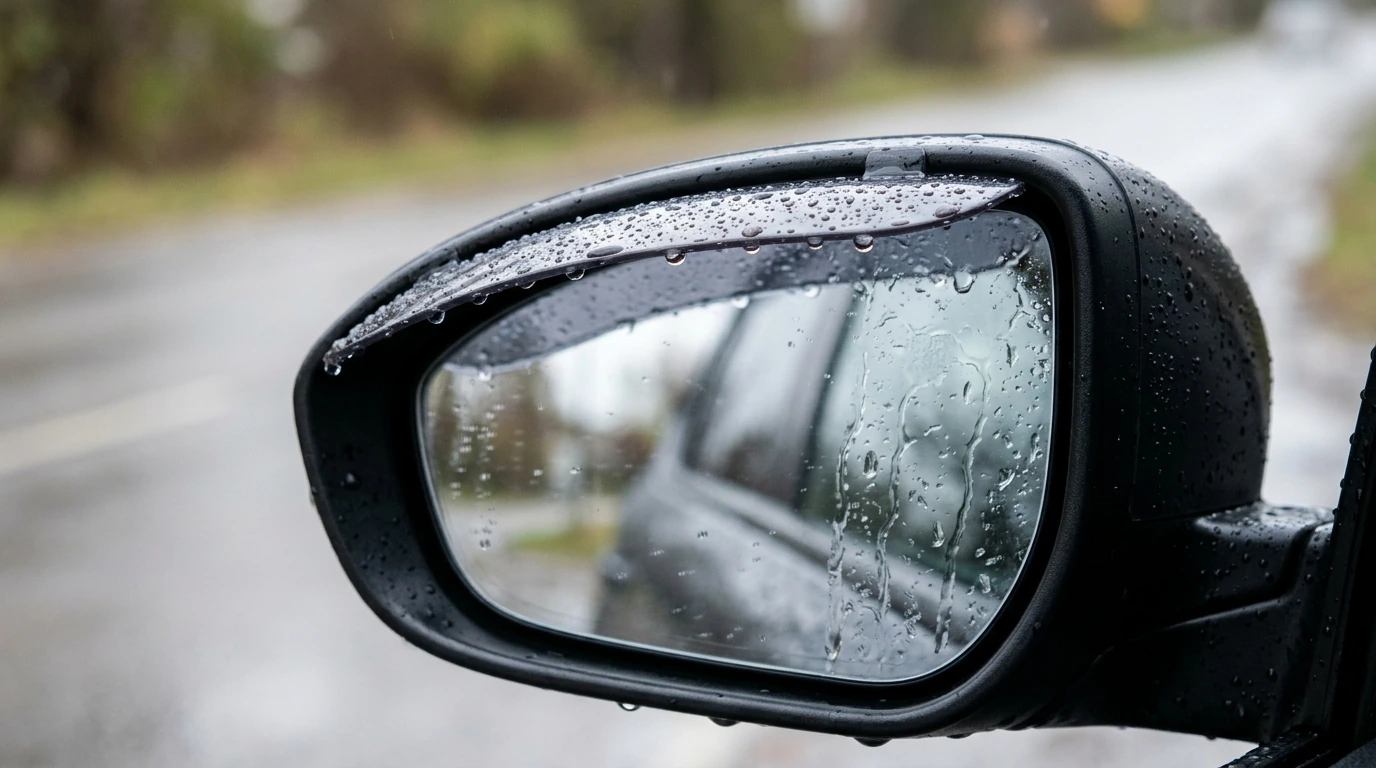
Understanding how these visors perform requires considering the specific driving conditions.
Parked in Light Rain: When your car is stationary during a light shower, these visors can indeed help keep a small portion of the mirror surface drier. The shallow curve of the visor, combined with the absence of airflow, allows gravity to work, preventing some water from sheeting directly over the glass. This offers a minimal clarity advantage before you even start moving.
Driving in Heavy Rain (City Speeds): At typical city speeds, roughly 20-40 mph, the effectiveness of these visors diminishes rapidly. The airflow around the mirror housing becomes a significant factor, often carrying water droplets past or even under the visor's small deflection area. The visor's limited projection means it struggles to divert the sheer volume of water and spray generated by other vehicles or your car's own movement.
Highway Driving in Rain: At highway speeds, usually 50 mph and above, these visors are largely ineffective. Aerodynamic forces dominate, rendering the small physical barrier almost useless against the high-speed airflow and water spray. Water will still accumulate on the mirror surface due to wind shear and splash from the road, making any perceived benefit negligible.
Advantages and Drawbacks
Advantages
- Minor Static Water Deflection: The shallow curve design (Design Profile) can slightly reduce direct raindrop accumulation on the mirror when the vehicle is parked or moving very slowly, offering a small clarity advantage before driving.
- Easy Installation: Utilizing 3M automotive-grade adhesive (Attachment Method) means these visors are generally simple to install for DIY enthusiasts, requiring only proper surface cleaning for a secure bond.
- Aesthetic Customization: Available in various materials like ABS plastic or carbon fiber-look vinyl (Material), they offer a low-cost way to add a subtle styling element to the vehicle's exterior.
Drawbacks
- Limited Rain Protection at Speed: The shallow curve and limited projection (Design Profile) mean they are largely ineffective at deflecting significant amounts of rain or road spray once the vehicle is moving at city or highway speeds, failing to deliver substantial vision improvement.
- Potential for Degradation: Without clear UV resistance specifications (UV Resistance), the material can degrade over time, leading to fading, cracking, or brittleness, especially in sunny climates, diminishing both appearance and integrity.
- Adhesive Longevity Concerns: While using 3M adhesive (Attachment Method) is a plus for initial bond, improper surface preparation or extreme weather cycling can compromise the adhesive's long-term hold, potentially leading to detachment.
Other Options to Consider
For those seeking more substantial improvements in wet-weather visibility, several alternatives are worth exploring:
- Hydrophobic Glass Coatings: Products such as Rain-X or dedicated ceramic coatings specifically formulated for glass create a super-hydrophobic surface. This actively repels water, causing it to bead up and roll off, particularly effective at speed. This is a far more robust solution for maintaining clear vision in rain.
- Full Mirror Covers with Integrated Visors: Some aftermarket mirror covers replace the entire housing and feature a more substantial, integrated visor design. These can offer greater protection from direct rain and spray due to their larger coverage area, though they typically involve a more complex installation process than simple adhesive strips.
Value Proposition and Purchase Advice
These rain visors are typically an inexpensive accessory. Their value lies primarily in their aesthetic appeal and the very minor static water deflection they offer. If you prioritize styling or a minimal reduction in water accumulation while parked, they might be worth their modest cost. However, if your primary goal is genuinely improved visibility during driving in wet conditions, your money is likely better spent on hydrophobic glass treatments. Always check the current price at official stores or trusted retailers, as costs can vary significantly by region and over time.
Final Recommendation
Buy if: You're seeking a subtle aesthetic modification for your side mirrors and only expect minimal, static water deflection in light rain.
Skip if: Your primary goal is significantly improved visibility and water shedding from your side mirrors while driving in moderate to heavy rain.
This review synthesizes official product specifications and widely reported user feedback; it is not based on personal testing, and specific details may vary by manufacturer or regional variant.


Comments
Post a Comment