
The sharp, acrid scent of gasoline hits you the moment you open the trunk, a stark reminder of that recent fuel can mishap. It’s more than just an annoyance; a persistent gasoline odor can permeate the entire cabin, making every drive unpleasant and potentially unsafe if fumes are concentrated.
The Odor Neutralization Process: A Clear Path Forward
Neutralizing a gasoline spill in your car trunk requires a multi-step approach, not a single magic product. This guide is for any vehicle owner who has experienced an accidental fuel spill and needs to restore their car's interior to a fresh state. Those who only deal with minor, fleeting fuel smells from casual transport might find the full process overkill, but persistent odors demand this level of intervention. The biggest trade-off for effective neutralization is the time and patience required for thorough odor elimination, as rushing can leave lingering traces.

Understanding the Challenge: Why Gasoline Odors Persist
Gasoline isn't a simple liquid; it's a complex blend of volatile organic compounds (VOCs). When spilled, these VOCs rapidly evaporate into the air, creating the distinct smell. More critically, they can penetrate porous materials like carpet fibers, foam padding, and even plastic liners, where they become trapped. Over time, these trapped molecules continue to off-gas, leading to a lingering odor that standard cleaning methods often fail to address.
The challenge lies in not just cleaning the visible spill, but in extracting or neutralizing these microscopic odor molecules from deep within the trunk's materials. This requires specialized agents and a methodical approach to ensure complete eradication rather than temporary masking.
Key Agents for Odor Elimination
Choosing the right products is crucial for success. Here's a breakdown of common agents and how they work:
-
Chemical Odor Neutralizers
FACT: Many professional-grade odor neutralizers contain encapsulating polymers or reactive compounds like zinc ricinoleate.
MEANING: These ingredients don't just mask odors; they chemically bind with or surround the odor molecules, rendering them inert and preventing them from evaporating into the air.
VERDICT: Plus – Highly effective for immediate and thorough odor elimination at a molecular level.
WHO FEELS IT: Drivers needing rapid, complete odor removal, especially after significant spills.
-
Activated Charcoal
FACT: A highly porous form of carbon, often derived from wood or coconut shells, with a vast surface area.
MEANING: Its microscopic pores trap odor molecules through adsorption, physically drawing them out of the air and surfaces. It acts like a sponge for smells.
VERDICT: Plus – Excellent for passive, long-term odor absorption without adding new scents. Neutral – Slower acting than chemical sprays.
WHO FEELS IT: Anyone seeking a natural, ongoing solution for residual smells or preventative maintenance, particularly patient users.
-
Enzymatic Cleaners
FACT: Formulated with beneficial bacteria that produce enzymes, often targeting organic matter.
MEANING: These enzymes break down the organic compounds responsible for odors into harmless, odorless substances, effectively digesting the source of the smell.
VERDICT: Plus – Effective for breaking down residues, particularly if the spill has soaked into organic materials like carpet fibers. Neutral – Requires moisture and time to work.
WHO FEELS IT: Owners dealing with spills that have penetrated fabric or carpet, where organic breakdown is necessary.
-
Baking Soda (Sodium Bicarbonate)
FACT: A mild alkali known for its deodorizing properties.
MEANING: It reacts with both acidic and basic odor molecules, neutralizing them by bringing their pH closer to neutral, thus eliminating their characteristic scent.
VERDICT: Plus – Readily available, inexpensive, and safe for most surfaces. Neutral – Less potent and slower than specialized products for severe odors.
WHO FEELS IT: Budget-conscious users, those with minor spills, or as a follow-up to stronger treatments.
Real-World Spill Scenarios and Recommended Actions
Different spill situations call for varying levels of intervention:
Scenario 1: Fresh, Small Spill on a Hard Surface
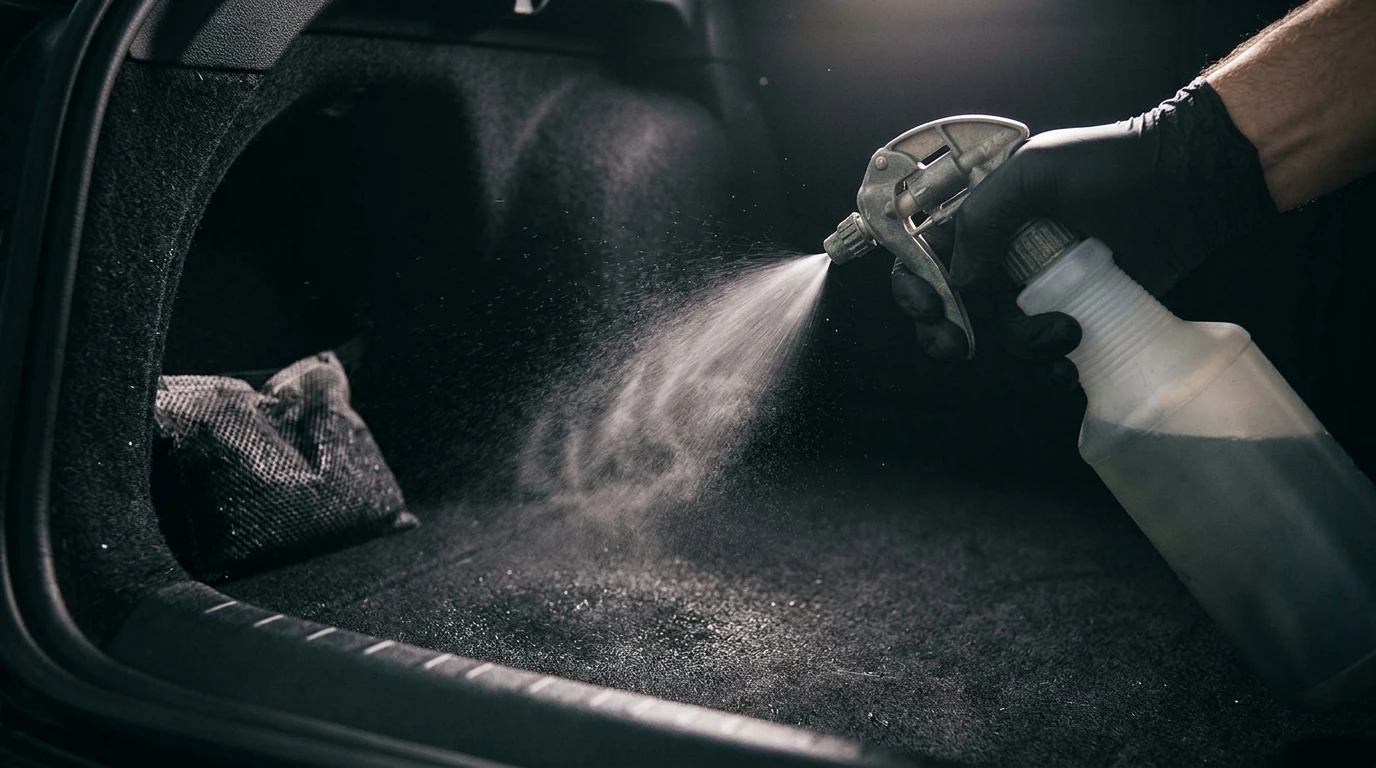
For a recent, contained spill on a plastic or rubber trunk liner, immediate action is key. First, use absorbent towels to soak up as much liquid gasoline as possible, working from the outside of the spill inward to prevent spreading. Once the bulk is removed, clean the area thoroughly with a strong degreaser or all-purpose cleaner to break down any residue. Follow up with a chemical odor neutralizer spray to target lingering molecules. The hard, non-porous surface means less penetration, so a swift and targeted approach usually suffices.
Scenario 2: Dried, Older Spill on Carpeted Trunk
A spill that has dried and soaked into carpet presents a greater challenge. Begin by vacuuming the area to remove any crystallized residues. Then, apply an enzymatic cleaner, ensuring it saturates the affected carpet fibers. Allow it to dwell as per product instructions, often several hours, to let the enzymes break down the odor-causing compounds. After the enzymatic cleaner has worked and dried, a liberal application of baking soda or activated charcoal can help draw out any remaining deep-seated odors over several days. The multi-stage process is necessary due to the material's absorbency.
Scenario 3: Lingering Odor After Initial Cleanup
If you've attempted cleanup but a faint gasoline smell persists, it indicates that odor molecules are still trapped. This scenario benefits greatly from a combination of passive and active neutralization. Place several open containers of activated charcoal or fresh coffee grounds in the trunk, allowing them to adsorb odors over several days, or even a week, with the trunk closed. Additionally, consider a final, thorough misting with a high-quality chemical odor neutralizer across all trunk surfaces, including the underside of the trunk lid and any side panels, ensuring full coverage.
Pro Tip: Ventilate Thoroughly
After any significant cleaning or neutralization step, always ventilate the trunk completely. Leave the trunk lid open in a safe, well-ventilated area for several hours, or even overnight, to allow fresh air to circulate and help dissipate any remaining fumes and product scents. This is critical for preventing re-accumulation of odors and ensuring a truly fresh finish.
Advantages and Drawbacks of Thorough Neutralization
A comprehensive approach to gasoline odor removal offers distinct benefits, but also comes with considerations.
Advantages
- Complete Odor Eradication: Utilizing chemical neutralizers that bind with odor molecules ensures the smell is genuinely eliminated, not just masked, leading to a truly fresh interior.
- Prevents Re-contamination: Thorough cleaning and enzymatic treatment of porous materials like carpet prevent trapped gasoline residues from off-gassing and causing the smell to return weeks later.
- Improved Air Quality: Removing volatile organic compounds (VOCs) from the trunk improves the overall air quality within the vehicle, making it more pleasant and safer for occupants.
- Preserves Vehicle Value: A car free of unpleasant, persistent odors maintains better resale value, as strong smells can deter potential buyers.
Drawbacks
- Time-Consuming Process: The multi-step nature, especially with enzymatic cleaners and passive adsorbents, requires significant time for dwell periods and ventilation, which can be inconvenient.
- Cost of Specialized Products: While baking soda is cheap, high-quality chemical neutralizers and enzymatic cleaners can represent a notable investment compared to basic cleaning supplies.
- Potential for Material Damage: Aggressive scrubbing or improper application of some strong cleaners, especially on delicate or aged trunk liners, could theoretically cause discoloration or minor damage if not tested in an inconspicuous area.
- Requires Patience: The adsorption process with activated charcoal or baking soda is not instant; it demands patience as these agents slowly draw out odors over days, which can be frustrating if immediate results are desired.
Preventative Measures and Professional Options
While this guide focuses on cleanup, preventing spills is always the best strategy. Always transport fuel cans upright and secured, preferably in an open truck bed or on a purpose-built external carrier if possible. If a spill does occur, immediate action is paramount.
For extremely severe or deeply embedded odors that resist DIY efforts, consulting a professional automotive detailer is a viable alternative. They often have access to industrial-grade ozone generators or specialized fogging equipment that can neutralize odors throughout the entire vehicle, though this comes at a higher cost.
Long-Term Freshness: Maintaining a Clean Trunk
After successfully neutralizing a gasoline spill, maintaining a fresh trunk is simpler. Regularly vacuum the trunk carpet and wipe down hard surfaces. Periodically place a small bag of activated charcoal in the trunk to continuously absorb any ambient odors that might accumulate from everyday use. This proactive approach helps ensure the interior remains pleasant and free from unwanted smells.
Final Recommendation
Commit to this process if: You've experienced a noticeable gasoline spill in your trunk and are dealing with a persistent, unpleasant odor that permeates the cabin. This comprehensive checklist provides the necessary steps and product insights to achieve a truly fresh, odor-free vehicle interior.
Consider alternatives if: You're only dealing with extremely minor, fleeting fuel smells that dissipate quickly with ventilation, or if the spill is so extensive that professional remediation is clearly the safer and more effective option.
Frequently Asked Questions
- Q: How long does it take for gasoline smell to go away from a car trunk?
- A: Without intervention, a strong gasoline smell can linger for weeks or even months as the volatile compounds slowly evaporate. With a thorough neutralization process, significant improvement can be seen within days, but complete eradication might take a week or more depending on the severity and materials affected.
- Q: Is it safe to drive with a strong gasoline smell in the trunk?
- A: While minor smells might not pose an immediate danger, a strong, persistent gasoline odor indicates the presence of fumes. Prolonged exposure to these fumes can be unhealthy, and in very extreme cases, a high concentration of fumes could theoretically pose a fire hazard. It's best to address the smell promptly for both health and safety reasons.
- Q: Can I use household air fresheners to get rid of the smell?
- A: Household air fresheners only mask odors temporarily. They do not neutralize the gasoline molecules, so the underlying smell will return once the freshener's scent fades. For true elimination, specialized odor neutralizers or adsorbents are required.
- Q: What if the smell has spread to the car's cabin?
- A: If the smell has permeated the cabin, you'll need to extend your cleaning efforts beyond the trunk. Ventilate the entire car thoroughly, and consider using activated charcoal or chemical odor neutralizers in the cabin area, including under seats and on floor mats. For persistent cabin odors, professional detailing might be necessary.
This review is compiled from official specifications of various cleaning agents and widely reported user feedback on odor removal techniques, rather than a personal lab test. Specific product details and regional availability can differ.


Comments
Post a Comment