
Imagine settling into your vehicle after a long day, the streetlights fading behind you, and instead of a stark, dark cabin, a soft, inviting glow emanates from the footwells. This subtle enhancement, often achieved with under-dashboard ambient LED strip kits, transforms the car's interior from merely functional to genuinely welcoming. It’s a popular upgrade for drivers looking to personalize their space and add a touch of modern luxury.
Key Takeaways
- Best For: Drivers seeking to enhance interior aesthetics, add luxury, or improve low-light visibility for dropped items.
- Skip If: You prioritize absolute factory originality or are unwilling to manage wiring and potential adhesive challenges.
- Biggest Trade-Off: Balancing ease of installation (often adhesive-based) with long-term durability and discreet wiring.
- Core Consideration: LED type, power source, and mounting method are critical for performance and longevity.
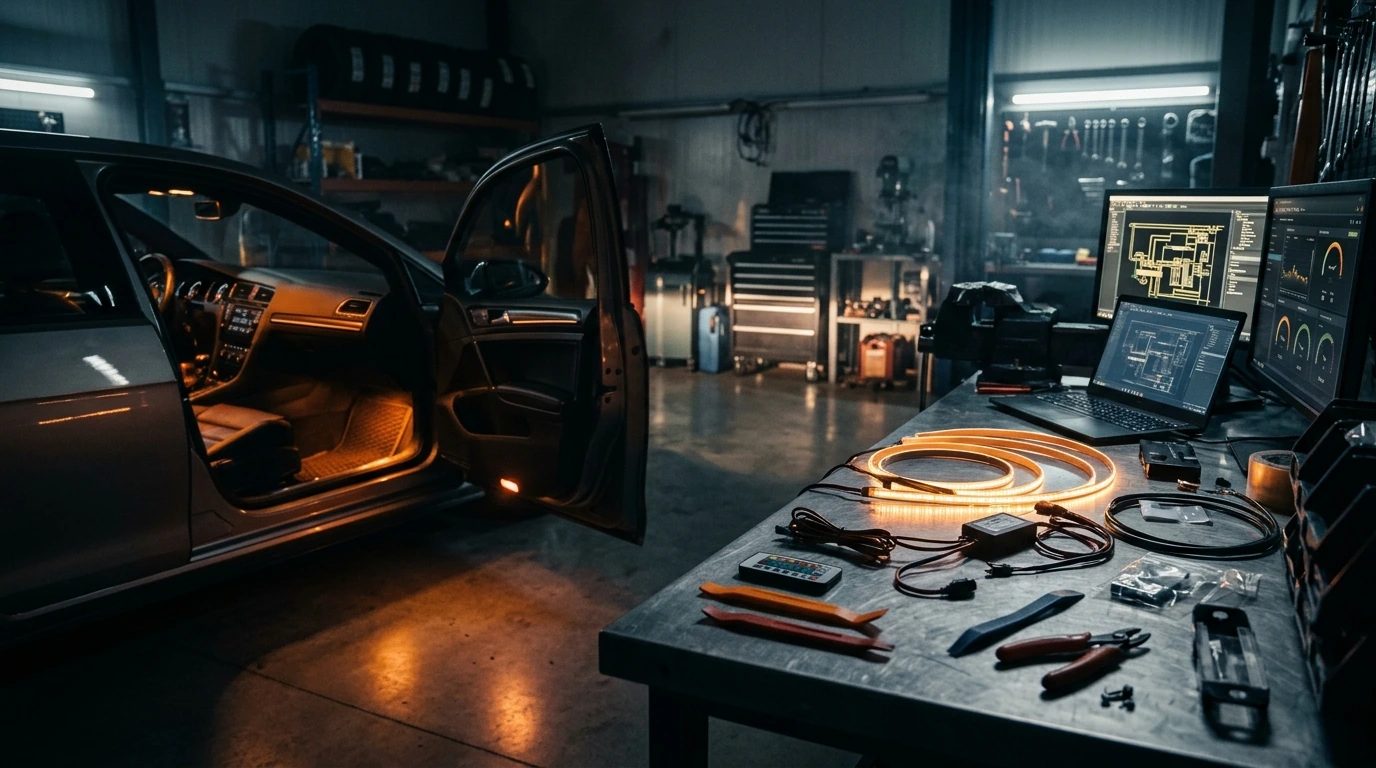
Under-dashboard ambient LED strip kits are aftermarket lighting solutions designed to be discreetly mounted beneath the dashboard, casting light into the footwell areas. These kits typically consist of flexible LED strips, a power source (often a 12V adapter or direct wiring harness), and sometimes a control module for color and brightness adjustments. Compared to older, bulkier incandescent solutions or even some factory-installed ambient lighting, modern LED kits offer superior energy efficiency, a wider spectrum of colors (though this article focuses on warm white for a cozy feel), and much slimmer profiles for easier concealment. The key differentiator in 2026 often lies in the sophistication of the control system and the overall quality of the adhesive and mounting hardware included.
Deciphering the Key Specifications
Choosing the right footwell lighting kit comes down to understanding the technical details that dictate its performance and how well it integrates into your vehicle. Here are the critical specifications to consider:
| Spec/Composition | What It Means | Verdict (Plus / Minus / Neutral) | Who Feels It |
|---|---|---|---|
| LED Type (e.g., SMD 5050, COB) | Refers to the specific technology of the light-emitting diodes. SMD 5050 offers good brightness and color options, while COB (Chip-on-Board) LEDs provide a more uniform, dot-free light output and often higher efficiency. | Plus (COB for smooth light), Neutral (SMD 5050 is common and effective) | Drivers seeking a seamless, high-end look; those sensitive to visible LED dots. |
| Power Source (12V Cigarette Lighter, USB, Hardwire) | How the kit draws power. Cigarette lighter adapters are plug-and-play, USB offers convenience if ports are available, and hardwiring provides the cleanest, most integrated installation. | Plus (Hardwire for clean install), Neutral (Cigarette lighter for ease), Minus (USB might lack power for full brightness) | DIY installers, those wanting a factory-like finish, drivers with limited power outlets. |
| Mounting Method (3M VHB Adhesive, Clips, Screws) | The method used to secure the LED strips. High-quality 3M VHB (Very High Bond) adhesive is common, while clips or small screws offer more robust, though more invasive, attachment. | Plus (3M VHB for ease), Minus (Generic adhesive for poor longevity), Plus (Clips/screws for security) | Anyone in climates with extreme temperature swings, those concerned about long-term adhesion, renters. |
| IP Rating (e.g., IP65) | Ingress Protection rating, indicating resistance to dust and water. IP65 means dust-tight and protected against low-pressure water jets; higher ratings offer more protection. | Plus (IP65+ for durability), Neutral (Lower ratings might suffice if footwells stay dry) | Drivers in wet climates, those who frequently track dirt/snow into the car, off-roaders. |
| Control Method (Remote, App, Physical Button) | How you interact with the lights to change colors, brightness, or modes. Remote controls are straightforward, app control offers more features, and physical buttons are simple and reliable. | Plus (App for features), Plus (Physical button for reliability), Neutral (Remote for simplicity) | Tech-savvy users, those who prefer minimal clutter, drivers who want quick adjustments. |
Real-World Scenarios: How They Perform
Understanding the specifications helps predict how an ambient LED kit will function in everyday driving. Here’s an analysis of common use cases:
The Daily Commute and Passenger Comfort
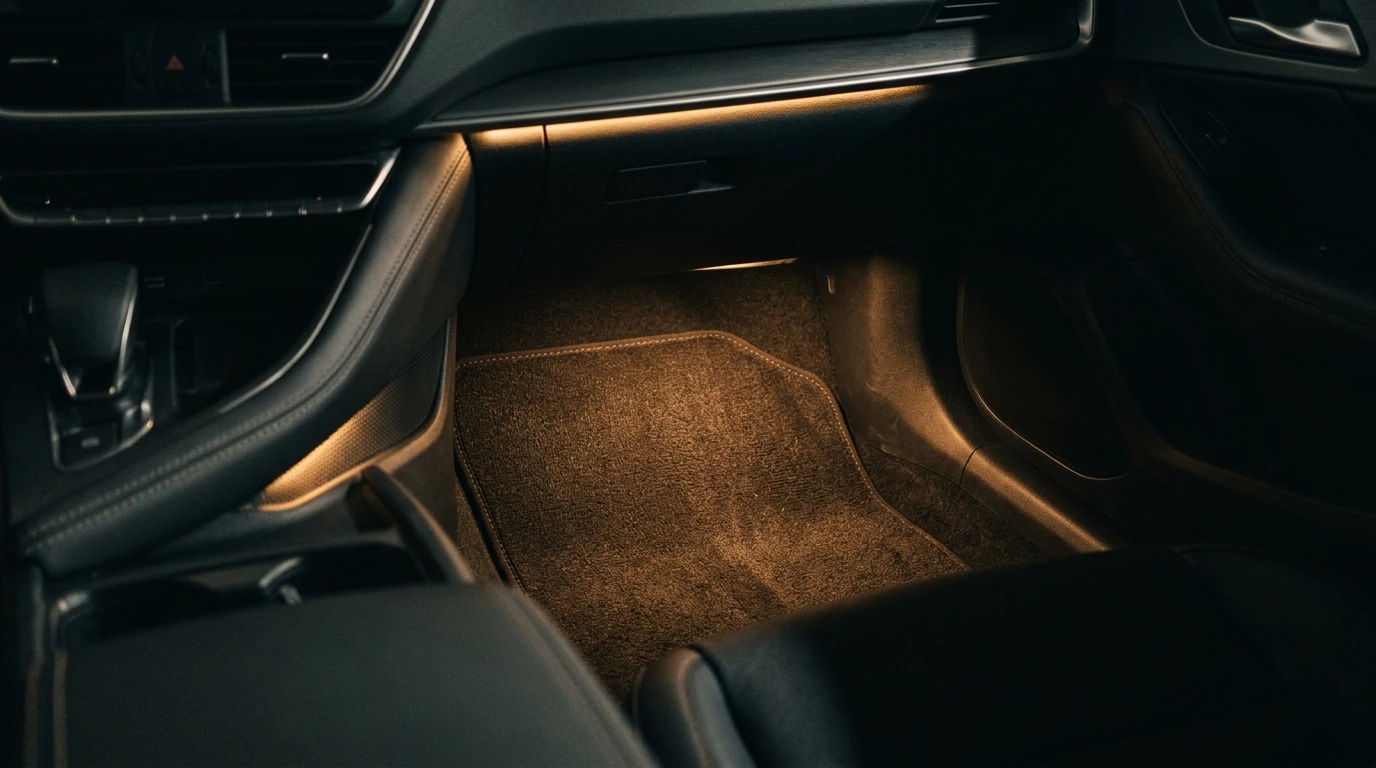
During a typical evening commute, a warm footwell glow can significantly improve the perceived comfort of the cabin. Kits featuring COB LEDs tend to excel here, providing a continuous, soft light that’s less harsh than individual LED dots. Passengers generally appreciate the subtle illumination, making the car feel more upscale and inviting. The ease of adjusting brightness via an app or remote (depending on the control method) allows drivers to tailor the ambiance to their preference without fumbling.
Night Driving and Practicality
For night driving, the primary concern is often distraction. A well-designed kit with adjustable brightness, especially if it uses a hardwire power source that can tap into the vehicle’s ignition, will activate and deactivate seamlessly. The warm light can be practical for finding dropped keys or phones without needing to turn on harsh overhead dome lights. However, if the LED type is too bright or poorly diffused, it could create unwanted reflections or glare, potentially affecting night vision, particularly for those sensitive to peripheral light sources.
Long-Term Installation and Maintenance
The longevity of an ambient LED kit largely depends on its mounting method and IP rating. In regions with significant temperature fluctuations, adhesive-only solutions, especially those using lower-quality tape, are commonly reported to fail over time, leading to sagging strips and visible wiring. Kits with an IP65 or higher rating are better equipped to handle moisture and dust that inevitably accumulate in footwells, preventing premature failure of the LEDs or control module. Regular cleaning of the footwell area will also help maintain the strips’ appearance and adhesion.
Pro Tip: Wiring for a Clean Look
For the most professional and durable installation, consider a kit designed for hardwiring into your vehicle's fuse box, ideally to a circuit that powers with the ignition. This avoids visible wires from cigarette lighter adapters or USB ports and ensures the lights turn on and off with the car, preventing battery drain.
Advantages and Drawbacks in Focus
Advantages
- Enhanced Cabin Aesthetics: Kits with high-quality LED types like COB provide a smooth, inviting glow that elevates the car's interior ambiance, making it feel more premium.
- Improved Low-Light Visibility: The subtle illumination from the LEDs can make it easier to locate dropped items in the footwell, a practical benefit derived directly from the LED type's light output.
- Flexible Control Options: Many kits offer app or remote control, allowing for easy adjustment of brightness and color (if applicable), offering user convenience tied to the kit's control method.
- Relatively Easy Installation: Kits designed with 12V cigarette lighter adapters and quality 3M VHB adhesive offer a straightforward DIY installation process, reducing complexity for the average user.
Drawbacks
- Potential Adhesive Failure: Kits relying solely on generic adhesive for mounting are commonly reported to sag or detach over time, especially in varying temperatures, a direct consequence of the mounting method.
- Visible Wiring Challenges: Achieving a truly clean, hidden wiring setup requires careful routing and potentially hardwiring, which can be difficult if cable lengths are insufficient or if using a cigarette lighter adapter.
- Distraction for Some Drivers: While subtle for many, some individuals might find the peripheral light from the LED type distracting during night driving, particularly if the brightness is not adjustable or set too high.
- Vulnerability to Moisture and Dust: Kits with lower IP ratings are more susceptible to damage from spilled liquids or accumulated dust in the footwell, potentially leading to premature failure of the LED strips.
Alternatives Worth Considering
While aftermarket LED strip kits offer a compelling upgrade, other options exist depending on your budget and desired outcome:
- Factory-Installed Ambient Lighting: Many premium vehicles come with integrated ambient lighting from the manufacturer. This is the gold standard for seamless integration and durability, though it’s not an aftermarket add-on but a feature of the vehicle itself.
- Battery-Powered Puck Lights: For a temporary or highly localized solution, small battery-powered LED puck lights can be placed in footwells. These are easy to install and remove but offer limited light output and require frequent battery changes, making them less ideal for continuous use.
- Custom Fiber Optic Lighting Kits: For the ultimate in bespoke interior lighting, professional installers can integrate fiber optic strands into trim panels and footwells. This is a significantly more complex and costly option, but it provides a truly factory-integrated and highly customizable lighting experience.
Value and Buying Advice
The value of an under-dashboard ambient LED kit is largely determined by its construction quality and how well its features align with your installation preferences. Kits with robust mounting solutions (like high-quality 3M VHB or clips), higher IP ratings, and versatile power options (e.g., hardwire capability) generally offer better long-term value, even if they come at a slightly higher price point. Always check the current price at the official store or trusted retailers, as costs can fluctuate by region and promotions.
Final Recommendation
Buy if: You want to add a touch of modern luxury and practical low-light visibility to your car's interior, are comfortable with basic wiring management, and prioritize a personalized cabin experience. Opt for kits with COB LEDs, hardwiring capability, and strong adhesive or clip mounting.
Skip if: You prefer to keep your vehicle strictly factory original, are unwilling to spend time on discreet wiring, or have concerns about potential adhesive degradation over time.
Frequently Asked Questions
Q: Are these LED kits difficult to install for a DIY enthusiast?
A: Kits with cigarette lighter adapters are generally straightforward "plug-and-play." Hardwiring for a cleaner look requires basic knowledge of automotive electrical systems and identifying a suitable fuse, which might be more challenging for beginners.
Q: Can I change the color of the lights?
A: Many ambient LED kits offer RGB (Red, Green, Blue) functionality, allowing for a wide range of color choices, often controlled via a remote or smartphone app. Some kits are single-color only, so check the product specifications.
Q: Will these lights drain my car battery?
A: Modern LED strips are very energy-efficient. If hardwired to a switched ignition source, they will turn off with the car. If connected to a constant power source (like some USB ports or always-on 12V outlets), there's a minimal risk of drain over extended periods if left on, but generally, it's negligible for short durations.
This review is compiled from official product specifications and widely reported user feedback rather than personal lab testing. Specific details, such as exact features and performance, can vary by regional variant or production batch.


Comments
Post a Comment