
Struggling to get that dried, white wax residue out of your car's textured black trim? This common detailing challenge demands a precise approach to restore your vehicle's clean, factory-fresh appearance without causing damage.
Effectively cleaning old wax residue from textured black bumpers and door handles requires a targeted strategy, often involving specific chemical agents and careful application. This isn't about a single 'magic' product, but rather understanding the properties of different cleaning compounds and their interaction with plastic and rubberized surfaces. It's best suited for meticulous car owners and detailers who prioritize a pristine finish, while those seeking a quick, universal solution might find the process more involved than expected. The biggest trade-off is often balancing aggressive cleaning power with the risk of staining or drying out the trim if not done correctly.
Understanding the Wax Problem on Textured Surfaces
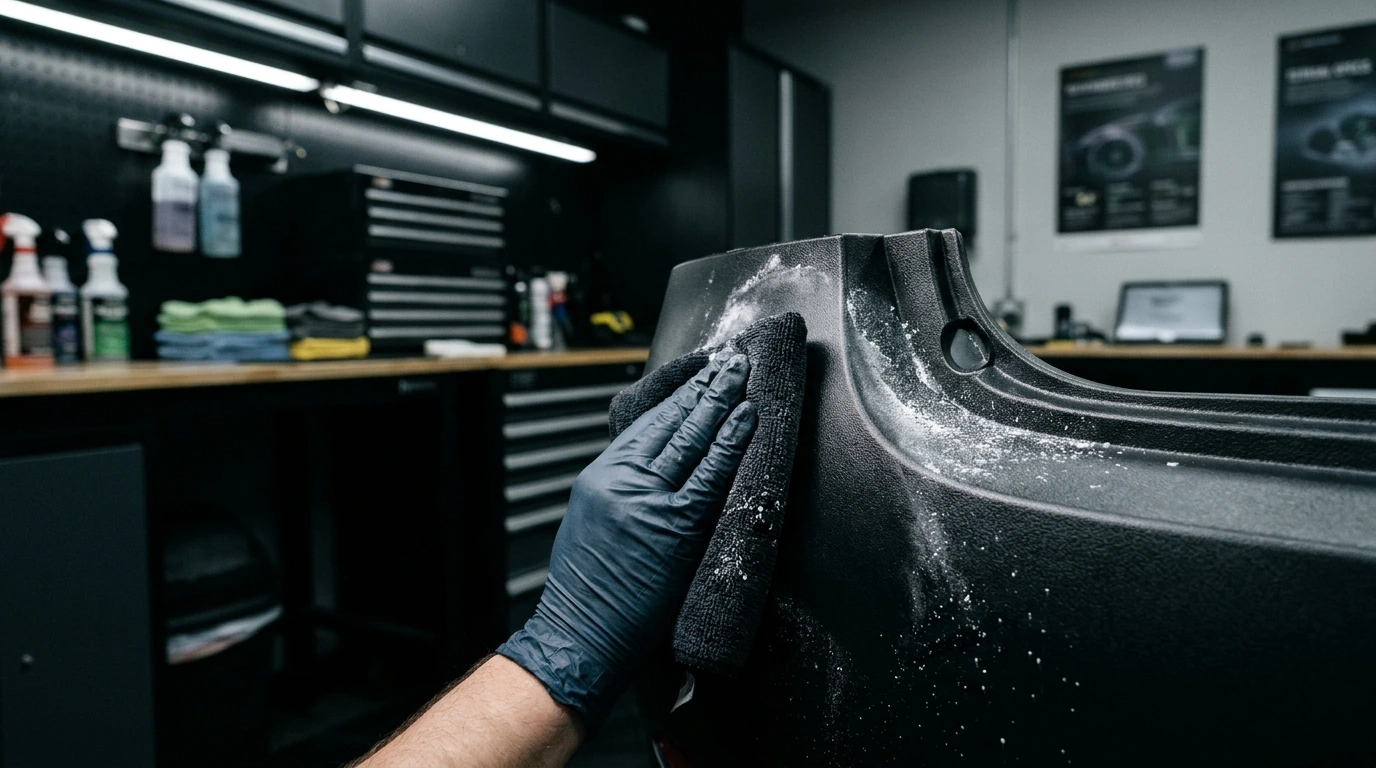
Wax residue tends to embed itself deeply into the microscopic pores and grooves of textured plastic and rubber trim. Unlike smooth painted surfaces where wax merely sits on top, these porous materials create a tenacious bond, making simple washing ineffective. The problem is exacerbated by older, hardened wax formulations that have dried and cured over time, often turning white or hazy against the black trim.
What makes this different from cleaning other car surfaces is the material itself. Textured plastics and rubber are susceptible to harsh solvents that can strip their protective layers, leading to discoloration, drying, or a chalky appearance. The goal is to dissolve the wax without compromising the integrity or finish of the underlying trim.
Key Approaches to Residue Removal
The effectiveness of cleaning wax residue hinges on selecting the right agent and technique. Here's an analysis of common methods:
Petroleum Distillates / Mineral Spirits
- Fact: Many dedicated wax and tar removers contain petroleum distillates or mineral spirits. These are hydrocarbon solvents.
- What It Means: They are excellent at dissolving hydrocarbon-based substances like carnauba wax, paraffin, and other common detailing waxes. Their non-polar nature allows them to break down the wax at a molecular level.
- Verdict: Plus. Highly effective for dissolving wax.
- Who Feels It: Owners dealing with stubborn, dried-on wax stains.
Isopropyl Alcohol (IPA)
- Fact: Commonly available in 70% or 90%+ concentrations.
- What It Means: IPA is a polar solvent that can help break down certain components of wax and oils. It evaporates quickly, leaving little residue. However, it's generally less effective than petroleum distillates for heavy wax deposits.
- Verdict: Neutral to Plus. Good for lighter haze or as a follow-up, but not a primary heavy-duty wax remover.
- Who Feels It: Detailers looking for a final wipe-down or addressing minor wax haze.
All-Purpose Cleaners (APCs) / Degreasers
- Fact: These are typically alkaline, surfactant-based solutions designed to lift dirt, grease, and grime. They come in various dilution ratios.
- What It Means: While excellent for general cleaning, their primary mechanism isn't dissolving wax. They work by emulsifying contaminants. Stronger concentrations might soften wax, but they also carry a higher risk of drying out or staining delicate plastic trim if left on too long or not rinsed thoroughly.
- Verdict: Neutral to Minus. Can work on very fresh or light wax, but risky for aged, heavy residue.
- Who Feels It: Those with very minor, fresh wax splatters, but caution is needed.
Melamine Foam (Magic Eraser)
- Fact: Made from melamine resin, these sponges act as a very fine abrasive.
- What It Means: The microscopic fibers act like ultra-fine sandpaper, physically abrading away contaminants. While effective at removing embedded dirt and some surface wax, this abrasive action can also remove the textured finish itself, dulling the plastic or leaving micro-scratches.
- Verdict: Minus. High risk of damaging the trim's texture and appearance.
- Who Feels It: Anyone tempted by quick fixes; often leads to irreversible damage on delicate surfaces.
Real-World Scenarios for Effective Cleaning
Consider how these agents would perform in practical situations:
- Scenario 1: Fresh Wax Splatter on a Bumper. If you've just waxed your car and noticed fresh residue on the textured bumper, a mild APC diluted appropriately, or even a quick wipe with a dedicated wax remover, should lift it easily. The wax hasn't had time to fully cure or embed itself deeply, so less aggressive methods are sufficient.
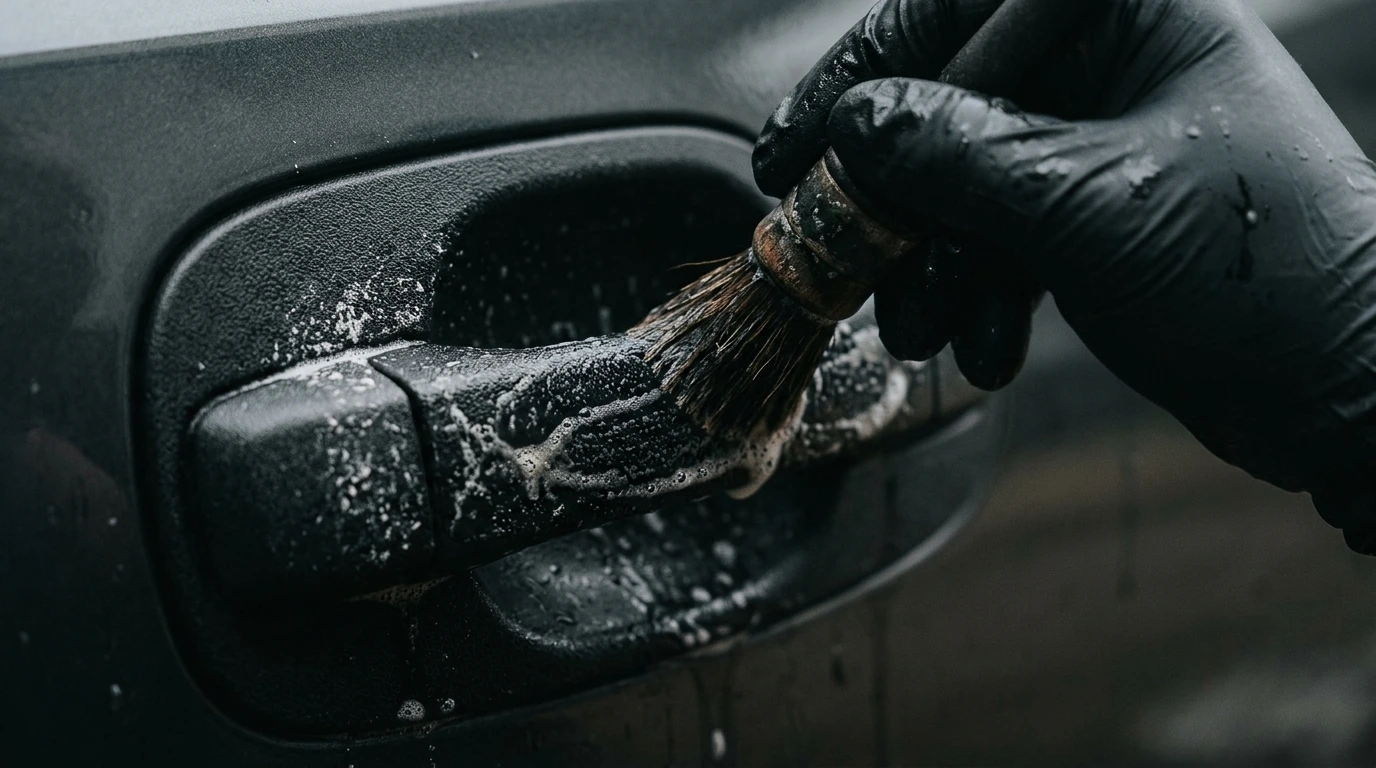
- Scenario 2: Aged, Hardened Wax in Door Handle Crevices. For wax that has been sitting for months, turning white and hard, especially in intricate areas like door handle textures, a petroleum distillate-based wax remover is the most effective. Its ability to dissolve the wax without excessive scrubbing is crucial. Following up with a gentle brush to work the solution into the texture, then wiping clean, should yield good results.
- Scenario 3: Hazy, Dull Trim from Repeated Waxing. If the trim has a general hazy appearance from years of wax application, a combination approach might be best. Start with a dedicated wax remover for the bulk, then use a 70% IPA solution for a final wipe-down to ensure all residues are gone. Afterward, applying a plastic trim restorer can rehydrate and protect the material.
PRO TIP: Always test any cleaning product on an inconspicuous area of the trim first. This helps ensure it won't cause discoloration or damage before you apply it to a visible section.
Advantages and Considerations of These Methods
Advantages:
- Targeted Dissolution with Petroleum Distillates: Dedicated wax removers containing petroleum distillates directly break down the chemical bonds of wax, making them highly efficient for stubborn, dried-on residue without requiring aggressive scrubbing. This protects the textured surface from physical abrasion.
- Safe Evaporation with IPA: Isopropyl Alcohol (IPA) evaporates quickly and leaves minimal residue, making it suitable for a final cleaning pass to ensure no oily film remains, which can attract new dirt. This quick drying time reduces the risk of moisture-related issues on plastic.
- Versatility of APCs for Light Contamination: For very fresh wax splatters or general surface grime mixed with light wax, a properly diluted All-Purpose Cleaner (APC) can be effective. Its surfactant properties lift and emulsify contaminants, offering a gentler alternative for minor issues.
Drawbacks:
- Risk of Drying/Staining with Strong Solvents: While effective, petroleum distillates can potentially dry out or slightly dull certain types of plastic trim if left to dwell too long or used excessively without proper follow-up. This requires careful application and immediate wiping.
- Limited Power of IPA for Heavy Wax: Isopropyl Alcohol is not strong enough to efficiently tackle thick, aged, or heavily embedded wax residue. Relying solely on IPA for significant wax build-up will likely lead to frustration and incomplete cleaning.
- Abrasive Damage from Melamine Foam: The physical abrasion of melamine foam, while seemingly effective initially, can permanently alter the delicate texture of black plastic trim, leading to a smooth, scuffed, or discolored appearance that is difficult to reverse.
Alternative Strategies for Persistent Stains
If standard wax removers aren't fully effective, consider a dedicated plastic trim restorer that also has mild cleaning agents. These products are formulated to be safe for plastics and can sometimes lift embedded wax while simultaneously conditioning the trim. Products like those from CarPro, Gyeon, or Mothers often have specific formulations for textured trim that combine cleaning with restoration. Another option, though more labor-intensive, is using a soft detailing brush (like a boars hair brush) with the wax remover to gently agitate the product into the texture, helping to dislodge embedded wax without excessive force.
Evaluating Value and Best Practices
The value in cleaning old wax residue from textured black trim comes from restoring your vehicle's aesthetic appeal and preventing further degradation of the plastic. Investing in a quality, dedicated wax remover, rather than relying on harsh household cleaners, is a cost-effective choice in the long run, as it prevents potential damage that would be expensive to repair or replace. Always check the current prices at official automotive detailing stores or trusted online retailers for the best value.
Your Next Step to Clean Trim
Buy a dedicated wax and tar remover if you have visible, white, dried wax residue on your textured black trim. Skip if your trim is merely dusty or has very light, fresh contamination that a gentle car wash can handle, as stronger chemicals won't be necessary.
This review is compiled from official product specifications and widely reported user feedback, rather than a personal lab test. Details regarding product formulations or regional availability can vary.


Comments
Post a Comment