
Removing drink syrup residue from car window switches is not a simple wipe-down task; it demands precision and the right materials to prevent electrical shorts and further damage.
Understanding the Sticky Switch Problem
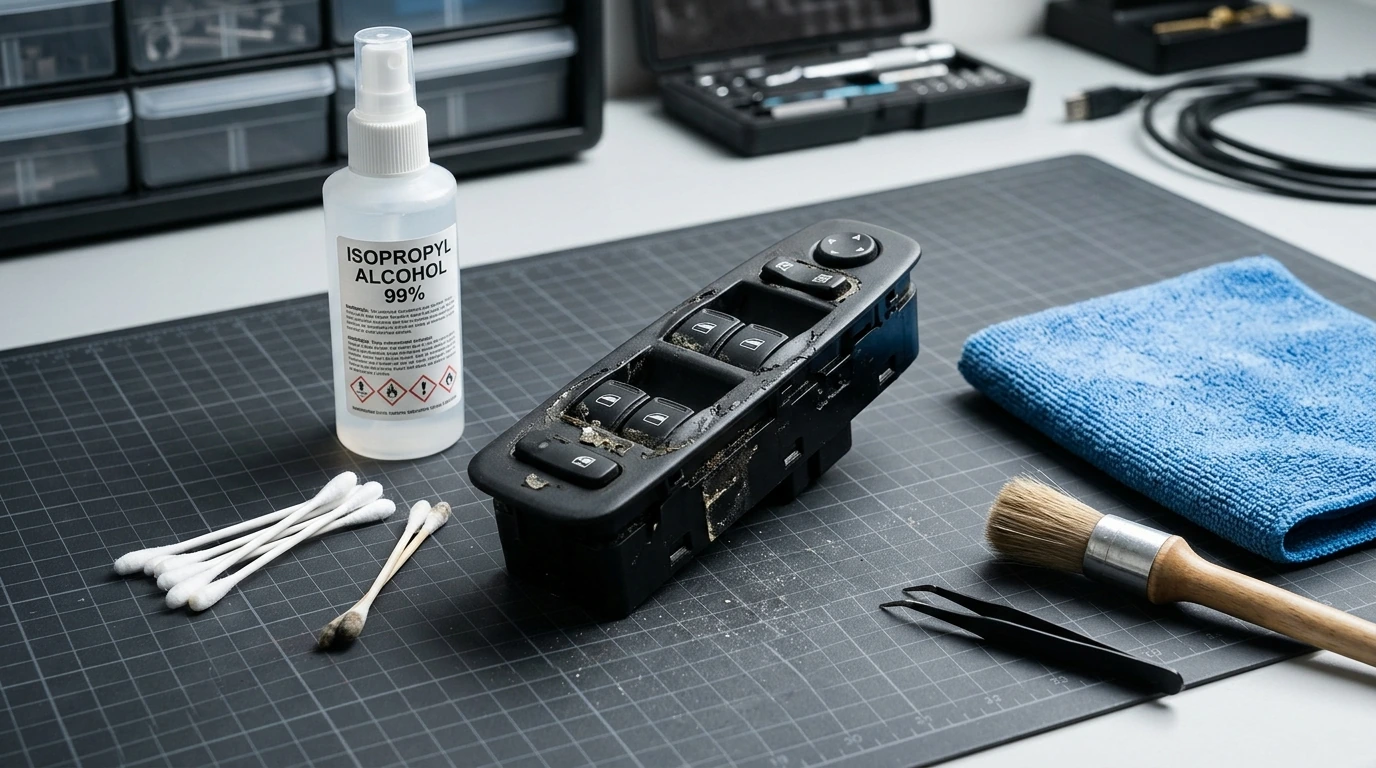
Sticky car window switches are a common nuisance, often caused by spilled sugary drinks seeping into the small gaps around the buttons. This residue can gum up the internal mechanisms, making switches hard to press or even unresponsive. More critically, sugary liquids are conductive and corrosive, posing a risk of short-circuiting the delicate electronics if not addressed correctly.
This cleaning process is ideal for car owners who have experienced accidental spills and are comfortable with careful, methodical work. Those who prefer not to handle small electrical components or are unsure about basic disassembly might find professional detailing or switch replacement a more suitable option. The biggest trade-off for DIY cleaning is the time and meticulous effort required, which is essential to avoid costly electrical repairs.
Essential Tools and Materials for Safe Cleaning
Attempting to clean sticky switches without the right supplies can push residue deeper or introduce moisture where it shouldn't be. Here's a breakdown of the critical items needed for a successful, damage-free cleaning:
- Isopropyl Alcohol (IPA) 90%+ Purity
- What It Means: High-purity IPA is an excellent solvent for sugars and evaporates quickly without leaving residue. The higher concentration means less water content, reducing the risk of electrical damage.
- Verdict: Plus – Essential for dissolving sugar and quick drying.
- Who Feels It: All users; critical for preventing moisture-related shorts.
- Microfiber Cloths
- What It Means: Soft, lint-free cloths that absorb liquids effectively and won't scratch plastic surfaces.
- Verdict: Plus – Safe for wiping surfaces, prevents lint accumulation.
- Who Feels It: All users; ensures a clean finish without damage.
- Cotton Swabs and Detail Brushes (soft bristles)
- What It Means: These tools allow for precise application of IPA into tight crevices and gentle scrubbing without excessive liquid.
- Verdict: Plus – Enables targeted cleaning in hard-to-reach areas.
- Who Feels It: All users; crucial for thorough residue removal.
- Plastic Trim Removal Tools
- What It Means: Non-marring tools designed to safely pry open trim panels and switch housings without damaging the plastic.
- Verdict: Plus – Prevents cosmetic damage during disassembly.
- Who Feels It: Users needing to access deeper residue or remove the switch panel.
- Compressed Air Duster
- What It Means: Used to blow away loose debris and help accelerate the drying process, especially in tight spots.
- Verdict: Neutral – Useful for quick drying and removing loose particles, but not for dissolving sticky residue.
- Who Feels It: Users wanting a faster drying time and thorough debris removal.
PRO TIP:
Always disconnect your car's battery before attempting any cleaning that involves liquids near electrical components. This eliminates the risk of accidental shorts or component damage during the process.
Real-World Cleaning Scenarios
Addressing sticky window switches requires a tailored approach based on the severity of the spill.
Minor Surface Stickiness, Recent Spill
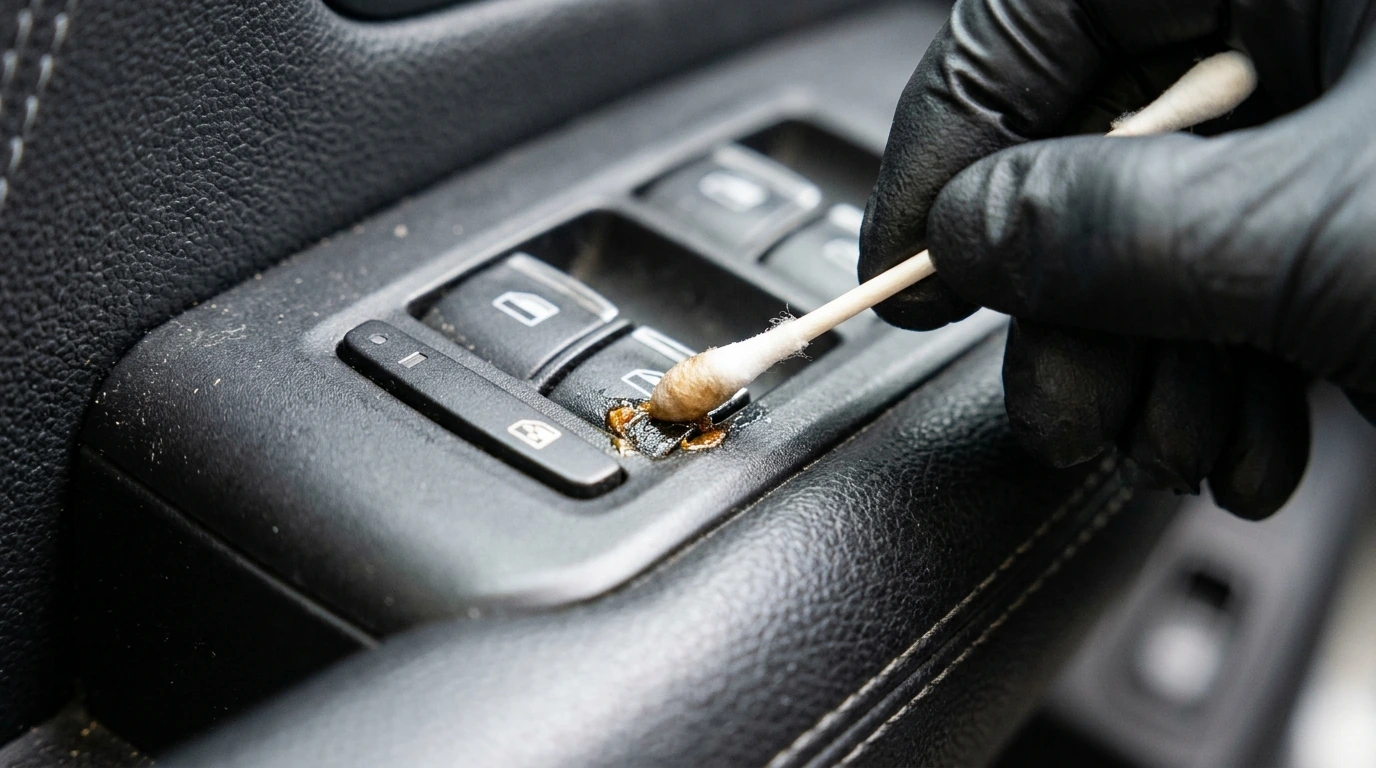
If a spill just occurred and the stickiness is minimal, confined mostly to the surface of the buttons and surrounding trim, a targeted approach is usually sufficient. Dampen a cotton swab with IPA (ensure it's not dripping wet) and carefully wipe around the edges of the buttons and any visible residue. Use a detail brush to gently work the IPA into the tightest seams. Follow up immediately with a dry microfiber cloth to absorb any excess liquid and residue. This method relies on the IPA's quick evaporation and minimal moisture introduction.
Heavily Gummed-Up Switch, Older Spill
For switches that are severely gummed up, feel sluggish, or are unresponsive due to an older, dried spill, a more intensive cleaning is usually needed. This often involves carefully prying out the window switch panel using plastic trim removal tools. Once the panel is accessible, you can more thoroughly clean the individual switches, potentially even carefully separating the button caps from their bases if the design allows. This direct access permits more liberal, yet still controlled, application of IPA with cotton swabs and brushes, ensuring all dried syrup is dissolved and removed from the internal mechanisms. Always ensure the components are completely dry before reassembly.
Preventing Future Spills and Residue Buildup
While not a cleaning scenario, proactive measures can significantly reduce the risk of future issues. Using cup holders designed to securely hold various drink sizes, or opting for spill-proof travel mugs, can prevent most accidental spills. Regular, light cleaning of the interior, especially around high-touch areas like window switches, can also catch minor drips before they become a major problem. This preventative mindset saves considerable effort in the long run.
Advantages and Drawbacks of DIY Switch Cleaning
Understanding the balance of benefits and potential pitfalls helps in deciding whether to tackle this task yourself.
Key Advantages
- Cost-Effective Repair: Utilizing high-purity IPA and common cleaning tools is significantly cheaper than professional detailing or replacing an entire switch assembly, which can be costly.
- Prevents Electrical Damage: The careful, controlled application of quick-drying IPA minimizes moisture ingress, directly addressing the risk of short circuits and corrosion that sugary liquids can cause.
- Restores Full Functionality: Thoroughly dissolving and removing sticky residue with cotton swabs and detail brushes restores the smooth, responsive operation of the window switches, improving the driving experience.
Potential Drawbacks
- Time-Consuming Process: The meticulous nature of applying IPA with cotton swabs and brushes, especially for heavily gummed switches, requires significant time and patience, which might not suit everyone's schedule.
- Risk of Cosmetic Damage: Improper use of plastic trim removal tools can lead to scratches or broken clips on interior panels if not handled with care, despite the tools being non-marring by design.
- Potential for Electrical Shorts: While high-purity IPA reduces risk, over-saturating components or failing to disconnect the battery can still lead to electrical issues, particularly if water-diluted alcohol is used.
Other Approaches to Consider
While DIY cleaning is effective, it's not the only solution for sticky switches.
- Professional Interior Detailing: A reputable detailer can often address sticky switches as part of a comprehensive interior cleaning package. They have specialized tools and experience, which can be a better pick if you lack the time or confidence for DIY work.
- Switch Replacement: If a switch is severely damaged, corroded, or the internal electronics are compromised beyond simple cleaning, replacing the entire switch unit might be the only viable option. This is typically a more expensive solution but guarantees full restoration of function.
Value and Practical Advice
Cleaning sticky car window switches yourself offers excellent value, provided you have the patience and the right materials. The cost of IPA and a few tools is minimal compared to professional services or part replacement. When purchasing isopropyl alcohol, always verify the purity percentage on the label; aim for 90% or higher to ensure minimal water content. Similarly, ensure any trim removal tools are indeed made of soft plastic to prevent marring your vehicle's interior.
Final Recommendation
Buy if: You are comfortable with detailed, methodical work, have access to high-purity isopropyl alcohol and fine cleaning tools, and want to save money on professional services or replacement parts. Skip if: You are hesitant about working with small electronic components, uncomfortable disconnecting the car battery, or prefer a hands-off approach that guarantees professional results without personal effort.
This review is compiled from official specifications of common cleaning agents and widely reported user feedback on automotive care. Details regarding specific vehicle switch designs or material sensitivities can differ by region or variant, so always exercise caution and consult your vehicle's manual if unsure.


Comments
Post a Comment